Understanding the Legal Definition, Safety Risks, and Penalties for Wrong-Way Parking and Stopping of Automobiles

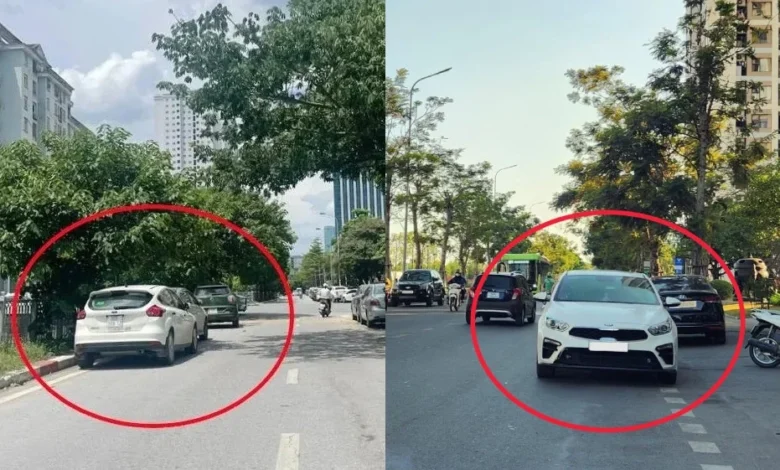
The modern urban landscape is increasingly defined by vehicular congestion, where the margin for error on multi-lane highways and narrow city streets is razor-thin. Among the myriad infractions committed by drivers daily, the practice of stopping or parking an automobile against the flow of traffic—or improperly positioning a vehicle on the left side of a roadway—has emerged as a persistent hazard. Despite explicit regulatory frameworks designed to penalize and deter such behavior, a significant portion of motorists continue to exhibit a lax attitude toward basic parking protocols. This casual disregard not only obstructs the smooth flow of transit and endangers compliant motorists, but it also triggers widespread frustration among pedestrians and fellow drivers alike, frequently setting the stage for catastrophic head-on collisions or high-speed side-swipes.
Deconstructing the Offense: Two Interpretations of Wrong-Way Parking
To fully comprehend the gravity of this infraction, it is essential to examine how traffic jurisprudence defines the proper methodology for stopping and parking a motor vehicle. Under contemporary traffic regulations, including provisions outlined in Vietnam’s recent Road Traffic Safety Laws, the parameters for securing a stationary vehicle are tightly controlled.
On standard roadways, drivers are legally mandated to execute stops and parking maneuvers exclusively on the right side of the travel direction. Where a broad median strip or a dedicated divider separates opposing traffic streams, vehicles must utilize the outer boundary of their respective travel lane. In scenarios characterized by undivided highways lacking physical medians, motorists are strictly restricted to halting their automobiles flush against the right-hand curb or road edge.
Conversely, legal statutes explicitly prohibit stopping or parking under specific high-risk conditions. These banned zones include the left side of a one-way street, along winding roadway segments, near the crests of hills where visibility is severely obstructed by topography, upon bridges and underpasses, or parallel to another stationary vehicle.
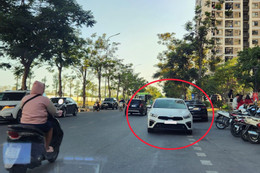
Consequently, the colloquial term "wrong-way parking" encompasses two distinct yet equally dangerous infractions. The first involves the blatant act of pointing an automobile’s front end against the prevailing flow of traffic, forcing the vehicle to travel counter-flow during the entry and exit phases of the parking maneuver. The second, more insidious variation involves parking on the extreme left lane of a multi-lane, one-way road—tucked directly against the central concrete median. While the vehicle may technically be facing forward relative to the lane’s orientation, utilizing the far-left lane for parking transforms a high-speed passing lane into an unexpected stationary obstacle.
The Escalating Danger on High-Speed Lanes
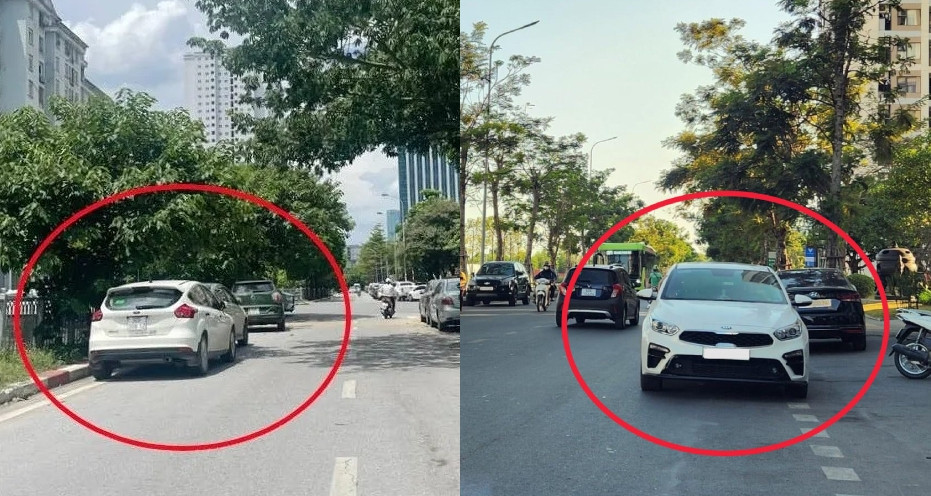
In practical application, both forms of improper parking present severe threats to public safety. When a driver stops facing oncoming traffic, the physical transition into and out of the parking stall necessitates crossing active travel lanes against the flow of vehicles. This creates an immediate risk of a head-on collision, as oncoming motorists have little to no reaction time to anticipate a stationary obstruction looming in their path.
The danger is magnified exponentially when vehicles are parked on the left side of a multi-lane highway, flush against the median divider. Transport experts emphasize that the leftmost lane of a multi-lane thoroughfare typically accommodates the highest operational speeds. It is the designated corridor for overtaking maneuvers, where vehicles travel at maximum velocity. When an operator arbitrarily abandons an automobile in this lane, they effectively hijack a high-speed artery, forcing fast-moving traffic to execute emergency lane changes into adjacent, potentially congested lanes.
Traffic safety analyses indicate that these split-second evasive maneuvers frequently trigger chain-reaction collisions, rear-end crashes, and severe structural damage, occasionally resulting in fatalities. The illusion of convenience for the parking driver is drastically disproportionate to the existential threat imposed upon the broader motoring public.
Comprehensive Penalty Structure Under Current Decrees
Regulatory authorities have established a rigorous tiered penalty system to address these infractions, reflecting a growing governmental intolerance for reckless roadway behavior. Under current administrative sanctions governing road transport violations—specifically highlighted in Decree 168/2024/NĐ-CP—the legal repercussions vary depending on the exact nature and location of the improper stop.
For motorists caught parking or stopping without maintaining proximity to the right-hand curb, or those engaging in wrong-way positioning relative to the lane’s flow, or parking directly upon the central fixed median, the administrative fine ranges from 600,000 to 800,000 Vietnamese Dong.
A more severe financial and administrative penalty applies to drivers who commit improper parking at high-risk locations. Specifically, individuals who park on the left side of a one-way street, along the left side of opposing roadways, or near blind spots such as sharp curves and hill crests face monetary fines ranging from 2 million to 3 million Vietnamese Dong. In addition to these financial penalties, offenders are assessed a deduction of 2 license points from their driving credentials.
Furthermore, if any instance of improper stopping or parking directly results in traffic congestion or bottlenecks, the legal consequences intensify significantly. Under relevant provisions of the administrative code, obstructing the flow of traffic through poor parking choices incurs fines ranging from 4 million to 6 million Vietnamese Dong, coupled with an automatic deduction of 2 points from the driver’s license.
Root Causes and Behavioral Psychology
Industry analysts and transportation psychologists point to ingrained personal habits and a pervasive sense of entitlement as the primary drivers behind improper parking infractions. In densely populated urban centers where parking infrastructure is frequently overburdened, motorists often prioritize immediate personal convenience over collective safety. The temptation to execute a quick, unauthorized stop—saving a few minutes of walking or driving distance to an intended destination—overrides risk assessment.
Compounding this issue is a historical lack of stringent enforcement in certain jurisdictions, which has fostered a culture of impunity among a fraction of drivers. When enforcement agencies intermittently police these behaviors, offenders express surprise, failing to connect their momentary lapse in judgment with systemic traffic disruption and danger.
Strategic Recommendations for Motorists
To mitigate the risks associated with urban parking and ensure absolute compliance with transport laws, automotive experts recommend a disciplined approach to vehicle operation. When a driver identifies a need to stop or park, they must resist the impulse to execute hazardous maneuvers such as crossing opposing lanes or utilizing restricted medians.
Instead, motorists should proceed to a designated parking facility, drive an extra distance to locate a lawful parking zone, or execute a legal U-turn at an appropriate, unobstructed intersection. Once positioned, the vehicle must be brought to a halt flush against the right-hand curb, ensuring that no portion of the automobile extends beyond the legal parameters or impedes adjacent traffic streams. Adopting these defensive driving principles not only shields motorists from costly administrative fines and license point deductions, but it also plays a critical role in preserving the safety and fluidity of the national transportation network.