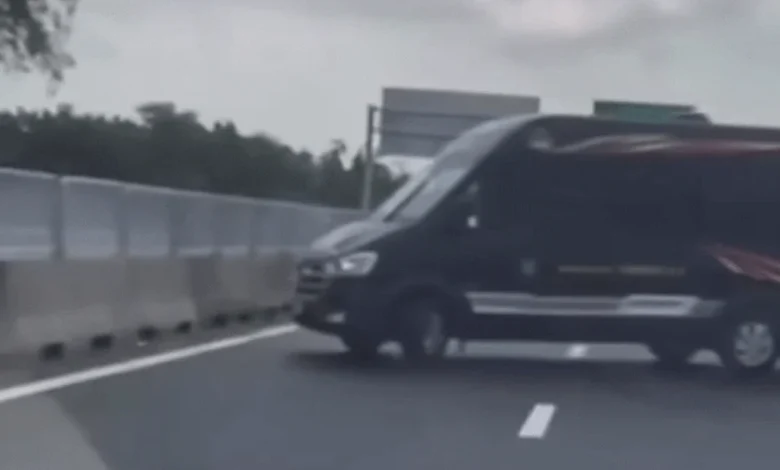
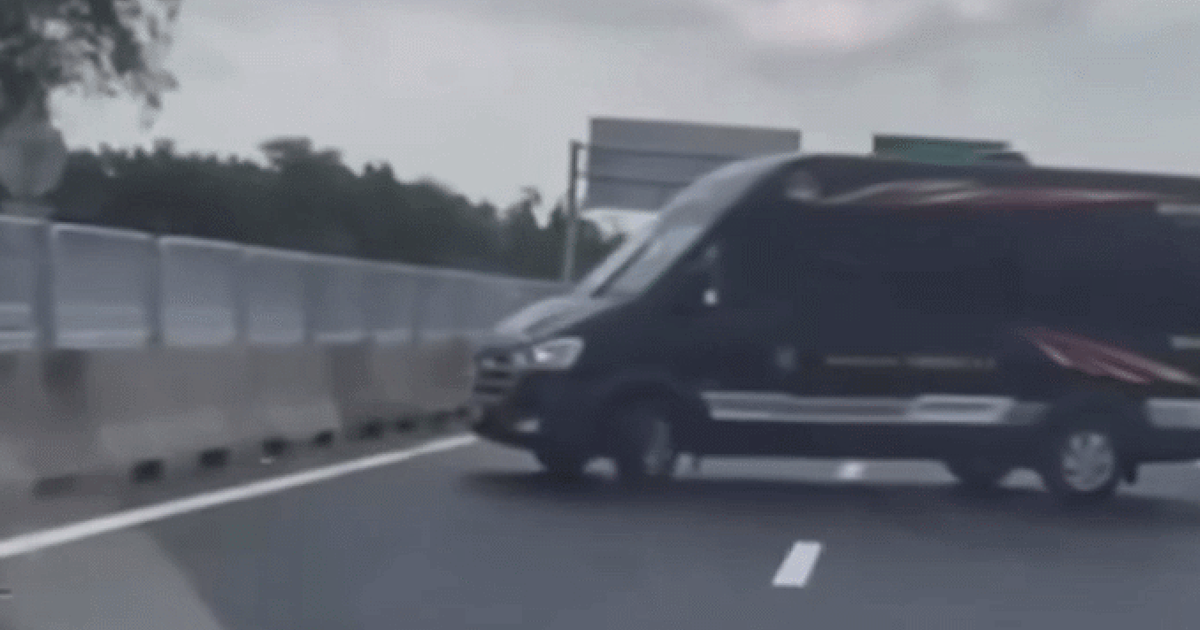
On November 4, 2026, the Traffic Police Department (C08) under the Ministry of Public Security officially addressed widespread public concern following the circulation of a viral video showing a passenger coach performing an illegal U-turn on a high-speed thoroughfare in Dong Nai province. The incident, which occurred on October 31, 2026, sparked significant debate regarding road safety standards, enforcement protocols, and the confusion surrounding the operational status of new infrastructure projects in Vietnam.
Incident Chronology and Verification
According to official reports released by the Traffic Police Department of Dong Nai Province, the incident involving the passenger coach, bearing license plate number 50H-450.XX, was captured on video at approximately 13:37 on October 31. The location was identified as Km 11 of the Vanh Dai 3 (Ring Road 3) project, specifically within the Phu Thanh neighborhood of Nhon Trach ward.
Upon receiving instructions from the central Cục Cảnh sát giao thông, local authorities initiated a formal verification process. Investigations revealed that the driver, identified as L.Q.K., born in 1964 and a resident of Tan Huong commune, Dong Thap province, was indeed operating the vehicle at the time of the recorded maneuver. While the video appeared to show a flagrant disregard for traffic laws on a high-speed expressway, the investigative findings provided critical context that altered the initial narrative presented by social media observers.
Infrastructure Context: A Road Under Construction
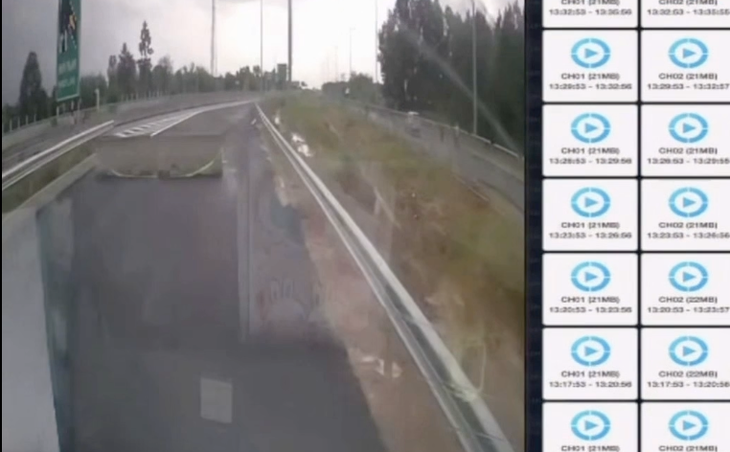
A central point of contention in the public discourse was the classification of the road as a "high-speed expressway." The Traffic Police Department clarified that the segment of Vanh Dai 3 where the incident took place is currently an active construction site. The thoroughfare has not yet been commissioned, nor has it been officially opened for public operation.
"This is not a functional high-speed expressway as the initial social media reports suggested," stated a representative from the Traffic Police Department. "The route is still in the active construction phase. Crucially, the traffic sign system, which is essential for guiding drivers and regulating speed and movement, has not been fully installed or finalized."
The lack of standardized signage and physical barriers contributed to the driver’s confusion. Upon entering the zone, the driver encountered a dead end—a result of construction crews placing temporary barriers to restrict access. Facing an obstruction and realizing the route was incomplete, the driver opted to perform a U-turn to exit the area, a decision that, while hazardous in a completed expressway environment, was born out of navigational error within an unmanaged construction zone.
Enforcement and Legal Rationale
A significant portion of the public reaction centered on the lack of immediate punitive measures against the driver. Under Vietnamese traffic law, performing a U-turn on an expressway is a severe violation, often resulting in heavy fines, license suspension, and, in some cases, the impoundment of the vehicle. However, the decision by the Dong Nai Traffic Police not to issue a citation in this specific instance is grounded in legal interpretation.
For a violation to be prosecuted, authorities must establish that the driver knowingly ignored signage or traffic regulations. Because the road in question is not yet an operational expressway, and due to the confirmed absence of sufficient traffic control devices or advisory signage, the legal basis for a "traffic violation on an expressway" is effectively nullified. The authorities concluded that without the necessary evidence of willful negligence or the violation of established traffic codes—which cannot be enforced on an unfinished, uncommissioned road—the punitive threshold was not met.
The Role of Citizen Journalism and Dashcams
The incident serves as a pertinent case study in the evolving landscape of citizen journalism in Vietnam. The Traffic Police Department took the opportunity to issue a public advisory regarding the usage of recording equipment while operating motor vehicles. While the footage provided by citizens was instrumental in identifying the event, the authorities highlighted that the act of using a mobile phone to record video while driving—a common practice for those capturing such incidents—is itself a traffic violation.

"We encourage citizens to be vigilant, but we also urge them to prioritize road safety," the statement read. "Ideally, incidents should be recorded using fixed dashcams. Attempting to film with a mobile phone while behind the wheel creates additional risks on the road, effectively mimicking the very danger the witness is trying to document."
Broader Implications for Road Safety and Infrastructure
The Dong Nai incident underscores the risks inherent in the rapid expansion of Vietnam’s transport network. As the country moves forward with ambitious projects like Ring Road 3, the transition period between construction completion and official commissioning presents unique safety challenges.
- Signage and Communication: The case highlights the critical importance of clear, temporary signage during the transition from construction to operation. Even if a road is technically closed, the presence of construction barriers may not be sufficient to deter commercial drivers who rely on GPS systems that may not reflect real-time road closures.
- GPS Reliability: Commercial vehicle operators often rely on digital mapping services. If these services reflect a road as open, or if they fail to account for construction-related dead ends, drivers can easily find themselves in dangerous situations. The integration of official construction data into mapping platforms is a recurring suggestion by safety experts to mitigate these risks.
- Public Awareness: The incident acts as a reminder that the public perception of road classification can sometimes lag behind the physical reality of construction. Authorities are tasked with the difficult job of educating the public about which segments of new infrastructure are "under construction" versus "in operation."
Moving Forward: Safety Protocols
In the wake of this incident, the Traffic Police Department has committed to coordinating more closely with the project management boards of various infrastructure developments. This includes:
- Enhanced Monitoring: Increasing patrols in areas surrounding major construction sites to prevent unauthorized entry.
- Signage Audits: Ensuring that construction contractors maintain adequate warnings and physical barriers at the perimeter of all unfinished road segments.
- Data Sharing: Establishing better communication channels with transport companies to ensure that drivers are kept informed of the status of new routes.
While the driver of the coach avoided a fine, the incident has prompted a broader review of how construction zones are secured. The Traffic Police Department has reiterated its commitment to ensuring that as Vietnam’s road network grows, the safety of all road users remains paramount. The focus remains on proactive prevention—ensuring that drivers are properly guided and that the necessary infrastructure is in place to prevent the conditions that lead to such maneuvers in the first place.
For the transport industry, the incident serves as a cautionary tale. Commercial drivers are expected to exercise heightened caution when navigating unfamiliar areas, particularly near large-scale construction projects. The reliance on technology must be balanced with visual observation and strict adherence to the road environment, regardless of what digital maps or general assumptions might dictate.
As the Vanh Dai 3 project continues, the lessons learned from this incident—ranging from the legal complexities of unfinished road enforcement to the dangers of distracted driving for the sake of viral content—will likely influence future protocols for road safety management in Dong Nai and beyond. The authorities’ measured response, focusing on clarification rather than immediate, perhaps legally tenuous, punishment, reflects a pragmatic approach to the complexities of a developing national infrastructure.
Ultimately, the public is reminded that road safety is a shared responsibility. While the infrastructure developers must ensure the safety and clarity of their sites, the motoring public must prioritize cautious driving and responsible documentation. The incident in Dong Nai, while resolved without further escalation, remains a significant marker in the ongoing conversation about how Vietnam manages its rapidly changing landscape of highways and arterial roads.
Related posts: