Decoding the 6 GHz Revolution: Beyond Speed to Network Capacity in Wi-Fi 6E, Wi-Fi 7, and Beyond

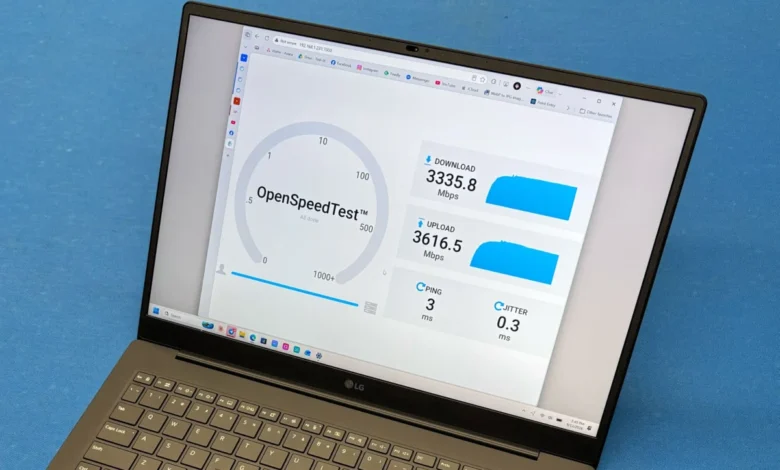
The evolution of wireless networking standards, marked by the advent of Wi-Fi 6E, Wi-Fi 7, and upcoming generations, has fundamentally transformed how digital data traverses the invisible spectrum. While consumer discourse surrounding these advanced protocols often fixates on raw, headline-grabbing speed metrics, the true engineering marvel of modern Wi-Fi lies elsewhere: the integration and utilization of the expansive 6 GHz frequency band. Rather than serving merely as a high-performance lane for individual data packets, the 6 GHz band represents a profound shift in network architecture, alleviating structural congestion, expanding channel availability, and fundamentally redefining wireless capacity in high-density environments.
Historical Context and the Congestion of Legacy Bands
To understand the transformative impact of the 6 GHz spectrum, one must examine the operational limitations of legacy wireless infrastructure. For over two decades, consumer and enterprise Wi-Fi networks relied almost exclusively on two foundational frequency bands: 2.4 GHz and 5 GHz. While these bands successfully connected billions of devices globally, they eventually succumbed to the sheer weight of modern connectivity demands.

The 2.4 GHz band, characterized by its excellent physical propagation and wall-penetration capabilities, has long been a notorious bottleneck. Operating as a shared commons for not only Wi-Fi access points but also Bluetooth peripherals, smart home devices, microwave ovens, and industrial equipment, the 2.4 GHz spectrum suffers from severe environmental noise and electromagnetic interference. More critically, structural limitations within the band restrict operators to a minuscule number of non-overlapping channels—typically only three channels (1, 6, and 11) when utilizing the standard 20 MHz channel width. In dense urban apartments or office complexes, managing interference on the 2.4 GHz band is an ongoing engineering compromise.
The 5 GHz band provided a substantial reprieve, offering a larger total spectrum and higher data throughput. However, as network demands escalated, operators began bonding channels to increase throughput, scaling channel widths from 20 MHz to 40 MHz, 80 MHz, and 160 MHz. This architectural choice triggered an inverse relationship between channel width and available channel density. While a 20 MHz configuration yielded approximately 25 non-overlapping channels in the 5 GHz band, expanding to 40 MHz reduced that pool to roughly 12 channels. At an 80 MHz width, only 6 non-overlapping channels remained, and aggressive 160 MHz deployments shrunk the available pool to a mere two channels.
This spectrum scarcity created acute challenges in dense deployment scenarios. In a modern corporate office building, convention center, or university campus accommodating thousands of concurrent users across dozens of access points, network engineers face an intractable geometric problem. Designing a high-density Wi-Fi topology requires minimizing co-channel interference, yet the lack of available channels forces frequent channel reuse. When multiple access points are forced to share the identical frequency channel within proximity, they must contend for the same finite radio-frequency space, leading to packet collisions, elevated latency, and diminished aggregate performance.
The 6 GHz Spectrum: Opening a Vast New Digital Highway

The regulatory opening of the 6 GHz band—initiated globally by bodies like the United States Federal Communications Commission (FCC) with Wi-Fi 6E and subsequently adopted by international standards organizations for Wi-Fi 7—fundamentally rewrites this dynamic. The 6 GHz band introduces an unprecedented expanse of clean, unoccupied frequency spectrum, injecting up to 59 new 20 MHz channels into the wireless ecosystem.
To use an infrastructural analogy, if the 2.4 GHz and 5 GHz bands represent congested urban corridors where vehicles must tightly squeeze into narrow lanes, the 6 GHz band is equivalent to opening an expansive, multi-lane highway directly parallel to the old routes. In an enterprise environment utilizing 35 access points, the availability of 59 distinct 20 MHz channels provides network architects with unprecedented headroom. Engineers can strategically assign channels without resorting to aggressive reuse, drastically reducing contention and stabilizing real-world performance under heavy loads.
Furthermore, the 6 GHz spectrum unlocks the full potential of wide-channel operations without the traditional penalties associated with legacy bands. High-throughput wireless standards demand wide channel widths to maximize data transfer rates. While 160 MHz channels on the 5 GHz band were frequently impractical due to interference and spectrum scarcity, the 6 GHz band provides sufficient physical space to comfortably support multiple 80 MHz, 160 MHz, and even emerging 320 MHz channels. Consequently, devices can leverage ultra-wide data pipelines without triggering a cascade of co-channel interference across neighboring access points.
Peak Speed Versus Network Capacity: Dissecting the Marketing Metric

A persistent misunderstanding in consumer technology marketing is the direct correlation between generation numbers and perceived speed. A common misconception among end-users is that a device connecting to a 6 GHz router will inherently operate twice as fast as one connected to a 5 GHz network simply because the numerical designation is higher. In practice, actual wireless throughput is governed by a complex matrix of variables, including the client device’s antenna configuration, supported spatial streams, channel width, signal propagation conditions, and the underlying hardware capabilities of both the access point and the client.
Network engineers distinguish between two fundamental performance metrics: peak speed and capacity. Peak speed denotes the theoretical maximum data rate achievable by a single device under ideal laboratory conditions. Capacity, conversely, refers to the network’s ability to maintain high performance and low latency while serving a large multitude of concurrent devices.
In modern wireless ecosystems, capacity is increasingly more vital than raw peak speed. While Wi-Fi 7 protocols tout theoretical maximum data rates approaching 46 Gbps, the practical value of next-generation standards lies in their resilience against network congestion. By providing an expansive spectral canvas, the 6 GHz band ensures that hundreds of devices can stream high-definition video, participate in real-time video conferences, and execute cloud-compute tasks simultaneously without degrading the quality of service for neighboring users.
Environmental Purity and Propagation Characteristics

Beyond sheer bandwidth, the 6 GHz band benefits from a relative lack of legacy interference. Because the spectrum is newly allocated to Wi-Fi 6E and Wi-Fi 7 standards, it is largely devoid of the lingering legacy devices, industrial machinery, and consumer electronics that continuously pollute the 2.4 GHz and 5 GHz spectrums. This spectral purity ensures a cleaner signal-to-noise ratio, allowing advanced quadrature amplitude modulation (QAM) schemes—such as 4096-QAM found in Wi-Fi 7—to operate at maximum efficiency.
However, physics dictates strict operational boundaries. Higher frequency radio waves experience greater free-space path loss and possess poorer object-penetration capabilities compared to lower frequencies. The 6 GHz signal does not travel as far through solid concrete walls or dense architectural structures as the 2.4 GHz band. Consequently, 6 GHz deployments require thoughtful access point placement and often rely on multi-band mesh topologies to ensure seamless indoor coverage, seamlessly steering clients between bands based on proximity, signal attenuation, and throughput requirements.
Regulatory Challenges and Regional Deployment Realities
While the silicon and hardware required to support 6 GHz operations are globally standardized and integrated into modern flagship smartphones, laptops, and enterprise routers, the deployment of this technology is subject to strict national regulatory frameworks. The availability of the 6 GHz band is not universal; it depends entirely on local telecommunications authorities and spectrum allocation policies enacted by individual sovereign nations.

In markets such as Vietnam, while regulatory bodies have increasingly permitted the official import of hardware supporting Wi-Fi 6E and Wi-Fi 7, the operational activation of the 6 GHz band remains governed by domestic radio frequency regulations. Consequently, a distinct structural discrepancy often emerges between global device specifications and local market readiness.
A consumer purchasing a globally advertised smartphone or laptop featuring hardware-level Wi-Fi 6E/7 capabilities may find that the 6 GHz frequency range remains disabled upon unboxing within a specific regional market. This occurs because original equipment manufacturers (OEMs) must complete rigorous local homologation, type approval, and certification processes to ensure compliance with domestic spectrum sharing and power limit regulations. Only after these legal and technical clearances are secured do manufacturers push firmware updates or localized software builds that activate the 6 GHz feature set for regional consumers.
Implications and Future Outlook of Wireless Infrastructure
As enterprise networks and smart-home ecosystems continue to absorb exponential increases in connected endpoints—ranging from Internet of Things (IoT) sensors to augmented reality (AR) headsets and high-resolution security systems—the underlying architecture of local area networks must evolve. The transition toward the 6 GHz spectrum signifies a mature recognition by standards bodies that raw speed alone cannot sustain the future of digital connectivity.

By expanding the available frequency landscape, reducing inter-network contention, and enabling the sustainable deployment of ultra-wide channels, the 6 GHz band addresses the fundamental bottlenecks of modern wireless communication. As regulatory frameworks continue to harmonize globally and local device certification catches up with hardware innovation, the true beneficiary will be the end-user, experiencing a resilient, interference-resistant wireless experience capable of sustaining the demands of the next digital era.