Government mandates new safety distance training for high-speed driving licensing as road safety initiative intensifies

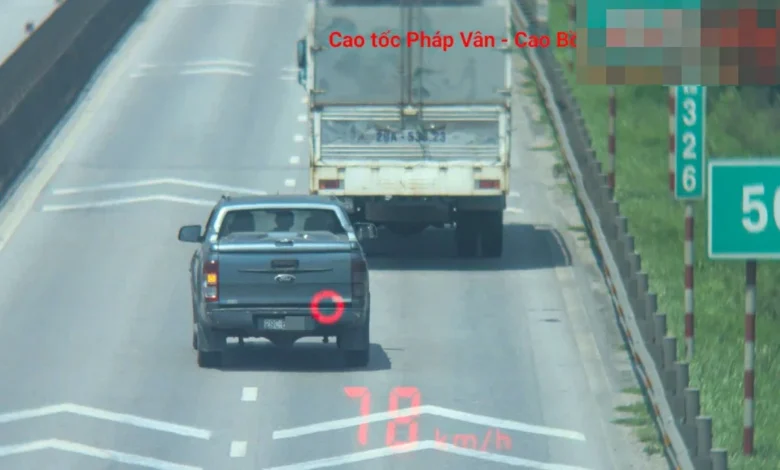
The Vietnamese government has formally directed the Ministry of Public Security and the Ministry of Construction to integrate comprehensive safety distance training into the national driver’s licensing curriculum, marking a significant shift in how high-speed driving is taught and regulated across the country. Following a high-level review session on traffic order and safety on September 14, Deputy Prime Minister Pham Gia Tuc emphasized that the current training protocols require an immediate update to address the specific dangers posed by high-speed travel on the nation’s rapidly expanding expressway network.
This policy adjustment is not merely a change in pedagogical focus but a direct response to the rising number of accidents linked to rear-end collisions and failure to maintain adequate following distances on major motorways. The directive mandates that future drivers must demonstrate a practical understanding of how speed, vehicle dynamics, and environmental factors intersect to dictate the necessary safe braking distance.
The Context of the Mandate
Vietnam’s infrastructure has undergone a massive transformation over the past decade, with hundreds of kilometers of new expressways connecting key economic zones. While this expansion has slashed travel times and improved logistics, it has also introduced a new set of risks. The speed differentials on these roads, combined with the often-aggressive driving culture, have led to a disproportionate increase in multi-vehicle pile-ups.
Government data indicates that a significant percentage of expressway accidents are caused by drivers who "tailgate," or fail to maintain the legally required gap between vehicles. At high velocities—often exceeding 100 or 120 km/h—the reaction time required to avoid a stationary or rapidly slowing vehicle is measured in milliseconds. Without proper training on the "three-second rule" or dynamic distance calculation, even experienced drivers often underestimate the physical reality of their vehicle’s stopping distance.
By embedding this training into the core licensing process, the Ministry of Public Security aims to shift the mindset of new drivers from simply learning to maneuver a vehicle to understanding the physics of road safety. The initiative is designed to ensure that the concept of "safe following distance" becomes second nature rather than an abstract theory learned from a textbook.
Chronology and Regulatory Framework
The push for this reform began as a series of regional reviews involving multiple government stakeholders. On September 14, the Government Office released the formal conclusions of the Deputy Prime Minister’s review, establishing a clear roadmap for implementation.
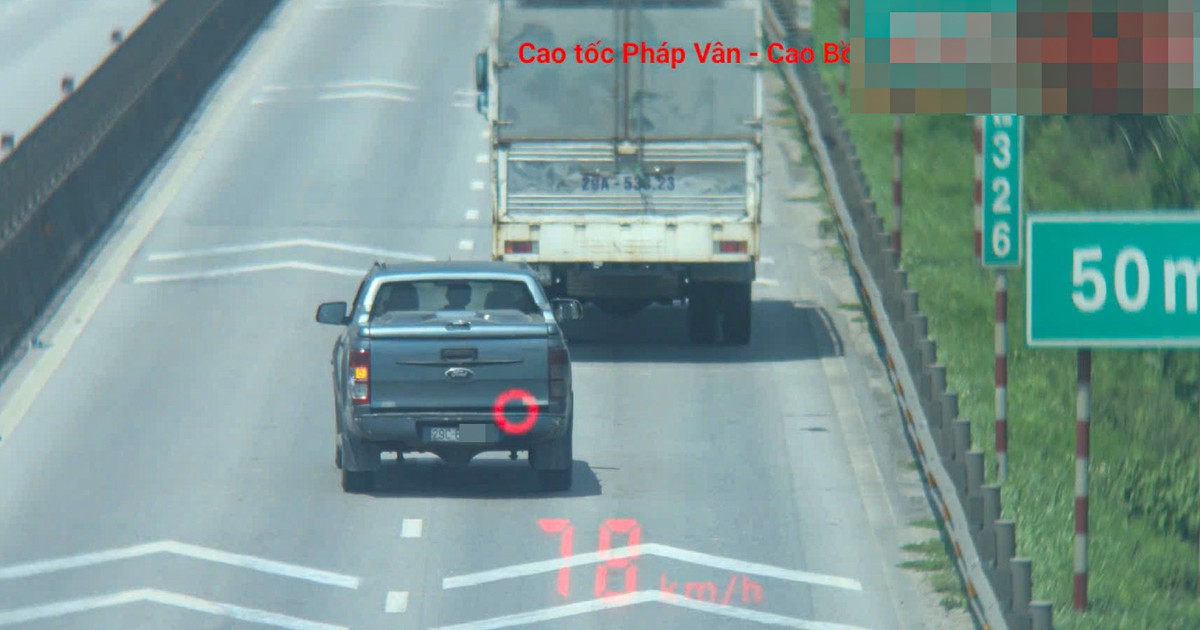
The directive outlines a three-pillar strategy:
- Educational Integration: The Ministry of Public Security has been tasked with updating the national driver training curriculum. This will involve the introduction of standardized test questions and simulated scenarios specifically focused on high-speed safety gaps.
- Infrastructure Signage: The Ministry of Construction, in collaboration with the Ministry of Transport, has been ordered to accelerate the installation of high-visibility, mandatory safety distance signs along all expressways where automated enforcement is active.
- Enforcement Consistency: Legal frameworks are being tightened to ensure that enforcement mechanisms—such as traffic cameras and patrol-based ticketing—are applied uniformly. This is intended to stop the cycle of recurring violations, where drivers feel emboldened by a lack of immediate consequences.
Supporting Data and Scientific Rationale
Traffic safety experts note that the human brain often fails to accurately judge speed when travel remains consistent for long durations, a phenomenon known as "speed adaptation." On a featureless expressway, 100 km/h can feel like 60 km/h. This psychological barrier makes it difficult for drivers to maintain the appropriate gap.
Calculations provided by the Ministry of Transport demonstrate that at 100 km/h, a vehicle travels approximately 28 meters per second. If a driver’s reaction time is 1.5 seconds, they will cover 42 meters before even touching the brake pedal. When factoring in the actual braking distance on a dry road, the total stopping distance far exceeds the distance many drivers currently maintain. The new curriculum will force learners to practice these calculations, likely through both classroom simulations and mandatory high-speed driving exercises under controlled conditions.
Official Responses and Institutional Roles
The Ministry of Public Security has expressed its commitment to revising the testing format by early 2026. According to internal reports, the new licensing exams will likely include a mandatory section on "Hazard Perception," where candidates are presented with video clips of high-speed traffic scenarios and must identify the correct moment to initiate braking or change lanes to maintain a safety buffer.
Simultaneously, the Ministry of Construction is working to update "Circular No. 38," which governs the technical standards for road infrastructure. This update will ensure that road markings, such as distance-check chevron patterns, are standard across all major routes. These chevrons—already in use in many developed countries—provide a visual anchor that helps drivers judge whether they are at least two or three chevrons behind the vehicle in front.
Local authorities have been instructed to prioritize these updates on segments of expressways that have historically seen the highest frequency of accidents. The government has also made it clear that these measures must be implemented without disrupting the flow of traffic, a common concern during construction or sign installation phases.
Implications and Broader Impact
The implications of this policy shift extend far beyond the driving school classroom. For the insurance industry, the focus on documented safety distance could lead to more nuanced liability assessments. If a driver has been properly trained and tested on these specific skills, their ability to claim "unavoidable accident" in a rear-end collision may be diminished.
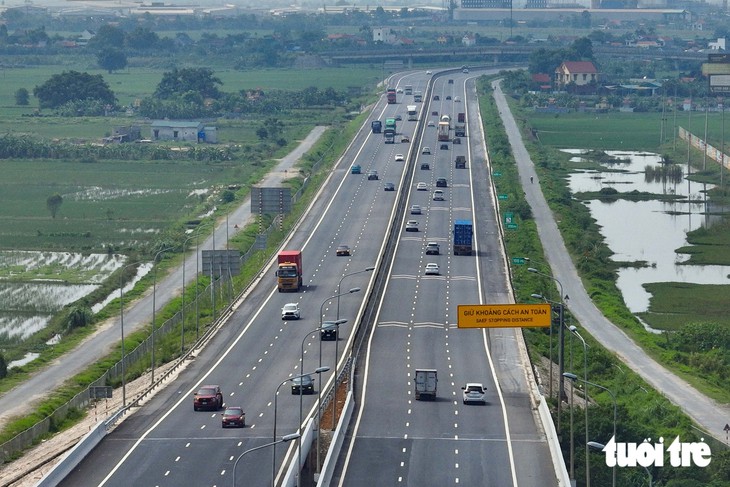
Furthermore, the integration of these protocols into the licensing system provides a long-term solution to the road safety crisis. By filtering out candidates who cannot demonstrate an understanding of safe distance, the government is effectively raising the bar for the quality of drivers entering the road network.
However, critics of the plan point to the challenge of enforcement. While adding curriculum to training is a necessary step, the real test will be the ability of the traffic police to monitor and penalize distance violations without causing bottlenecks or unnecessary congestion. The Deputy Prime Minister’s directive specifically warns against creating "traffic jams or friction" during the rollout of enforcement activities, urging authorities to utilize technology such as automated speed and distance monitoring cameras rather than relying solely on manual patrols.
Looking Toward the Future
As Vietnam continues its economic development, the reliance on high-speed connectivity will only grow. The government’s move to modernize driver training is a tacit acknowledgment that infrastructure alone cannot guarantee safety. It is the human element—the judgment, the reaction time, and the understanding of physical limits—that remains the most critical factor.
The upcoming revisions to the licensing curriculum represent a proactive step toward a safer driving culture. By moving toward a model that emphasizes risk awareness and the physics of high-speed travel, the authorities hope to reduce the tragic toll of road accidents. The success of this policy will depend on the seamless cooperation between the ministries involved, the rigor of the testing centers, and, ultimately, the willingness of the motoring public to adopt safer, more disciplined driving habits on the nation’s highways.
For now, the focus remains on the implementation phase. As the Ministry of Public Security and the Ministry of Construction begin their work, the public can expect to see more rigorous standards, clearer signage, and a heightened emphasis on the simple, yet vital, act of maintaining a safe distance. This is not just a regulatory update; it is a fundamental re-evaluation of what it means to be a licensed, responsible driver in a modern, high-speed nation.
Related posts: