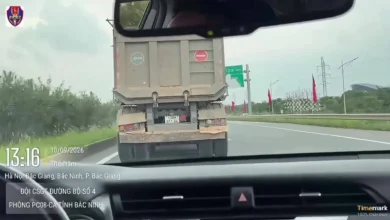
A recent incident involving a truck driver in Bac Ninh province has brought renewed attention to the critical, yet often misunderstood, regulations surrounding the use of turn signals during overtaking maneuvers. On September 15, 2026, authorities identified a driver who failed to maintain a continuous turn signal while passing another vehicle on Provincial Road 287. This lapse in judgment, caught by traffic monitoring systems and widely circulated on social media, resulted in a significant financial penalty and points deduction on the driver’s license, highlighting the strict enforcement of the 2024 Law on Road Traffic Order and Safety.
The incident serves as a stark reminder that traffic laws are not merely suggestions but precise operational requirements designed to minimize blind spots and prevent collisions. Under current Vietnamese regulations, specifically Decree 168/2024/ND-CP (as amended by Decree 238/2026/ND-CP), the failure to signal appropriately during an overtaking maneuver is classified as a serious traffic violation, carrying fines ranging from 4 to 6 million VND, alongside a two-point deduction from the driver’s license.
The Anatomy of an Overtaking Maneuver
For many motorists, the act of overtaking is performed instinctively. However, the legal and safety requirements for passing a vehicle are complex. Article 14 of the 2024 Law on Road Traffic Order and Safety stipulates that before initiating a pass, a driver must conduct a thorough visual check to ensure the maneuver can be completed without endangering other road users.
The signal is not just a gesture; it is a communication tool. The law requires that drivers signal their intent to change lanes using their turn lights or, in specific low-light or rural conditions, by flashing headlights or sounding the horn. Crucially, this signal must be maintained throughout the duration of the pass. The common practice of blinking the signal only once at the start of the maneuver is insufficient and constitutes a violation if the signal is extinguished before the vehicle has safely returned to its original lane.
Chronology of the Bac Ninh Violation
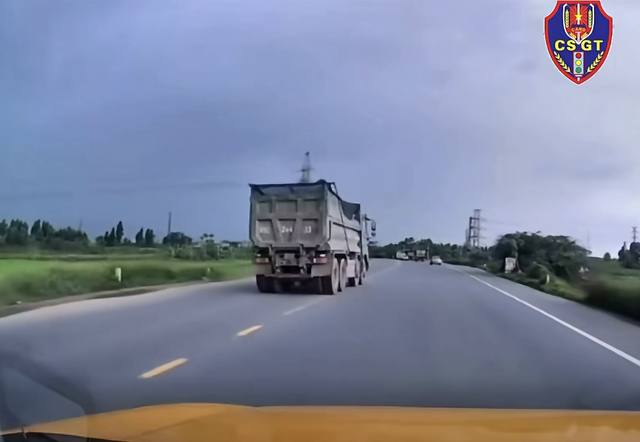
At approximately 1:22 PM on September 15, 2026, the driver, identified as H.M.K., was operating a heavy-duty truck on Provincial Road 287 in Bang Lai ward, Bac Ninh. Traffic cameras captured the vehicle pulling out to overtake another vehicle. While the driver initiated the signal, it was deactivated prematurely—before the pass was completed.

Traffic authorities used the digital evidence to track the vehicle and verify the registration details. The speed at which the violation was processed reflects the increasing reliance on integrated traffic surveillance networks. Once the data was analyzed, the Department of Traffic Police (C08) moved to issue the citation. This event is part of a broader, ongoing campaign by authorities to strictly enforce traffic discipline, particularly among commercial vehicle operators whose larger profiles and increased number of blind spots make signaling even more vital for surrounding traffic.
The Logic Behind Continuous Signaling
The requirement to maintain a signal is rooted in the physics of road safety. When a vehicle, particularly a large truck or bus, moves into an adjacent lane, its body creates a significant visual obstruction for vehicles both ahead and behind.
By keeping the turn signal active, the driver provides a constant, unambiguous visual alert to all other road users regarding their trajectory. If a driver cuts the signal midway, they effectively disappear from the "intent map" of other drivers, creating a high risk of "side-swipe" accidents. In modern vehicle design, many steering columns are programmed to cancel the turn signal automatically once the steering wheel returns to the center position. Consequently, drivers must be proactive. If the wheel centers before the pass is fully completed, the driver must manually re-engage the signal to ensure it remains active until the vehicle has safely cleared the target vehicle and signaled its return to the original lane.
Official Stance and Legal Implications
The Ministry of Public Security and the Department of Traffic Police have been clear in their communications: traffic safety is a collective responsibility, and the "human factor" remains the most common cause of accidents. The penalty of 4 to 6 million VND is designed to act as a deterrent.
Beyond the immediate financial impact, the deduction of license points creates a long-term administrative burden for the driver. In a professional context, where a driver’s license is their livelihood, the accumulation of such points can lead to temporary or permanent suspension of driving privileges. Legal analysts note that the 2024 and 2026 legislative updates represent a shift toward "behavioral compliance." The authorities are no longer just looking for the absence of signals; they are looking for the consistency of the signal as a marker of defensive driving habits.
Broader Impact on Road Safety Culture
The widespread public reaction to the Bac Ninh incident underscores a growing awareness of traffic laws among the general public. Social media platforms have become a secondary enforcement mechanism, where footage of violations is frequently shared, leading to public pressure on authorities to take action.
For the logistics and transportation sector, this incident should serve as a mandatory training module. Companies employing drivers must emphasize that the "shortcut" of failing to maintain a signal is not worth the economic and legal costs. Professional driving standards dictate that a driver should never assume they are visible to others; they must rely on their signals to define their presence on the road.
Furthermore, the integration of AI-powered traffic cameras means that "blind" violations—those committed on rural or less-traveled roads—are now just as likely to be detected as those in metropolitan centers. The era of "enforcement by proximity" is ending, replaced by a 24/7 surveillance model that prioritizes the enforcement of every aspect of the law, including the often-neglected nuances of signaling.
Practical Guidelines for Drivers
To avoid falling victim to these regulations, drivers should adopt the following standard operating procedures:
- Pre-Check: Always verify that the path ahead is clear of oncoming traffic and that no vehicle behind is currently attempting to pass you.
- Signal Early: Initiate the turn signal well before you begin the lateral movement into the passing lane.
- Maintain the Signal: Do not turn off the signal until your vehicle has completely passed the target vehicle and you have ensured there is a safe distance to merge back into your lane.
- Manual Intervention: If your vehicle’s steering geometry cancels the signal during the maneuver, manually re-engage it immediately.
- The Final Merge: Only initiate the return to your original lane once you have checked your mirrors and verified the space is sufficient. Maintain your signal during this return phase as well.
In conclusion, the Bac Ninh incident is not an isolated mistake but a case study in modern traffic enforcement. The law is clear: safety is built on continuous communication between vehicles. By failing to maintain a signal, a driver removes one of the few available tools for preventing human error. As traffic density continues to rise, adherence to these seemingly minor rules will be the defining factor in reducing the nation’s traffic accident statistics. For the driver of the truck in Bac Ninh, the 6 million VND fine is a costly lesson in the necessity of vigilance and the importance of being a predictable, communicative participant in the flow of traffic.