The pursuit of renewable energy integration in Vietnam has encountered critical regulatory boundaries, prompting federal authorities to issue explicit clarifications regarding solar power installations on multi-use land plots. The Electricity Regulatory Authority of Vietnam (ERAV), operating under the Ministry of Industry and Trade (MoIT), has formally responded to an inquiry raised by the Ho Chi Minh City Renewable Energy Association (HCMRE). The core message of the regulatory guidance is straightforward yet carries profound implications for industrial investors: the mere ownership or control of vacant land does not automatically grant a business entity the legal right to construct and operate solar photovoltaic systems without undergoing rigorous administrative and regulatory compliance procedures.
This clarification addresses a widespread misconception among commercial and industrial (C&I) operators who are increasingly eager to harness solar power to satisfy their operational energy demands, lower their carbon footprints, and hedge against fluctuating conventional electricity tariffs. As manufacturing hubs across southern Vietnam seek innovative ways to maximize asset utilization, the intersection of land-use laws and renewable energy regulations has become a complex arena requiring careful navigation.
Regulatory Framework and the Distinction of Multi-Use Land
According to the official guidance issued by the Electricity Regulatory Authority of Vietnam, solar power systems installed on structures built on multi-use land—where land serves both a primary commercial or industrial function and a secondary energy-generation purpose—share certain procedural similarities with traditional rooftop solar systems. Specifically, under current legislative frameworks, these installations are categorized under the self-production and self-consumption model.
Under this model, commercial and industrial entities are permitted to install solar capacities to directly offset their internal energy consumption. If the system generates an excess of electricity during peak generation hours, the surplus energy can be fed back into the national grid, provided that the sold volume does not exceed 10 per cent of the actual total generated output, strictly in accordance with statutory limitations.
However, ERAV strongly emphasizes a critical legal distinction: solar installations deployed on the ground surface of multi-use land parcels do not enjoy the same expedited administrative pathways as standard rooftop solar panels. While rooftop installations typically benefit from simplified notification and registration procedures, ground-mounted systems utilizing multi-use land must rigorously comply with an extensive matrix of overlapping legal frameworks. These include, but are not limited to, laws governing land tenure, spatial and urban planning, investment licensing, construction standards, electrical safety, and environmental protection.
The regulatory agency explicitly noted that the specific conditions and verification protocols required to prove compliance with multi-use land regulations fall outside the direct regulatory scope of the Electricity Law. Consequently, enterprises cannot rely solely on energy sector approvals; they must independently study land-use regulations and proactively seek formal opinions and clearances from state land management authorities before breaking ground.
Chronology of the Inquiry: From Industry Questions to Federal Clarification
The dialogue between the business community and federal regulators developed in response to mounting operational pressures faced by manufacturers in dynamic economic zones such as Ho Chi Minh City. The chronological progression of this regulatory clarification highlights the growing pains of Vietnam’s fast-evolving renewable energy sector:
- Initial Industry Bottlenecks: As industrial zones expanded and energy demands surged throughout 2024 and 2025, numerous manufacturing enterprises experienced severe spatial constraints. Traditional rooftop space on factories, warehouses, and administrative buildings quickly became fully saturated with solar panels, leaving little room for further capacity expansion.
- Association Petitions: Seeking alternative solutions to meet corporate net-zero commitments and escalating power needs, the Ho Chi Minh City Renewable Energy Association formally petitioned the Electricity Regulatory Authority of Vietnam. The association sought definitive clarity on how to interpret Clause 4, Article 13 of Government Decree 58/2024/NĐ-CP, particularly in scenarios where companies possessed non-rooftop land assets within their facility perimeters.
- Specific Operational Scenarios Raised: The HCMRE highlighted two distinct real-world operational scenarios prevalent among its corporate members. The first involved factories possessing open land plots within their industrial compounds wishing to install ground-level solar arrays mounted on elevated support structures while maintaining the primary industrial designation of the land. The second scenario involved enterprises attempting to install floating solar arrays across industrial water features—such as wastewater treatment ponds, cooling reservoirs, or artificial landscaping lakes—without dredging, backfilling, or altering the primary hydrological functions of the water bodies. Furthermore, the association requested clarification on whether these configurations would qualify for the same simplified notification mechanisms as rooftop installations.
- Federal Response and Directives: In response to these complex inquiries, the Electricity Regulatory Authority of Vietnam issued a comprehensive legal interpretation grounded in Decree 58, Decree 243, and Consolidated Document 52 of the Ministry of Industry and Trade, definitively outlining the boundaries, compliance mandates, and technological scope permissible under current Vietnamese law.
Deep Dive into the Two Real-World Scenarios
The questions submitted by the Ho Chi Minh City Renewable Energy Association reflect the innovative strategies industrial operators are attempting to deploy to overcome spatial limitations. Analyzing how regulatory bodies evaluate these scenarios provides vital insights for future project developers.
Scenario 1: Elevated Ground-Mounted Solar on Industrial Land Plots
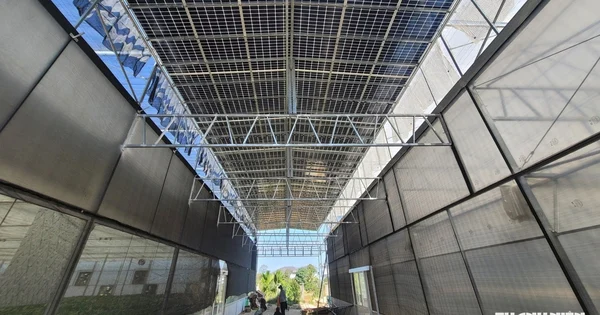
Many manufacturing facilities occupy sprawling plots where buildings cover only a fraction of the total land area, leaving open yards, parking lots, or buffer zones. Enterprises proposed erecting elevated steel frameworks or truss systems directly above these open land areas to support solar panels, allowing industrial activities or vehicle parking to continue underneath.
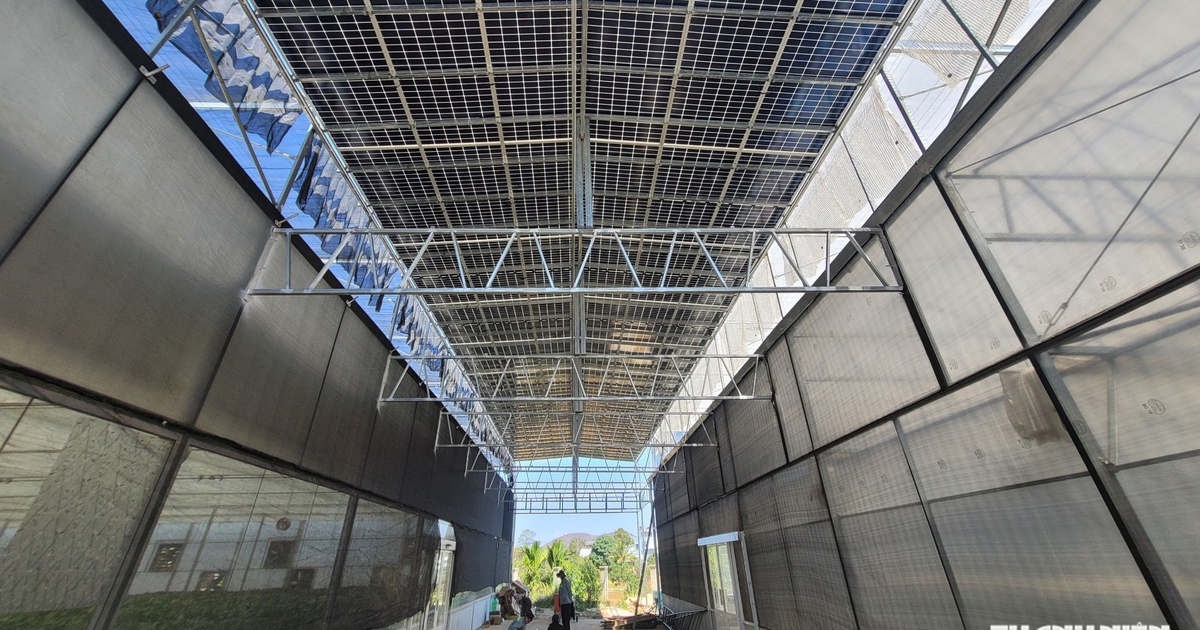
The regulatory response clarifies that while this dual-purpose utilization may be conceptually sound, it does not exempt the project from land-use conversion reviews or construction licensing. Even though the land is not being permanently transformed into a dedicated energy plant, the erection of permanent structural foundations and commercial power generation equipment alters the legal parameters of the land parcel. Enterprises must secure formal authorization proving that the secondary use does not violate master zoning plans.
Scenario 2: Floating Solar Arrays on Industrial Water Bodies
To bypass land-use restrictions entirely, several enterprises explored utilizing artificial water surfaces within their compounds—including wastewater treatment basins, cooling water reservoirs, and decorative lakes—by deploying floating photovoltaic (FPV) systems anchored on pontoons. Proponents argued that since these systems require no land backfilling and leave the underlying water volume intact, they should face minimal administrative hurdles.
Federal regulators pointed out that while floating systems are technically viable, their deployment must still respect environmental protection laws and water resource management regulations. Disruption to wastewater treatment processes or alterations to industrial cooling dynamics can trigger safety and environmental compliance violations, necessitating thorough pre-approval evaluations from local environmental and water resource departments.
Integration of Energy Storage Systems (BESS)
A particularly noteworthy aspect of the recent regulatory clarification addresses the integration of modern technology within self-production and self-consumption frameworks, specifically Battery Energy Storage Systems (BESS).
As intermittent renewable sources like solar energy comprise an increasingly large share of industrial microgrids, the management of surplus power and grid stability has become paramount. Industry stakeholders sought clarity on whether incorporating energy storage units directly connected to rooftop or self-consumed solar installations would legally reclassify the project type, potentially subjecting it to complex independent power producer (IPP) regulations.
The Electricity Regulatory Authority of Vietnam put these concerns to rest by confirming that the installation of battery storage systems sourced from rooftop self-production and self-consumption solar arrays does not alter the underlying legal classification of the power source. Energy stored in BESS units originating from authorized self-consumption solar generation continues to be legally recognized under the same regulatory category as standard rooftop solar systems. Consequently, these integrated storage projects remain eligible to follow the streamlined notification and registration procedures stipulated in Decree 58, provided they adhere to established capacity and operational guidelines.
Broader Economic Implications and Strategic Takeaways for Businesses
The definitive stance taken by the Electricity Regulatory Authority of Vietnam serves as both a caution and a roadmap for the commercial and industrial sectors. While the Vietnamese government remains deeply committed to expanding renewable energy integration—as outlined in the National Power Development Plan VIII (PDP8)—it is simultaneously reinforcing the rule of law regarding land administration and spatial planning.
Avoiding Legal Pitfalls
For project developers and corporate real estate managers, the primary takeaway is that proximity to land does not equate to a right to generate power. Rushing into ground-mounted or water-surface solar installations without comprehensive legal due diligence can result in severe administrative penalties, construction suspension orders, and financial losses. Businesses must engage legal counsel specialized in Vietnamese land law and coordinate closely with provincial and municipal departments of natural resources and environment before procuring equipment or signing engineering, procurement, and construction (EPC) contracts.
Balancing Ambition with Compliance
The transition toward green manufacturing is an irreversible trend driven by international supply chain demands, carbon border adjustment mechanisms (CBAM) in export markets, and corporate sustainability targets. By clarifying the exact legal boundaries surrounding multi-use land solar projects and battery storage integration, federal authorities are providing the regulatory certainty necessary for long-term strategic planning.
Ultimately, enterprises that successfully align their renewable energy ambitions with stringent land-use and construction compliance will be best positioned to secure a resilient, sustainable, and legally protected energy supply for their future operations in Vietnam.