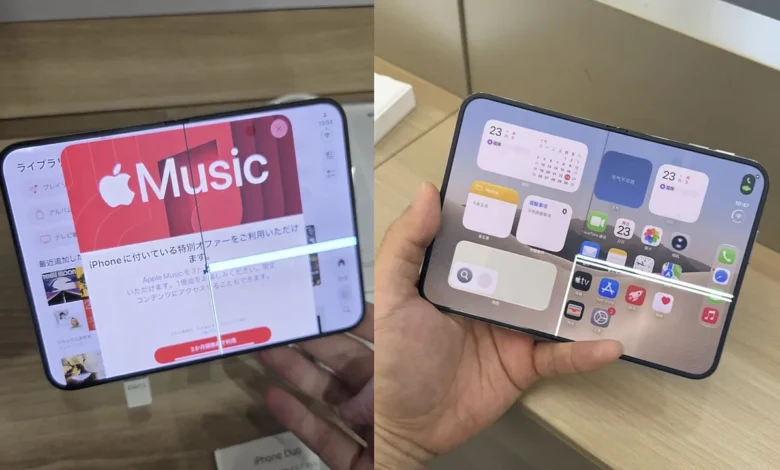
The highly anticipated launch of the Apple iPhone Duo, which officially hit store shelves on October 23, has encountered a series of early technical setbacks that are casting a shadow over the company’s first foray into the foldable smartphone market. While initial reception of the device was largely positive, a growing number of early adopters have taken to social media platforms and technical forums to report significant hardware failures, primarily centered on screen degradation and display-related defects. These reports, which have surfaced within the first 48 hours of product availability, suggest potential durability challenges for Apple’s innovative folding display technology.
The Emerging Pattern of Failure
Reports across platforms such as Reddit and MacRumors indicate that the issues are not isolated incidents but rather a recurring phenomenon. Users have documented instances where the iPhone Duo’s display develops vertical lines or outright cracks across the central hinge area, even without any evidence of accidental impact or misuse.
One user, posting under the username Midnight_Slump on Reddit, provided a harrowing account of their experience. After only six hours of ownership and fewer than 20 folding cycles, the user reported hearing a distinct "cracking" sound while opening the device for a friend. Subsequent inspection revealed a visible line running vertically across the internal display, directly aligned with the hinge mechanism. The post, which has since been verified by moderators as an authentic account, highlights the potential fragility of the device’s internal structural components. Similar reports from users in Japan, including an account from Reddit user Bitter_Offer7123, reinforce the narrative that the failure often occurs in the same critical location, pointing toward a possible design or manufacturing defect in the hinge and screen assembly.
Technical Analysis and Reviewer Findings
The hardware concerns extend beyond the screen itself. Tech reviewers on YouTube, including the channel Gupta Information Systems, which boasts over 1.85 million subscribers, have conducted stress tests to evaluate the device’s build quality. While the titanium frame has been praised for its rigidity and resistance to bending, reviewers noted that applying force causes the hinge area to show color shifting and transient artifacts, which sometimes resolve when the screen is returned to a flat position. However, these anomalies raise questions about the long-term integrity of the internal display layers.

Furthermore, the "nano-texture" protective layer, designed to reduce glare, has been a subject of criticism. Users have reported that the coating can cause a reduction in perceived contrast and image clarity, leading some owners to attempt to remove it entirely. This, in turn, creates additional complications, as applying third-party screen protectors over the native, potentially compromised, layer often leads to increased thickness and further strain on the folding mechanism.
The Software and Performance Paradox
Beyond the hardware, the iPhone Duo is facing criticism regarding its software optimization. While the device features a expansive foldable screen, industry analysts from The Wall Street Journal have described the user experience as having "too much iPhone, and too little iPad." The device struggles with multitasking, a critical component for a device in its price bracket. Many third-party applications have not yet been optimized for the dual-aspect ratio, resulting in a fragmented and occasionally frustrating interface.
Sam Rutherford, a senior editor at Engadget, characterized the lack of optimized applications as "the most difficult hurdle" Apple has encountered with its first foldable device. This lack of ecosystem support at launch leaves the hardware underutilized, failing to justify the $2,000 price point for power users who expected a seamless transition between phone and tablet modes.
Camera Performance Concerns
Photography, typically a strong suit for Apple, has also come under scrutiny. Reports from 9to5mac and Gizmodo indicate that the camera system performs poorly in low-light conditions, with the front-facing camera described as producing "muted" and "soft" imagery. Raymond Wong of Gizmodo pointed out the logical inconsistency of a $2,000 device lacking a high-end camera array that matches the standards set by the iPhone 18 Pro series. Furthermore, users have noted significant lens flare when capturing images of streetlights and other bright light sources, a detail that many reviewers found unacceptable for a flagship device.
Context and Market Timeline
The iPhone Duo was officially unveiled on September 9, arriving a month after the launch of the iPhone 18 Pro and 18 Pro Max. Pre-orders commenced on October 16, with widespread retail availability beginning on October 23. Notably, Vietnam was included in the first wave of markets, marking a significant strategic move for Apple in the Southeast Asian region.

The current situation is reminiscent of the "growing pains" experienced by other manufacturers during their initial entry into the foldable market. When competitors first introduced their folding devices, they similarly faced early criticism regarding screen creases, hinge durability, and software stability. For Apple, however, the standards of expectation are significantly higher. The company’s reputation is built on long-term hardware reliability, making these early reports particularly damaging to consumer confidence.
Official Response and Support
As of the time of writing, Apple has not issued an official statement regarding these reports. However, anecdotal evidence suggests the company is handling individual cases with caution. The user Midnight_Slump noted that while Apple initially hesitated to provide an immediate replacement, they eventually offered a new device after a thorough internal inspection. This process, while eventually favorable for the consumer, highlights a lack of a clear, standardized policy for handling these specific "day-one" hardware failures.
Implications for the Foldable Market
The broader implications of the iPhone Duo’s rocky start are significant. The foldable segment is a critical growth area for the smartphone industry, which has otherwise reached a plateau in terms of traditional form-factor innovation. If Apple—a company synonymous with rigorous quality control—cannot maintain the structural integrity of its display, it may delay the mass adoption of folding technology.
Despite the criticisms, the device is not without merit. Reviews from outlets like Wired have highlighted the iPhone Duo’s battery performance, which exceeds that of the Samsung Galaxy Z Fold 8 in web browsing tests, though it still falls short of the iPhone 18 Pro Max. Tom’s Guide praised the device for having the "best design of any foldable phone to date," suggesting that the hardware’s appeal lies in its aesthetic and build, provided the user is willing to accept the inherent risks of first-generation folding technology.
Ultimately, the consensus remains mixed. With scores such as 8.8/10 from Engadget and 7/10 from both The Verge and Wired, the iPhone Duo is viewed as a technically impressive device that is currently hampered by "first-gen" issues. Whether these failures are isolated incidents of a bad production batch or systemic design flaws will be determined in the coming weeks as more devices enter the hands of the public and Apple potentially introduces internal revisions or service programs. For now, early adopters are caught in a waiting game, testing the limits of a device that promises to redefine the smartphone experience but is currently struggling to fulfill the basic requirements of durability and reliability.
Related posts: