Massive Clam Mortality Event Strikes Coastal Farms in Thanh Hoa Province Following Severe Storm Impacts

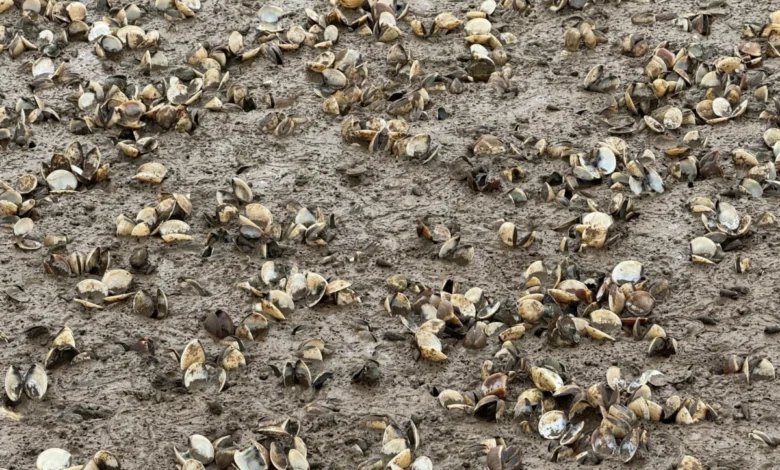
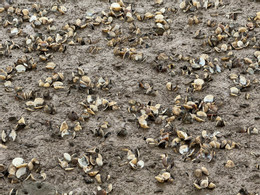
The Department of Agriculture and Rural Development of Thanh Hoa Province has officially confirmed a large-scale mortality event affecting clam farms located within the Ngoc Son ward. Preliminary assessments indicate that the disaster has decimated significant portions of local aquaculture assets, with authorities scrambling to mitigate environmental damage and provide relief to affected farmers. The situation, which began in late August, has escalated into a major economic challenge for the coastal community, raising critical questions regarding the resilience of local farming practices and the impact of climate-driven weather volatility on maritime industries.
Chronology of the Environmental Crisis
The crisis was initiated by the passage of Typhoon No. 4, which brought torrential rainfall to the region starting on August 26. The excessive precipitation led to a massive influx of freshwater from upstream sources into the coastal estuaries where the clam beds are situated. While clam farming is a staple of the local economy in Ngoc Son, the biological threshold of the bivalves was quickly exceeded by the rapid change in water chemistry.
By the time initial inspections were conducted by provincial experts on September 7, the mortality rate among the clam population had reached an estimated 80%. Despite ongoing efforts to manage the beds, reports from the field suggest that the mortality continued even after the initial storm event subsided. The rapid onset of the die-off—within just a few days of the rainfall—suggests that the physiological stress caused by the sudden drop in salinity proved fatal for the majority of the stock.
Supporting Data and Technical Assessment
According to findings released by the provincial Department of Agriculture and Rural Development, the scale of the damage is substantial. Out of a total of 78 farming households managing 83 hectares of clam beds, 50 households have reported direct losses. The affected area spans approximately 60 hectares.

Technical analysis of the site has revealed that the clam density at the Ngoc Son farms was significantly higher than the industry-recommended standards. Data shows a density of 850–880 clams per square meter, which is four to five times higher than the density recommended by aquaculture experts for optimal health and sustainability. This high stocking density likely exacerbated the vulnerability of the clams, as the crowded conditions left little room for natural adaptation to the rapidly changing water environment.
The salinity levels recorded during the event serve as the primary indicator of the cause. On August 13, prior to the storm, the water salinity in the area was measured at 25.4 parts per thousand (ppt), which falls within the ideal range of 20–35 ppt for healthy clam cultivation. By August 28, following the storm and the resulting freshwater runoff, salinity levels plummeted to 8.6 ppt—roughly one-third of the optimal level. This dramatic drop created an osmotic shock that the clams could not survive.
Quantifying the Economic Impact
The total volume of lost stock is currently estimated to be between 2,000 and 2,400 tons. However, these figures remain preliminary. The People’s Committee of Ngoc Son ward is currently working to finalize a detailed census of the affected farmers and verify the exact tonnage lost to ensure that any potential future government assistance can be allocated accurately.
The financial burden on these families is significant. Many of the farmers had invested heavily in juvenile clams and maintenance, anticipating a profitable harvest season. With the current market size of the clams ranging from 150 to 160 individuals per kilogram, the loss represents not only the capital invested in the seeds but also the loss of months of labor and expected revenue.
Official Responses and Mitigation Measures
The provincial agriculture department has taken immediate steps to manage the aftermath of the event. To prevent secondary environmental pollution from the decomposing biomass, officials have issued an urgent directive to all affected households. Farmers are required to:
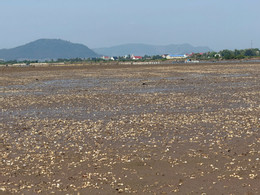
- Remove the dead clams: Immediate collection and disposal of the mortality to prevent the spread of bacteria and potential disease outbreaks.
- Sanitation: Thoroughly clean the farming beds to restore water flow and oxygenation levels.
- Site Preparation: Level the surfaces of the beds and clear any debris or silt buildup caused by the floodwaters.
- Hydrological Management: Clear water channels and drainage points to ensure better water circulation in the future.
Furthermore, for any surviving stock that has reached commercial size, authorities have advised farmers to expedite the harvest immediately. While this may result in selling smaller-than-ideal product, it is considered the most effective strategy to mitigate further financial losses and prevent additional mortality caused by lingering unfavorable water conditions.
As part of the ongoing investigation, the department has collected three samples of water and three samples of clam tissue for comprehensive laboratory testing. These tests aim to definitively rule out any secondary contributing factors, such as industrial pollution or localized pathogens, that might have compounded the effects of the freshwater influx.
Broader Implications for Aquaculture Resilience
The event in Ngoc Son serves as a sobering reminder of the systemic risks facing the aquaculture sector in Vietnam. As climate change increases the frequency and intensity of typhoons and extreme weather events, the vulnerability of near-shore farming becomes a growing concern for national food security and regional economic stability.
Historically, the aquaculture sector in provinces like Thanh Hoa and Ha Tinh has been prone to such mass mortality events when environmental conditions deviate from established norms. The recent reports from Ha Tinh, where similar mass die-offs have resulted in billion-dong losses, highlight a recurring pattern: when the delicate balance of an estuary is disrupted by extreme weather, the traditional intensive farming model often lacks the necessary "buffer" to withstand the change.
Experts suggest that the future of the industry may depend on adopting more resilient farming practices. This includes reducing stocking densities to recommended levels, which allows for better oxygen circulation and less competition for resources, making the organisms more robust against environmental stress. Additionally, the development of more advanced, real-time water quality monitoring systems could provide farmers with the early warning required to take protective measures, such as temporary relocation or early harvesting, before salinity or temperature thresholds are breached.
Future Policy Considerations
For the government, the immediate task is to address the urgent needs of the farmers in Ngoc Son. While immediate cleanup is the priority, the long-term implications involve a potential review of zoning laws for aquaculture. Authorities must determine if certain areas that are highly susceptible to freshwater flooding during typhoons should remain designated for intensive clam farming, or if alternative, more resilient species or methods should be introduced.
The disaster also highlights the need for a more robust insurance or risk-mitigation framework for smallholder aquaculture farmers. Currently, the lack of widespread agricultural insurance leaves these households entirely exposed to the volatility of the climate. As the sector matures, integrating micro-insurance schemes or government-backed relief funds for natural disasters could be essential to ensuring that individual farmers can recover from such shocks without facing total bankruptcy.
In conclusion, the mass mortality of clams in Thanh Hoa is a direct result of environmental instability triggered by extreme weather, exacerbated by high-density farming practices. While the immediate focus remains on site sanitation and minimizing further losses, the event underscores the urgent need for a shift toward more sustainable, climate-resilient aquaculture management strategies to protect both the environment and the livelihoods of those who depend on it. As the investigation concludes and the full extent of the damage is realized, the lessons learned from the Ngoc Son incident will likely inform future guidelines for sustainable aquaculture in the province, emphasizing that long-term viability requires balancing production capacity with the realities of an increasingly volatile climate.