Hà Đông Luxury Villa Paradox: Empty Mansions Languish for Decades While Asking Prices Skyrocket to 250 Million VND per Square Meter

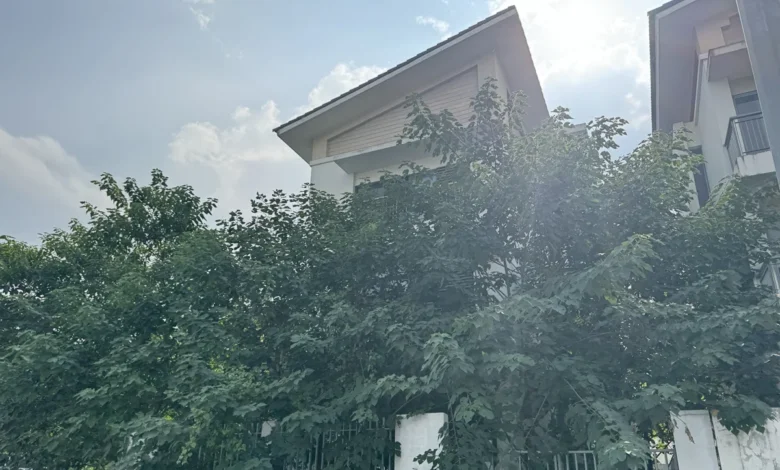
The real estate landscape in Hanoi’s western districts, particularly within the administrative boundaries of Hà Đông, continues to present a paradoxical socio-economic phenomenon. While scores of multi-story villas and luxury townhouses have stood completely vacant, uncompleted, and abandoned for more than a decade, their asking prices have surged to unprecedented heights. Today, properties that were initially acquired as speculative assets during the late 2000s are being listed for astronomical sums ranging from 150 million VND to 250 million VND per square meter, pushing total asset values well past the 50 billion VND threshold in prime locations.
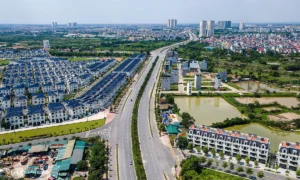
This stark juxtaposition between physical neglect and hyper-inflated capital valuation has transformed several prominent master-planned communities in Hà Đông into ghostly landscapes of shuttered windows, overgrown courtyards, and fading "for sale" banners. Industry analysts, urban planners, and policymakers are increasingly scrutinizing this trend, viewing it as a symptom of speculative capital hoarding that distorts housing affordability, impedes efficient urban utilization, and leaves billions of dongs worth of built infrastructure unproductive.
A Legacy of Speculation: The 2008–2010 Genesis
To understand the current valuation of these vacant properties, it is necessary to examine the historical trajectory of Hanoi’s western expansion. Following the administrative boundary expansion of the capital in 2008, the western corridor—spanning Hà Đông and neighboring districts—became the epicenter of a massive real estate boom. Real estate developers rushed to launch ambitious new urban areas, capitalizing on state-backed infrastructure master plans and a surge in speculative liquidity.
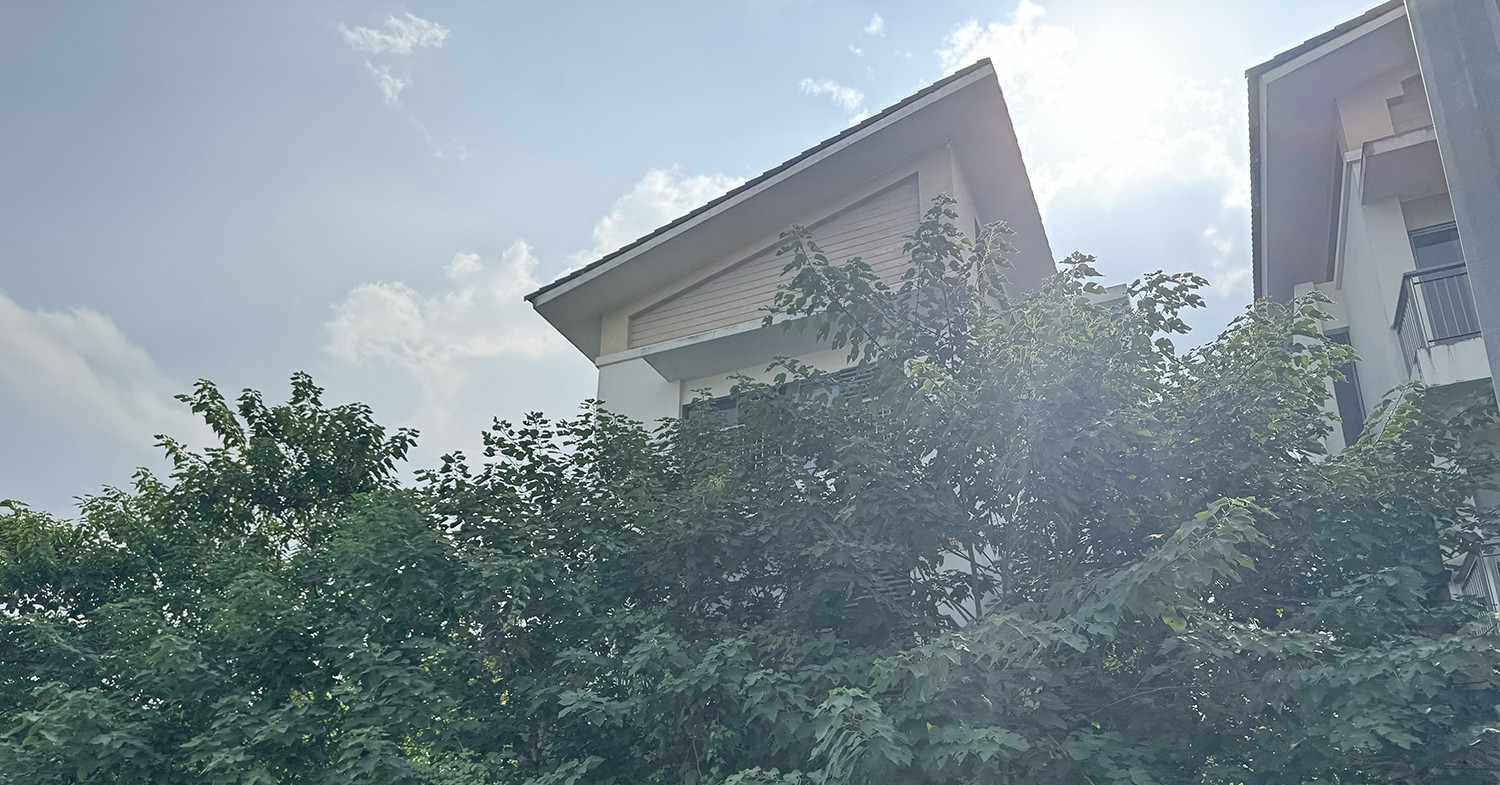
During the initial development phase between 2008 and 2010, land prices within these nascent townships were relatively modest, typically recorded at 15 million to 25 million VND per square meter. Investors could acquire a raw, rough-constructed villa shell for a total value ranging between 3.5 billion and 6 billion VND, depending on the precise acreage and directional orientation. Similarly, projects like the expansive Geleximco Lê Trọng Tấn development, which broke ground between 2007 and 2009 along major arterial routes, offered townhouses and villas at introductory primary market prices of 12 to 18 million VND per square meter, with total package costs hovering between 1.5 and 3.5 billion VND.
However, this rapid expansion outpaced actual demographic demand and commercial integration. When the Vietnamese real estate market suffered a severe downturn and a prolonged liquidity freeze between 2011 and 2013, the vulnerability of these mega-projects was exposed. Hundreds of investors who had bought properties purely for capital appreciation—relying on the expectation of continuous price hikes without immediate plans for occupancy or interior fit-out—found themselves holding illiquid assets. As the market stagnated, owners abandoned the properties, leaving raw concrete structures exposed to the elements. Over the years, weatherization, lack of maintenance, and general wear and tear degraded the exterior facades, cementing the perception of these neighborhoods as deserted ghost towns.
Infrastructure Catalysts and the Post-Decade Price Surge
Despite more than ten years of chronic vacancy, asking prices for these abandoned properties have not collapsed. Instead, they have appreciated exponentially, driven primarily by the sweeping transformation of Hà Đông’s macro-infrastructure and regional connectivity.
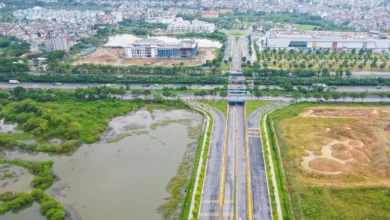
The turning point for secondary market valuations arrived toward the end of the last decade. Key public and commercial investments dramatically altered the livability index of the western corridor. The opening of the Aeon Mall Hà Đông in late 2019, the development of the expansive Millennium Park (Thiên Đường Bảo Sơn), and the completion of critical arterial road networks—such as the widened Lê Trọng Tấn and Phan Kế Toàn corridors—significantly reduced transit times to Hanoi’s inner districts and upgraded the immediate amenity ecosystem.
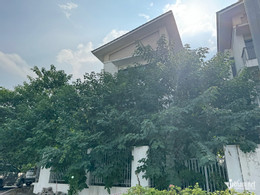
As accessibility improved and urban sprawl caught up with these once-isolated townships, secondary market values experienced a dramatic upward re-rating. Recent property surveys indicate that standard villa prices in major Dương Nội developments now fluctuate widely between 150 million and 250 million VND per square meter. Consequently, total valuation tickets for individual properties routinely span from 25 billion to 55 billion VND.
Even raw, unfinished villa shells that have remained devoid of human habitation for over a decade command hefty premiums. Unfinished units are currently being advertised at baseline rates of 145 to 180 million VND per square meter. For instance, properties spanning 170 to 200 square meters are routinely listed between 25 billion and 33 billion VND.
Within specific sub-divisions, the pricing gradients reflect strategic micro-locations. In the A.V Villa sector, a standard 180-square-meter rough-construction villa situated near Thiên Đường Bảo Sơn Park commands asking prices between 30 billion and 32 billion VND, translating to roughly 167 to 178 million VND per square meter. Larger corner-lot units spanning 230 square meters along 28-meter-wide grand avenues reach up to 45 billion VND, approaching nearly 196 million VND per square meter.
Moving closer to commercial hubs, such as the A.Q Villa enclave near Aeon Mall Hà Đông, 198-square-meter properties with four-to-five-story rough structures are listed between 33 billion and 35 billion VND. Premium commercial-facing assets on major thoroughfares—such as a 202.5-square-meter A.P shop villa along the 27-meter-wide Phan Kế Toàn street—have scaled unprecedented peaks, asking up to 58 billion VND, or approximately 286 million VND per square meter.
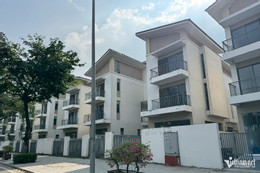
Within the Geleximco complex, townhouses are actively marketed at 170 to 260 million VND per square meter, while standard villas command 150 to 200 million VND per square meter. In Zone C, smaller 75-87 square meter townhouses trade between 13.7 and 15.5 billion VND, whereas prime boulevard or corner-lot configurations of 100-120 square meters reach 22 to 25 billion VND. Fully fitted semi-detached villas featuring private elevators (155-200 square meters) list at 29.9 to 33 billion VND, and fully decorated standalone mansions spanning 250 square meters peak around 42 billion VND.
Market Realities and Liquidity Challenges
Despite these eye-watering asking prices, local brokerage professionals emphasize a critical divergence between advertised listing figures and actual transaction liquidity. Local real estate agents note that at price points exceeding 30 to 50 billion VND per unit, these luxury assets are exceptionally niche and suffer from low absorption rates.
"Properties that have been left raw and abandoned for years incur substantial additional costs for owners before they can ever be safely inhabited or commercially leased," explains Mr. Tuấn, a veteran real estate broker operating in the western corridor. "Investors who contemplate purchasing these units for rental income must meticulously calculate the operational yields against the immense capital outlay required just to complete structural renovations, fit out interiors, and address infrastructural degradation."
Furthermore, market experts point out that inflated asking prices do not necessarily equate to healthy transactional volume. Many speculative owners continue to test the upper limits of the market, refusing to adjust their expectations downward, which results in prolonged listing cycles and persistent vacancies.
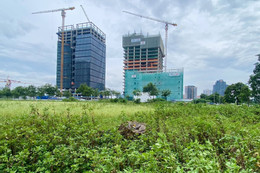
Policy Interventions: The Debate Over Vacant Land Taxation
The persistent phenomenon of multi-billion-dong properties lying idle while capital values climb has catalyzed intense policy debates regarding economic efficiency, housing accessibility, and equitable taxation. Economists and urban management authorities have increasingly argued that soaring land values driven purely by macroeconomic speculation—absent any productive economic utilization or human habitation—fail to generate genuine societal wealth.
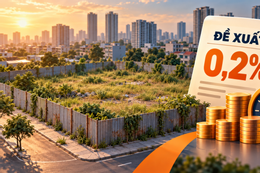
To combat this capital inefficiency, regulatory bodies have begun exploring punitive fiscal instruments. Proposals recently brought forward by the Ministry of Finance suggest implementing a specific tax rate of 0.2% on vacant land plots, as well as residential and commercial properties that remain uncompleted or chronically underutilized.
To contextualize the impact of such a measure, financial analysts calculate that a prime landholding or villa asset with a taxable valuation of 100 billion VND would incur an annual tax liability of approximately 200 million VND. While a 0.2% levy might appear modest initially, prominent market stakeholders have advocated for progressive scaling based on the duration of vacancy.
Mr. Nguyễn Vữ Cao, Chairman of the Board of Directors at Khang Land Holding, voiced strong support for regulatory intervention, noting that targeted taxation could fundamentally alter investor psychology. "Introducing a 0.2% tax on vacant land forces investors to rethink their obsession with passive capital appreciation," Mr. Cao stated. "The broader real estate market desperately requires cooling measures, but the long-term success of any fiscal intervention relies heavily on how transparently and rigorously it is enforced."
Financial specialists and legislative advisors have similarly underscored that as properties are left abandoned for consecutive years, the applicable tax penalties should compound proportionally. Such a sliding scale would create a strong disincentive against land hoarding, compelling speculative owners either to finish construction, place properties into active rental circulation, or divest their holdings to end-users who intend to reside in them.
Broader Economic Implications and Future Outlook
The current state of Hà Đông’s luxury villa market serves as a microcosm of wider structural challenges within Vietnam’s property sector. On one hand, infrastructure maturation, commercial expansion, and urban densification have undeniably elevated the intrinsic value of western Hanoi. On the other hand, speculative hoarding continues to lock up valuable housing stock, distorting real supply-demand dynamics and constraining affordable housing access for the wider population.
As municipal authorities move closer to finalizing legal frameworks for taxing idle real estate and unused land assets, the landscape for speculative investors may undergo a profound transformation. For now, the towering, empty villas along Lê Trọng Tấn and Dương Nội remain enduring symbols of a market caught between extraordinary paper wealth and physical emptiness—awaiting regulatory catalysts and economic pressures that may finally compel them to come to life.