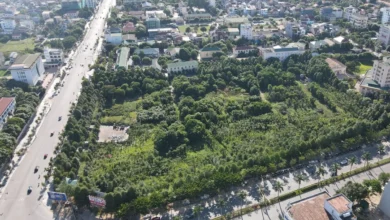
In a significant move to bolster urban infrastructure and economic capacity, the province of Bac Ninh is set to witness the official commencement of a landmark urban development project spearheaded by Vingroup. Scheduled for September 16, this initiative represents a cornerstone of the province’s broader strategic vision to transition into a major metropolitan center. The project, titled the New Urban Area in the West of Bac Ninh City (Zone 1), covers approximately 270 hectares and involves a staggering investment of over 41,000 billion VND.
Strategic Vision and Project Overview
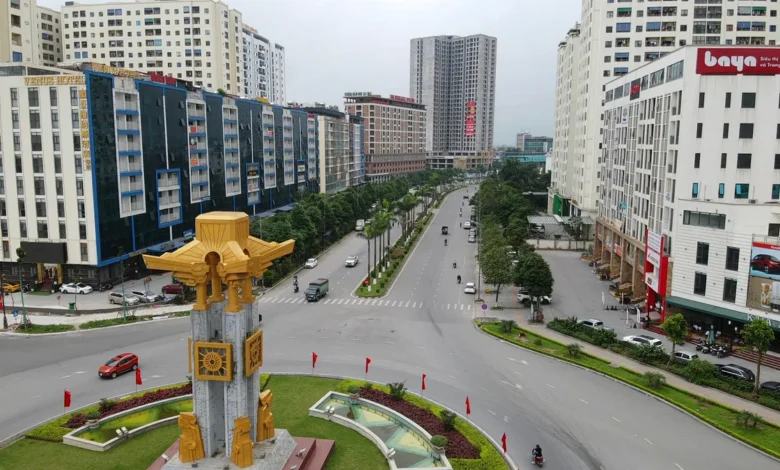
The decision to launch this massive urban project is not isolated; it is part of a concerted effort by the provincial authorities to upgrade the administrative and socio-economic status of Bac Ninh. As of September 20, Bac Ninh is poised to transition into a city directly under the central government’s administration, marking a historic milestone in its development trajectory. The provincial government has identified urban expansion as a primary driver for attracting foreign direct investment (FDI) and improving the quality of life for its residents.
The Vingroup-led development is designed as a mixed-use ecosystem. According to the master plan, approximately 50 hectares are allocated specifically for residential purposes, featuring a dense and diverse portfolio of nearly 3,500 units, including villas, terraced houses, and high-rise apartment buildings reaching up to 32 stories. Beyond housing, the project incorporates a comprehensive suite of amenities, including commercial office spaces, state-of-the-art healthcare facilities, multi-level schools, and expansive parkland, ensuring that the new district functions as a self-sustaining urban entity.
Chronology of Development
The path to this ground-breaking ceremony has been carefully paved through rigorous planning and administrative milestones:
- Late August: The provincial authorities of Bac Ninh successfully transferred the first phase of land, covering over 100 hectares, to the investor, allowing for immediate site mobilization and project implementation.
- September 16: The official groundbreaking ceremony is scheduled to take place, alongside four other major infrastructure and industrial projects.
- September 20: The effective date for the administrative elevation of Bac Ninh to a city under the central government, setting the stage for the project’s long-term integration into the regional economy.
Diversified Economic Growth
While the Vingroup project captures significant attention due to its scale and residential focus, it is part of a broader industrial and social infrastructure push. On the same day as the Vingroup groundbreaking, four other significant projects will commence, illustrating a balanced approach to economic development.
One notable project is a social housing development located in the New Urban Area of Phuong Hoang and Tien Phong wards. Developed by a subsidiary of Licogi13, this initiative will cover over 3 hectares with a total capital investment of nearly 2,000 billion VND. Once completed, it is expected to provide the local market with approximately 1,660 social housing units, directly addressing the housing needs of the growing workforce in the region’s industrial zones.
Furthermore, the province is expanding its industrial footprint with three major projects:
- Nghia Huong Industrial Park: With an investment of 2,220 billion VND.
- Thuan Thanh III Industrial Park (Zone C): Valued at nearly 2,000 billion VND.
- Viet Han Industrial Park Expansion: With an investment exceeding 1,200 billion VND.
These industrial additions underscore Bac Ninh’s commitment to maintaining its status as one of Vietnam’s leading industrial hubs, providing the necessary capacity for high-tech manufacturing and logistics enterprises to scale their operations.
Contextual Analysis: Bac Ninh’s Economic Trajectory
Bac Ninh holds a unique competitive advantage due to its location within the Northern Key Economic Triangle, which includes Hanoi, Hai Phong, and Quang Ninh. Acting as the gateway to the northeastern corridor of the Northern Delta, the province has become a magnet for multinational corporations seeking robust infrastructure and logistical connectivity.
Historically, Bac Ninh has focused on industrialization, but the current shift toward large-scale urban development projects suggests a maturation of the local economy. By integrating high-end residential, commercial, and educational services, the province aims to attract and retain a highly skilled workforce, thereby shifting from a low-cost manufacturing base to a more value-added, service-oriented economy.
The total area of the province, now set to serve as a major metropolitan hub, covers 4,713 square kilometers with a population of approximately 3.99 million people. With a dense administrative network comprising 45 wards and 54 communes, the province is strategically positioned to leverage its borders with major economic centers such as Hanoi, Hai Phong, Quang Ninh, Hung Yen, Lang Son, and Thai Nguyen.
Implications and Future Outlook
The influx of capital into urban and social housing projects is expected to have a multiplier effect on the local economy. Economists suggest that the construction phase alone will generate thousands of jobs, while the long-term operation of these facilities will catalyze growth in the services, retail, and hospitality sectors.
For Vingroup, this project reinforces its strategy of "urban ecosystem" development, which has proven successful in major cities like Hanoi and Ho Chi Minh City. By providing a "one-stop" living environment, the developer aims to set a new benchmark for urban living in the Northern region. However, analysts also emphasize that the success of such large-scale developments depends on the synchronization of external infrastructure—such as transport connectivity and public utilities—with the internal project schedule.
The local government has expressed strong support for these initiatives, viewing them as essential components of the provincial master plan. By aligning private investment with public policy, Bac Ninh is attempting to avoid the common pitfalls of rapid urbanization, such as inadequate social services or disjointed planning.
Conclusion
As Bac Ninh prepares for its administrative elevation on September 20, the concurrent launch of these five major projects signals a transition period characterized by rapid expansion and structural refinement. The 41,000 billion VND investment by Vingroup stands as a testament to the province’s attractiveness to large-scale developers and its potential to act as a primary engine for growth in the Northern Vietnam region. Whether these projects will successfully meet their delivery timelines and fulfill their socio-economic promises remains a subject of close observation by stakeholders and the local community alike. For now, the focus remains on the September 16 commencement, a date that will mark the physical start of a new chapter in Bac Ninh’s urban history.
Related posts: