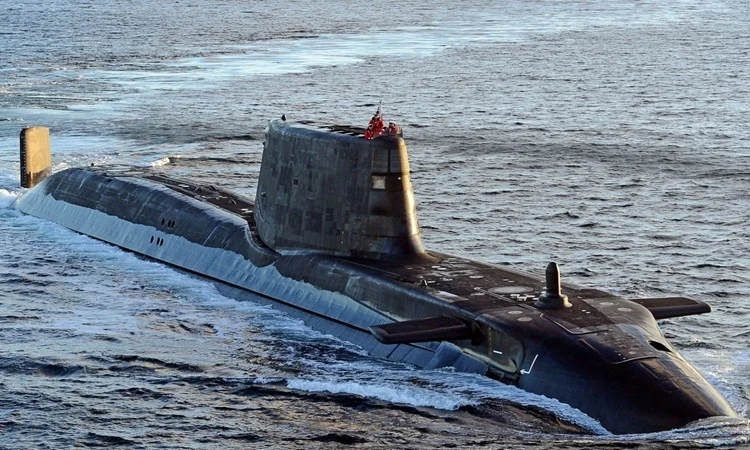
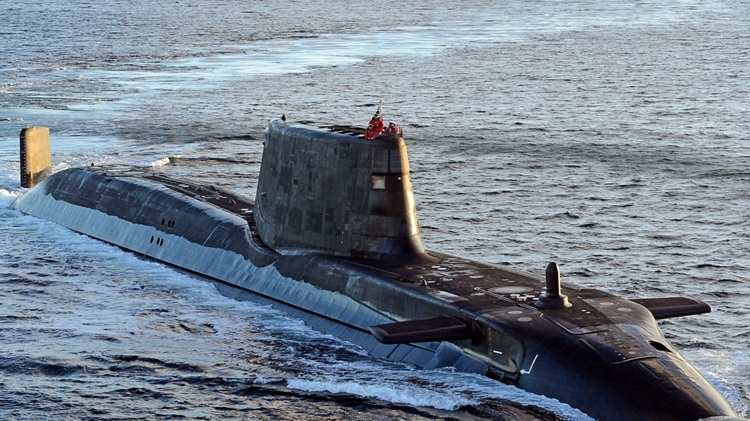
The capability of nuclear-powered submarines to remain submerged for extended durations is one of the most significant technological advancements in naval warfare. Unlike conventional diesel-electric submarines, which are tethered to the surface by the physiological and mechanical needs of their propulsion systems, nuclear-powered vessels operate as self-sustaining, mobile ecosystems. This independence allows modern platforms like the Royal Navy’s Astute-class or the United States Navy’s Virginia-class to project power globally without the logistical constraints that once dictated the operational tempo of the 20th-century submarine fleet.
The Evolution of Submarine Endurance
Before the advent of nuclear propulsion, submarines were essentially surface vessels that could submerge for limited periods. The primary constraint was the battery life and the requirement for fresh air to support the diesel engines. During the Second World War, a typical submarine might remain submerged for only a few hours at a time, or perhaps a few days if operating on primitive snorkels.
The turning point occurred in 1954 with the launch of the USS Nautilus (SSN-571), the world’s first operational nuclear-powered submarine. The shift from diesel-electric to nuclear fission transformed the vessel from a "submersible" into a true submarine. By utilizing a nuclear reactor to generate heat, which in turn produces steam to drive turbines, these ships achieved an almost unlimited range, constrained only by the amount of food and maintenance supplies on board.
A Chronology of Submerged Milestones
The history of long-endurance underwater operations is marked by several landmark missions that demonstrated the tactical potential of nuclear power. In 1960, the USS Triton (SSRN-586) made history by completing the first submerged circumnavigation of the globe. The vessel traveled 49,491 kilometers (approximately 30,750 miles) in 60 days and 21 hours without surfacing. This mission served as a clear signal to the global naval community that the "tyranny of the surface" had been broken.
In the decades that followed, technology continued to mature. While the USS Triton’s mission was a grueling test for its crew, modern nuclear submarines have integrated life-support systems that make such endurance a standard operational capability rather than an extraordinary feat. Today, vessels like the British Astute-class submarines are designed to operate for up to 25 years before needing a major refueling of their nuclear cores, though their actual patrol lengths are dictated by human factors rather than fuel availability.
The Physics of Perpetual Motion
The core of this endurance lies in the nuclear reactor. In a pressurized water reactor—the standard for naval propulsion—the fission process creates intense heat. This heat is transferred to a secondary water system, which turns into steam to drive the ship’s propulsion turbines and electrical generators. Because this is a closed-loop system, the water is condensed and reused, allowing the reactor to run continuously for millions of kilometers without the need for traditional refueling.
For the United States Navy, modern reactors are designed to operate for the entire service life of the submarine. According to the U.S. Department of Energy, some modern naval reactors can power a vessel for over 1.6 million kilometers (one million miles) without the need for mid-life refueling. This operational longevity translates into a strategic advantage: the ability to remain "on station" in contested waters for months at a time, maintaining a silent, undetectable presence that serves as a powerful deterrent.
Life-Support Systems: Generating Air and Water
While the reactor solves the propulsion problem, the challenge of sustaining human life in a hermetically sealed environment remains. Submarines produce oxygen primarily through the process of electrolysis. By running an electrical current through seawater, the ship’s systems split water molecules (H2O) into hydrogen and oxygen. The oxygen is circulated throughout the ship for the crew to breathe, while the hydrogen is safely vented or processed.
However, seawater cannot be used directly due to its salt content and potential to create hazardous chlorine gas during electrolysis. Consequently, the water must first pass through a reverse osmosis desalination system to remove salts and minerals. This ensures that the oxygen produced is high-purity and the water produced is potable.
Furthermore, submarines are equipped with complex "atmosphere control" systems. These systems continuously scrub carbon dioxide from the air and remove other contaminants—such as hydrogen, carbon monoxide, and volatile organic compounds—that accumulate in a closed space. Without these advanced chemical scrubbers and atmospheric monitors, the air quality would rapidly degrade, leading to toxic environments for the crew.
Human Limitations: The Final Constraint
Despite the technological marvel of a submarine that can theoretically stay underwater for years, the human element imposes strict limitations. The primary bottleneck is the availability of fresh food. While modern submarines can manufacture their own water and oxygen, they cannot manufacture fresh produce or a balanced diet for a crew of over 100 people.
Even with efficient preservation methods and dry-goods storage, the "food cycle" typically limits a patrol to approximately three to four months. Beyond this duration, the physical and mental health of the crew begins to decline. Naval planners and psychologists closely monitor the "endurance limit" of crews, noting that isolation, artificial lighting, and the confined living quarters of a submarine create significant psychological strain.
Strategic Implications and Future Outlook
The ability to remain submerged indefinitely has changed the nature of global maritime strategy. Submarines serve as the "stealth" component of the nuclear triad, providing a survivable second-strike capability that is nearly impossible to track in the vast expanse of the world’s oceans.
As naval technology advances, the focus has shifted toward increasing the automation of these life-support systems. Future developments aim to reduce the maintenance burden on the crew, potentially allowing for even longer patrols. Some analysts suggest that the development of Large Unmanned Underwater Vehicles (LUUVs) could one day remove the human limitation entirely, allowing for vessels that stay submerged for years at a time, performing surveillance and strategic missions without a single crew member on board.
In conclusion, the marriage of nuclear fission and advanced life-support chemistry has fundamentally altered the geography of the seas. By turning the ocean into a viable, long-term habitat for these vessels, the nuclear submarine has moved from being a tactical ship to a strategic asset. While the crew remains the limiting factor in terms of endurance, the engineering behind these vessels stands as a testament to human ingenuity in overcoming the most hostile environments on Earth. The legacy of the USS Nautilus continues today in the silent, persistent patrols of the world’s most advanced underwater fleets, ensuring that the reach of naval power is no longer defined by the need to see the sky.