Ministry of Agriculture and Environment Clarifies Rules on Land Use Rights Transfer Signatures and Household Representation for Undivided Land Parcels

Navigating the complexities of real estate transactions, property transfers, and land registry protocols often presents significant hurdles for everyday citizens. In recent months, a recurring legal dilemma has captured the attention of property owners across various provinces: what happens when a parcel of agricultural or residential land is registered under the name of a household, but standard transfer documents lack the signatures of all registered family members? This exact administrative gridlock recently prompted a formal inquiry from a citizen attempting to process a land use rights transfer, leading to an official and clarifying response from the Ministry of Agriculture and Environment.
The core dispute centers on the legal interpretation of terminology surrounding land transfer contracts, specifically what constitutes a valid signature under current Vietnamese land laws. As real estate markets continue to evolve and statutory frameworks undergo frequent revisions, understanding these nuances is essential for landowners, prospective buyers, and local registration offices alike to avoid costly legal disputes and stalled bureaucratic procedures.
The Origin of the Dispute: A Defective Transfer Contract and a Rejected Dossier
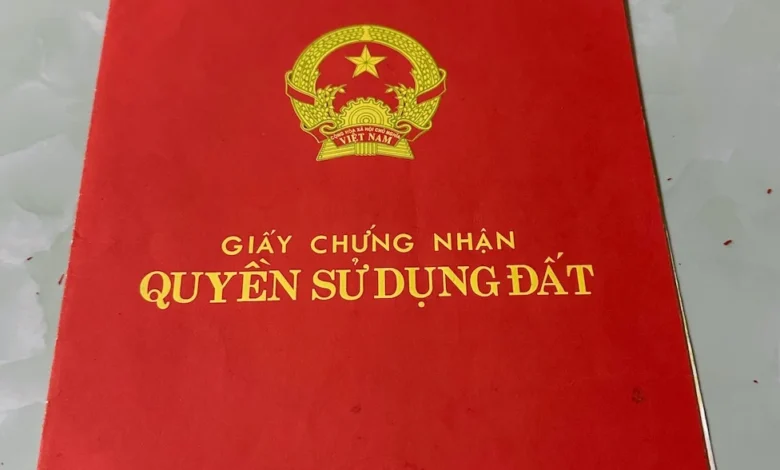
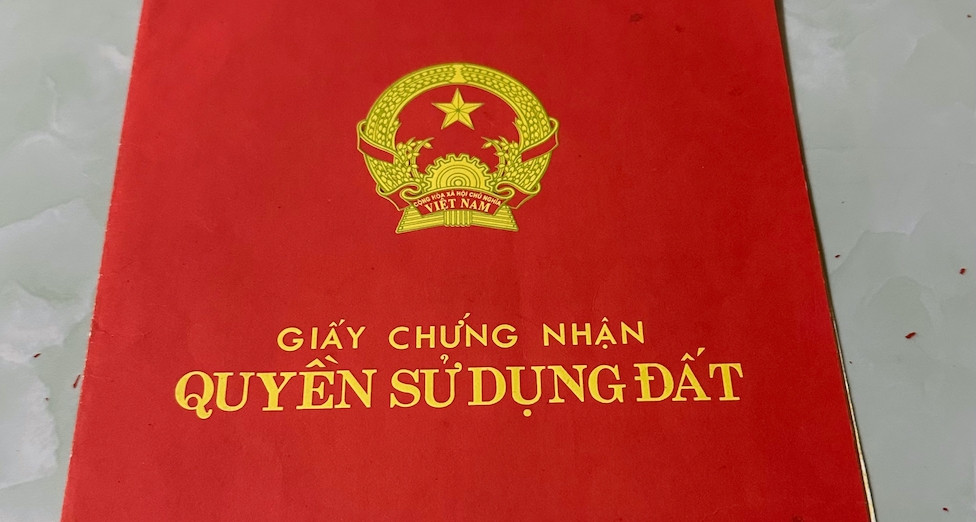
The administrative controversy began when a citizen submitted a transfer dossier for an agricultural land parcel to the local branch of the Land Registration Office. The property in question was originally documented under a Land Use Rights Certificate—commonly referred to as a "red book"—bearing the primary designation "Household of Mr. A." To formalize the transaction, a transfer contract had been duly established and stamped with the official verification seal of the local Commune People’s Committee.
However, a critical flaw existed in the execution of the contract. While the purchasing party had ensured that both husband and wife signed the agreement, the selling side featured only the signature of Mr. A himself, omitting the signatures of other adult members belonging to the household at the time the certificate was issued.
Confident that the transaction was legitimate due to the communal stamp, the citizen proceeded to file the change-of-ownership dossier at the Land Registration Office. This filing fell under the regulatory provisions governing transfers executed prior to August 1, 2024. To the citizen’s surprise, the office rejected the dossier outright. The officials argued that Mr. A could not unilaterally act on behalf of the entire family without explicit documentation proving he held full legal authorization to sign away property rights belonging to a collective household unit.
Faced with this rejection, the citizen raised a fundamental question regarding the legality of the Land Registration Office’s decision. Citing Point a, Clause 2, Section XI of Appendix I issued alongside Government Decree No. 151/2025, the citizen pointed out that the regulations explicitly require "documents on the transfer of land use rights bearing the signatures of the transferor and the transferee."
This wording sparked a debate over statutory interpretation: Does "signatures of the transferor" mean the signatures of all individual members listed within Mr. A’s household registry at the time the red book was issued, or is it legally sufficient to have the signature of the primary seller and the buyer—essentially treating the transaction as a bilateral agreement between primary parties? Furthermore, the citizen sought clarity on whether the administrative rejection aligned with broader statutory mandates governing collective land assets.
Statutory Framework Governing Land Use Rights of Household Groups
To resolve the mounting confusion, the Ministry of Agriculture and Environment issued a comprehensive legal interpretation, drawing heavily upon the provisions established in the Land Law 2024. Specifically, the Ministry referenced Clause 2, Article 27 of the legislation, which explicitly dictates the legal mechanisms for managing and disposing of land use rights held by a group of users or a household when the underlying land cannot be physically partitioned into distinct individual shares.
According to the statutory guidelines, where a parcel of land is legally recognized as the common property of a household or a collective group of users, any legal transaction—including sales, donations, leases, or transfers—must be executed collectively. All members who share joint ownership rights must either sign the transaction documents directly or provide valid, legally binding authorizations appointing a representative to act on their behalf.
The Ministry strongly emphasized that the phrase "signatures of the transferor and the transferee" must be interpreted contextually. In legal terms, it refers to the signatures of all individuals possessing rights to participate in the specific transaction, or their lawfully designated representatives. It does not mean that a single signature from the head of the household is automatically sufficient, nor does it imply that the signature of only one person on each side satisfies the legal threshold. Crucially, the law does not automatically presume that all individuals whose names appear in a historical household registration book possess active, unchecked authority to sign away real estate assets without explicit, verified internal consensus or formal power of attorney.
Determining Representative Authority and the Burden of Proof
A pivotal aspect of the Ministry’s clarification involves the burden of proof required to establish who holds the legitimate right to represent a household in a real estate transaction. The Ministry stressed that determining whether "Mr. A" possesses the legal capacity to represent his household in transferring land must never be left to assumption. Instead, it must be rigorously verified based on the original issuance dossier of the Land Use Rights Certificate, the historical origin of the land use rights, and any supplemental legal documents concerning representation and authorization.
If the submitted dossier fails to demonstrate clear, legally valid proof of representation—such as a notarized power of attorney or explicit co-ownership declarations signed by all impacted household members—the Land Registration Office is legally justified in withholding approval. Under such circumstances, the office lacks the statutory foundation required to execute a change-of-ownership registration, thereby protecting vulnerable family members from unauthorized asset liquidation by a single individual.
This stance reinforces the protective intent of land registration laws, which aim to prevent domestic disputes, fraudulent sales, and the unilateral alienation of family land assets. In rural and agricultural contexts, where land parcels often sustain multiple generations of a single family, ensuring collective consent remains a cornerstone of legal stability.
Navigating Rapid Regulatory Changes and Procedural Hurdles
Compounding the citizen’s frustration was a shifting regulatory landscape regarding administrative procedures. The Ministry of Agriculture and Environment noted that the specific administrative steps and procedures previously cited under point a, Clause 2, Item XI, Section C, Part V of Appendix I issued with Decree 151/2025 have officially been repealed by subsequent legislation, namely Decree 49/2026.

Because legislative updates frequently alter the exact pathways for submitting and processing real estate dossiers, citizens caught in transitional phases often face bureaucratic friction. The Ministry advised that affected individuals must strictly adhere to the updated administrative procedures promulgated by their respective provincial-level People’s Committees rather than relying on outdated regulatory clauses.
Furthermore, property owners and prospective buyers facing similar rejections are strongly encouraged to directly contact local competent authorities—such as district-level natural resources departments or municipal legal aid bureaus—to have their specific dossiers comprehensively audited. Given that land origin, historical registry data, and local zoning policies vary widely across regions, generalized legal interpretations must always be cross-referenced with local administrative guidelines.
Broader Implications for the Real Estate Market
The Ministry’s clarification serves as a vital reminder to the broader real estate market, particularly concerning transactions involving agricultural land, inherited properties, and older "handwritten papers" that are subsequently converted into formal red books.
In recent years, courts and administrative bodies have witnessed a surge in civil litigation stemming from informal land transfers executed decades prior. Buyers eager to acquire large tracts of agricultural land often bypass formal, multi-party consent protocols, relying instead on the signature of a single household head. When those transactions later encounter administrative blocks—or when younger family members dispute the original sale—the resulting legal battles can take years to resolve.
By clarifying that "signatures of the transferor" demands collective compliance for undivided household land, regulatory bodies are signaling a stricter adherence to formal due process. While this may increase administrative friction for buyers attempting to consolidate land parcels, it ultimately safeguards property rights and minimizes systemic fraud.

For citizens navigating these waters, the message from the Ministry is clear: diligence in verifying representation, updating administrative knowledge in accordance with the latest decrees, and ensuring every rightful co-owner signs off on transfer contracts are non-negotiable prerequisites for securing a legitimate, unchallengeable land title.