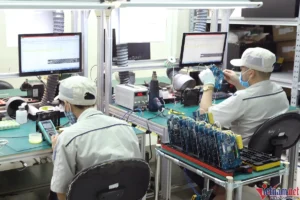
Vietnam’s semiconductor industry stands at a pivotal crossroads as it aims to become a global hub for chip design and manufacturing by 2030


At the Vietnam Global Innovation Forum 2025 held in Singapore, Dr. Le Quang Dam, CEO of Marvell Technology Vietnam, provided a comprehensive assessment of the nation’s rapidly evolving semiconductor ecosystem. The event, hosted at Google’s Asia-Pacific headquarters, served as a platform to discuss how Vietnam is positioning itself within the global value chain amid shifting geopolitical landscapes and the intensifying demand for advanced chip design.
A Two-Decade Evolution of Semiconductor Capability
The trajectory of Vietnam’s semiconductor industry has shifted dramatically over the past twenty years. In the early 2000s, the nation’s involvement was negligible, with a pool of only about 30 engineers specialized in integrated circuit (IC) design. However, the period between 2005 and 2010 marked a significant turning point as the government began prioritizing high-tech investment and global corporations started identifying Vietnam as a viable alternative for engineering talent.
According to Dr. Dam, the momentum for high-tech cooperation reached a fever pitch following the state visit of U.S. President Joe Biden to Vietnam in September 2023. This diplomatic milestone catalyzed a series of bilateral agreements and corporate investments that solidified the semiconductor industry as a cornerstone of Vietnam’s industrial strategy. As of early 2025, the landscape has matured into a robust ecosystem comprising approximately 60 companies dedicated to IC design.
Geographical Disparity and Talent Distribution
Despite this growth, Dr. Dam noted that the industry’s internal geography remains uneven. Currently, 85% of semiconductor enterprises are concentrated in Ho Chi Minh City, the nation’s commercial heart. While this concentration has fostered a "cluster effect," it also presents challenges regarding sustainable scaling.
Recent data indicates that secondary hubs are emerging, with Da Nang and Hanoi showing rapid progress in workforce development. The growth rate of technical talent in these regions has expanded from a modest 3% to 30% in recent years. This diversification is crucial, as the national goal to produce 50,000 semiconductor engineers by 2030 requires a multi-polar approach to talent cultivation. Out of this 50,000-person workforce, the government aims to allocate 15,000 specifically to the design sector, with the remaining 35,000 focusing on manufacturing and testing.

The 2030 Strategic Roadmap: A Quantitative Challenge
The ambition to scale from a few thousand engineers to a workforce of 50,000 in less than six years is an aggressive objective. Dr. Dam emphasized that this goal necessitates a significant investment in both infrastructure and educational reform. To achieve the 15,000-engineer target for the design sector, Vietnam must effectively graduate between 1,000 and 3,000 specialized design students annually.
Marvell Technology, which has been instrumental in building the domestic talent pipeline, currently estimates the industry’s growth rate at approximately 20% per year. However, reaching the 2030 milestone will require closer collaboration between the government, higher education institutions, and private industry leaders. This "triple-helix" model—integrating policy, academic curriculum, and corporate investment—is deemed essential for the long-term viability of the sector.
A "Once-in-a-Century" Opportunity
Dr. Dam characterized the current situation as a "once-in-a-century" opportunity for Vietnam. The global semiconductor industry is currently grappling with geopolitical tensions and supply chain vulnerabilities, which have forced global firms to adopt "China Plus One" strategies. Vietnam’s proactive stance, backed by policies like Resolution 57, which outlines clear directions for scientific and technological development, has made it a primary beneficiary of this transition.
The significance of Resolution 57 cannot be overstated. It provides the legal and administrative framework necessary to attract large-scale foreign direct investment (FDI). Furthermore, it empowers local universities to modernize their engineering programs to meet international standards, ensuring that graduates are "industry-ready" upon entering the workforce.
The Role of Human Capital and Diaspora Engagement
A critical component of Vietnam’s strategy is the repatriation and engagement of the global Vietnamese diaspora. Many of the country’s current industry leaders, including Dr. Dam, spent decades working in major technology hubs like Silicon Valley, gaining expertise at firms such as AMD, Broadcom, and Marvell.
"Vietnam is currently facing a very favorable set of circumstances. This opportunity does not arrive by chance; we must actively create it," Dr. Dam stated. He emphasized that the nation’s success depends on the ability to unite domestic engineers, overseas Vietnamese experts, and international partners to create localized value. By fostering an environment where innovation is prioritized, Vietnam hopes to move beyond being a mere assembly hub and become a center for original design and intellectual property development.

Analytical Outlook: Challenges and Necessary Reforms
While the outlook is optimistic, analysts suggest that several hurdles remain. The first is the quality of education. While the quantity of graduates is increasing, the industry requires specialized skills in advanced packaging, thermal management, and AI-driven circuit design—areas where current curricula may still be lagging.
Second, the infrastructure requirement for semiconductor manufacturing is immense. Building "fab" facilities (fabrication plants) requires stable, high-capacity power grids, ultra-pure water supplies, and sophisticated logistics networks. As Vietnam attracts more manufacturing-heavy projects, the burden on existing infrastructure will increase, necessitating rapid upgrades to industrial zones.
Finally, the competition for talent is global. Vietnam is not only competing with traditional hubs like Taiwan and South Korea but also with emerging neighbors like Malaysia and Thailand, which are also vying for the same pool of foreign investment. To remain competitive, Vietnam must focus on its "value proposition"—a combination of competitive labor costs, a stable business environment, and a commitment to R&D.
Conclusion
The evolution of Vietnam’s semiconductor industry from a nascent sector to a strategic national priority is a testament to the country’s resilience and ambition. With a clear roadmap toward 2030, a burgeoning workforce, and a supportive government, Vietnam is well-positioned to integrate itself into the heart of the global technology economy.
However, as Dr. Dam and other industry observers have pointed out, the success of this endeavor will hinge on execution. The next five years will be the "make-or-break" period for the country’s semiconductor aspirations. Whether Vietnam can sustain its current growth rate and transition from simple design tasks to complex, high-value-added chip manufacturing remains to be seen, but the foundations for such a transformation are undeniably being laid in 2025.
By leveraging its unique position in the global supply chain, fostering deeper ties with the diaspora, and maintaining a disciplined approach to education and infrastructure, Vietnam is carving out a role as an essential pillar of the future global digital architecture. The path forward is challenging, but for a nation that has consistently defied economic expectations over the past two decades, the goal of becoming a global semiconductor power is no longer a distant dream—it is an actionable, urgent, and achievable mission.
Related posts: