Coach Alexandre Polking Expresses Relief Over Minimal Call-Ups for Cong An Ha Noi FC Ahead of November FIFA Days

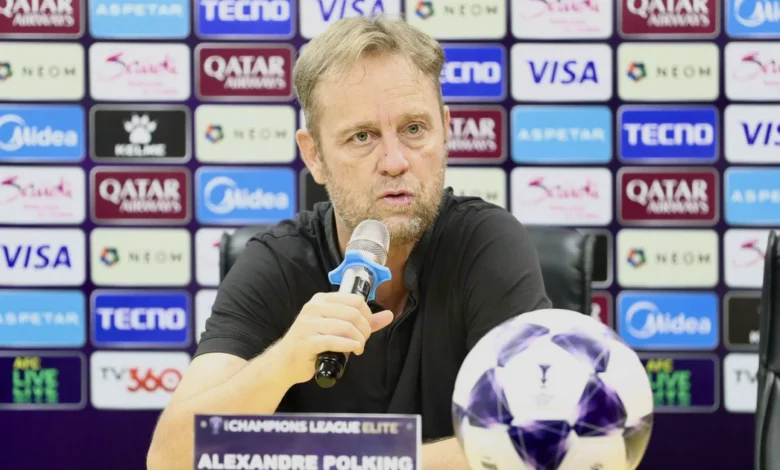
The international football break brings a unique dynamic to domestic leagues, balancing the aspirations of national teams with the physical welfare of club players. Following the official announcement of the Vietnam national football team squad by the Vietnam Football Federation (VFF) and head coach Kim Sang-sik for the upcoming November FIFA Days, Hanoi Police Football Club (Cong An Ha Noi FC) found themselves in an unusual position. With only a single player called up to represent the national side, the club’s head coach, Alexandre Polking, voiced a mixture of surprise and profound relief.
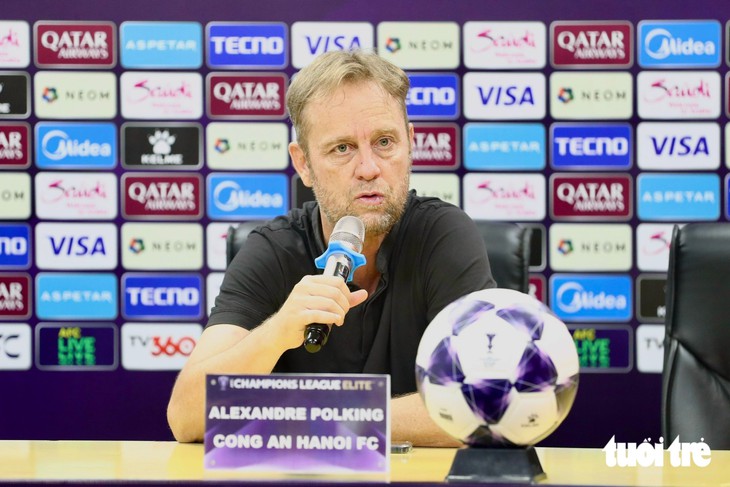
The announcement came against the backdrop of an intense fixture schedule for the capital city club, who had just secured a hard-fought 0-0 draw against Japanese side Kyoto Sanga at Hanoi’s Hang Day Stadium. Speaking in the post-match press conference, Coach Polking addressed the squad selection, highlighting the immense physical burden carried by his players over the preceding months and praising the collaborative communication between himself, national team boss Kim Sang-sik, and the governing body of Vietnamese football.
A Welcome Respite for Exhausted Stars
For a club of Cong An Ha Noi’s stature, supplying multiple players to the national team has traditionally been a given. However, the November FIFA international window presented a stark contrast. Out of the entire roster, only young forward Nguyen Dinh Bac earned a call-up to the Vietnam national squad. The absence of stalwarts such as goalkeeper Nguyen Filip, defender Adou Minh, central defender Bui Hoang Viet Anh, full-back Ho Ngoc Bao (referred to as Quang Vinh locally), influential midfielder Nguyen Quang Hai, and veteran anchor Pham Van Thanh Long left many observers surprised.
Yet, for Coach Polking, this unexpected reduction in national team representation was a blessing in disguise. The Brazilian-German tactician made a point of publicly thanking Coach Kim Sang-sik and the VFF for their considerate approach to squad selection during this specific international window.
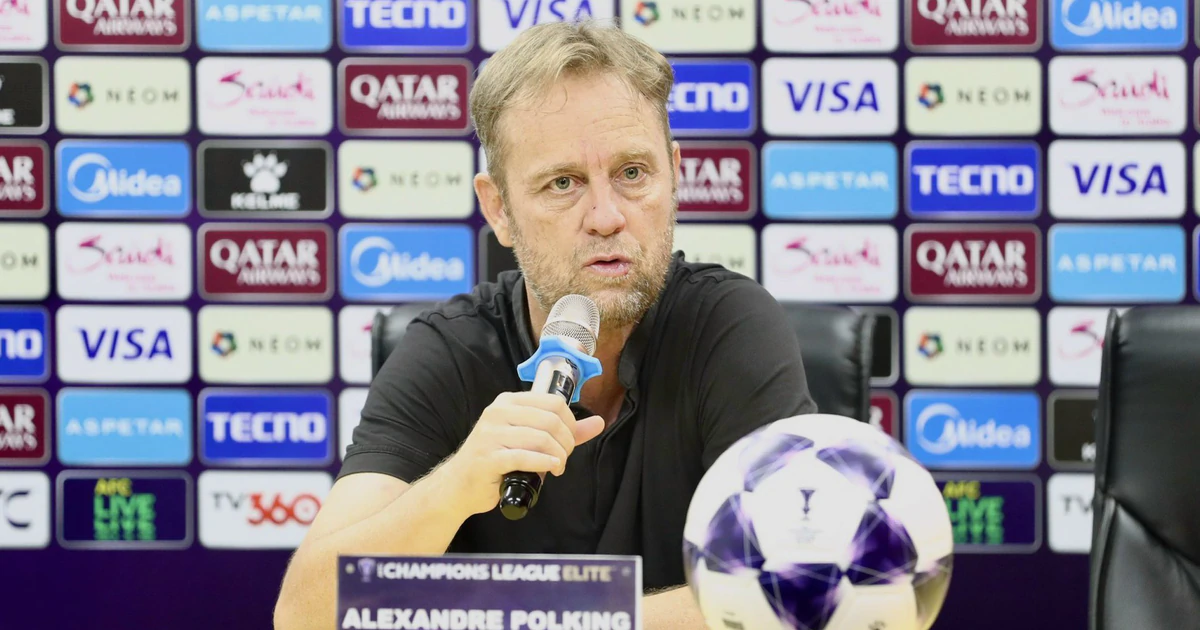
"I want to express my sincere gratitude to the head coach of the Vietnam national team, Mr. Kim Sang-sik, and the VFF, for having only one player from Cong An Ha Noi FC in this November gathering," Polking stated following the stalemate against Kyoto Sanga. "This decision provides a vital opportunity for my players to rest, recharge, and recover both physically and mentally."
Elaborating on the relentless physical demands placed upon his squad, Polking underscored the grueling nature of the domestic and continental calendars. Over the prior two months, the core national team players within the Cong An Ha Noi ranks had been subjected to a punishing sequence, featuring upwards of 23 competitive matches without a substantial break. In modern football, where fixture congestion is a frequent point of criticism from managers across the globe, the accumulated fatigue can severely impact player performance, increase the risk of soft-tissue injuries, and diminish the overall quality of the spectacle on the pitch.
"Over the past two months, our national team players at Cong An Ha Noi have played an excessive number of matches—pushing past 23 games in a very short span," Polking continued. "Having this period of rest will undoubtedly help them recover properly so that they can return to contribute even more effectively to the Vietnam national team in the future. Coach Kim and I communicate regularly, exchanging ideas and working out solutions to share the burden of player management."
Strategic Shift by Coach Kim Sang-sik
The decision to exempt the majority of Cong An Ha Noi’s core players from the November squad was not merely a favor to an individual club, but part of a broader strategic blueprint devised by head coach Kim Sang-sik. With the Asian Cup 2027 qualification cycle and tournament timelines undergoing structural adjustments—most notably being pushed back from January to December 2027—the South Korean tactician seized the window as an ideal laboratory for experimentation.
National team managers often utilize non-competitive or lesser-stakes FIFA Days to evaluate depth, test tactical variations, and integrate emerging talent into the system. By granting much-needed rest to battle-hardened veterans and established starters who have carried the weight of both club and country, Coach Kim has opened the door for several promising newcomers and fringe players to prove their mettle at the international level. This measured approach aims to prevent burnout, cultivate a deeper talent pool, and ensure that the national team remains fresh and competitive for upcoming official tournaments.

The Goalless Stalemate Against Kyoto Sanga
The timing of the national team announcement coincided with Cong An Ha Noi FC’s high-profile fixture against J1 League club Kyoto Sanga at Hang Day Stadium on November 3. The match served as a rigorous test for Polking’s men, pitting them against the tactical discipline and relentless physical conditioning characteristic of top-tier Japanese football.
Despite creating numerous clear-cut scoring opportunities throughout the 90 minutes, Cong An Ha Noi failed to capitalize on their dominance in the final third. The inability to convert chances proved costly, leaving the hosts to settle for a frustrating 0-0 draw that complicated their ambitions in the ongoing regional tournament structure.
Reflecting on the match, Polking could not hide his disappointment regarding the team’s profligacy in front of goal while simultaneously expressing pride in his players’ defensive resilience.
"If we had won this match, Cong An Ha Noi would have added three crucial points and significantly boosted our chances of advancing to the next round," Polking analyzed. "We certainly deserved a better result based on our overall performance. It is disappointing to let such valuable scoring opportunities slip away, but I must also commend my players for keeping a clean sheet, particularly our defensive line, against the relentless attacks mounted by Kyoto Sanga."
The defensive solidity displayed by the home side was a notable positive, especially given the pedigree of their opponents. Polking specifically lauded the performances of experienced campaigners and returning faces who stood firm under immense pressure.
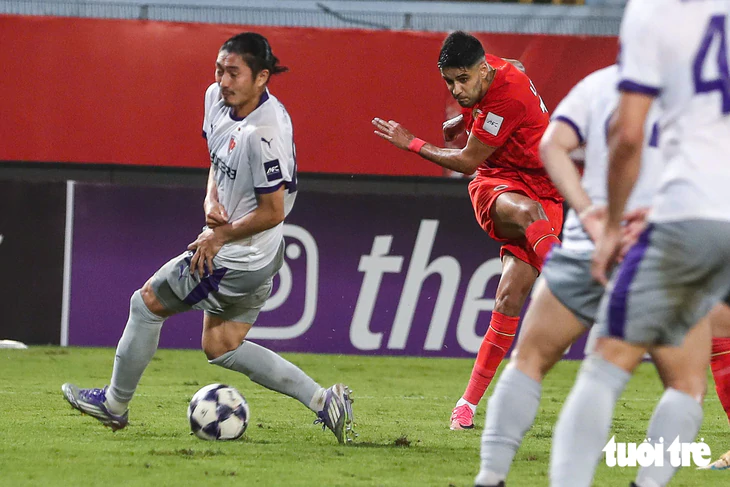
"Doan Van Hau, Nguyen Filip, and Adou Minh all delivered performances worthy of top-tier players," Polking remarked. "It is never easy to go up against a Japanese side and prevent them from scoring, especially because they maintain a high intensity and relentless physical tempo right up until the final whistle."
Kyoto Sanga’s Perspective: Battling the Hanoi Climate
While Cong An Ha Noi was left lamenting missed opportunities, the visiting Japanese side faced a different kind of adversary on the pitch: the notoriously humid and taxing weather conditions of the Vietnamese capital.
Kyoto Sanga head coach Ranko Popovic admitted after the match that his players struggled significantly to adapt to the environmental factors at Hang Day Stadium, which sapped their energy levels far quicker than anticipated.
"I honestly did not expect the weather here to be so harsh and demanding," Popovic confessed in his post-match remarks. "My players lost an incredible amount of fluid during the game; at one point, I thought some of them might need to go to the hospital for intravenous medical care. This type of weather feels identical to the peak of summer in Japan, but back in Japan, it is no longer summer."
The contrast in climatic conditions added an extra layer of complexity to the international club fixture, testing the adaptability and endurance of the visiting J1 League players and validating the cautious physical management advocated by managers like Polking.
Implications for the V.League and National Team Horizon
The alignment of interests between club managers and national team coaches is a rare luxury in professional football, where friction over player release and fatigue management is a constant narrative. Polking’s public appreciation of Kim Sang-sik’s squad selection underscores a maturing relationship within Vietnamese football governance, where the welfare of the athletes is increasingly recognized as a shared responsibility.
For Cong An Ha Noi FC, the luxury of having a near-complete squad remaining in training during the FIFA window provides Polking with an invaluable period to fine-tune tactical structures, integrate tactical adjustments, and work on finishing efficiency without the disruption of international travel. As the V.League 1 season intensifies, the physical advantage gained by players like Nguyen Filip, Bui Hoang Viet Anh, and Nguyen Quang Hai through adequate rest could prove decisive in the club’s pursuit of domestic and continental silverware.
Meanwhile, for the Vietnam national team, the November gathering offers a glimpse into the future. By balancing the need to preserve the health of overworked key contributors with the imperative of scouting new talent, the coaching staff is laying a sustainable foundation for the challenges ahead in the continental arena. As the dust settles on both the stalemate against Kyoto Sanga and the announcement of the national squad, the overarching narrative remains one of strategic relief—a rare moment where club and country find a harmonious path forward.