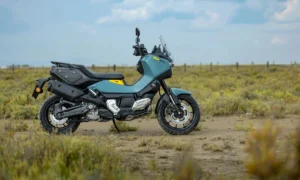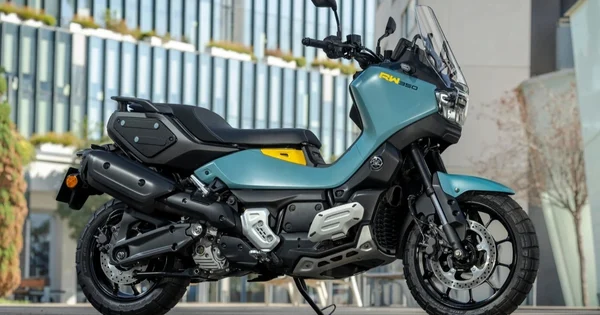
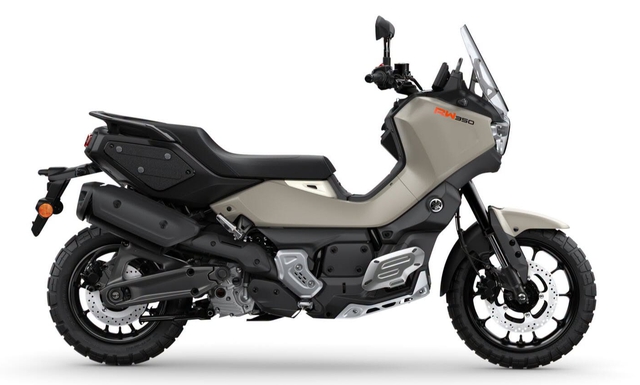
The global automotive landscape witnessed a significant shift at the EICMA 2026 motorcycle exhibition in Milan, Italy, as Yamaha officially pulled the covers off its latest contender in the middleweight adventure scooter segment: the Yamaha RW350. Designed to bridge the gap between urban commuting utility and off-road capability, this new model signals Yamaha’s strategic intent to capture a larger share of the burgeoning adventure-scooter category, a niche currently dominated by the formidable Honda ADV 350. By introducing the RW350, Yamaha is expanding its "RW" family, which already includes the more powerful RW700 and the long-distance touring-oriented RW700 Explore, positioning the 350cc variant as the most accessible entry point for riders seeking versatile performance.
A New Chapter in Adventure Mobility
The adventure scooter segment has evolved rapidly over the past five years. Initially perceived as a stylistic trend, these vehicles have proven their worth by offering the ease of a step-through transmission combined with the rugged suspension and ergonomic geometry of dual-sport motorcycles. Yamaha’s entry into this space with the RW350 is not merely a design exercise; it is an engineering response to changing consumer demographics. Riders are increasingly demanding machines that can handle the rigors of a congested city commute during the workweek while remaining capable of navigating gravel paths or unpaved fire roads on the weekend.
The development of the RW350 comes at a time when middleweight displacement engines are seeing a resurgence in popularity. Offering a balance between fuel efficiency and sufficient highway power, the 327cc engine architecture places the RW350 in the "sweet spot" for many international markets, particularly in Southeast Asia and Europe, where license restrictions often categorize motorcycles by displacement tiers.
Technical Specifications and Engineering Innovation
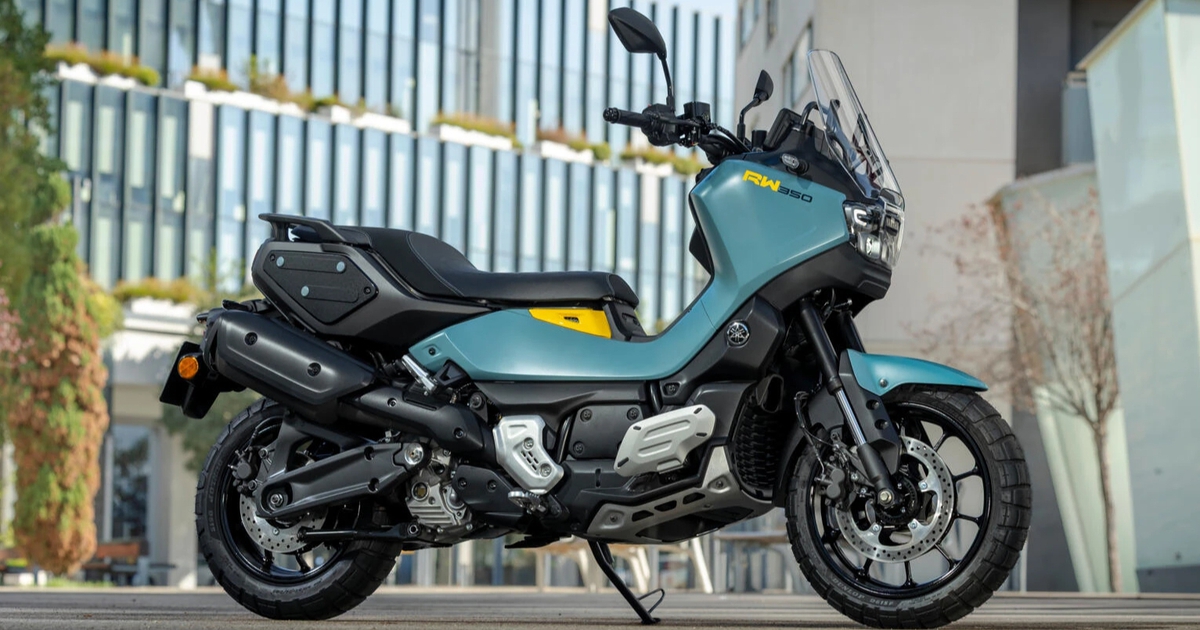
At the heart of the Yamaha RW350 lies a liquid-cooled, 327cc single-cylinder, 4-stroke engine featuring a SOHC 4-valve configuration and electronic fuel injection. The powertrain is tuned to deliver a maximum output of 29.2 horsepower at 7,000 rpm, with a peak torque of 31.5 Nm peaking at 5,750 rpm. While these numbers are competitive, the true innovation lies in the chassis architecture.
Yamaha has implemented what it calls "Dynamic Ride" technology. Unlike conventional scooters where the engine and transmission housing act as a part of the swingarm—contributing to unsprung weight and impacting handling—the RW350 utilizes a rigid-mount engine design. The engine is fixed directly to the mainframe, while the CVT transmission housing is allowed to oscillate with the rear wheel. This configuration significantly reduces the weight carried by the rear suspension, allowing for a more sophisticated, responsive damping setup. To further refine the ride, Yamaha has incorporated a 4-point counterbalancer system to mitigate the inherent vibrations of a single-cylinder engine, ensuring a smooth experience at higher cruising speeds.
Suspension and Off-Road Capability
The RW350 is clearly built with rougher terrain in mind. It features an inverted front fork with 37 mm stanchions and a generous 140 mm of travel. The rear suspension comprises a dual-shock setup with 105 mm of travel, providing 7 levels of preload adjustment to accommodate varying loads—a critical feature for riders carrying luggage or a passenger.
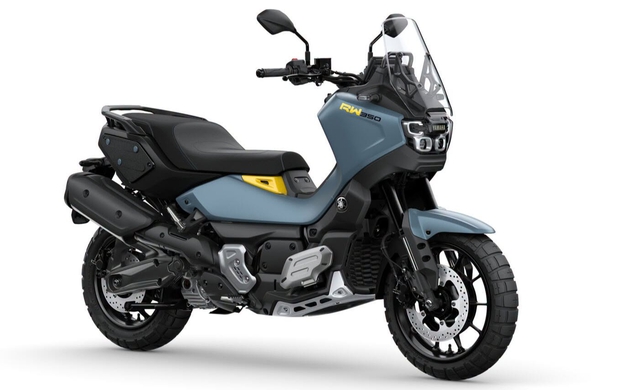
The rolling stock also sets the RW350 apart. It is equipped with a 16-inch front wheel and a 14-inch rear wheel, a combination that strikes a balance between stability over obstacles and maneuverability in tight corners. The bike comes factory-fitted with Dunlop D615 tires, which feature a block-pattern tread designed to provide grip on loose surfaces without compromising asphalt performance. With a ground clearance of 185 mm and a robust under-engine skid plate, the RW350 is well-protected against debris and terrain irregularities that would typically sideline a standard commuter scooter.
Technological Integration and Rider Aids
Modern mobility requires connectivity, and Yamaha has equipped the RW350 with its latest suite of rider aids under the "Yamaha Ride Control" (YRC) umbrella. The system offers three distinct riding modes—Street, Explore, and Eco—which modulate engine response and Traction Control (TCS) parameters.
The cockpit is dominated by a 5-inch TFT color display, which supports full smartphone connectivity through the MyRide app. A standout feature for long-distance enthusiasts is the integration of the Garmin StreetCross navigation system, providing turn-by-turn guidance directly on the dashboard. Further enhancing the user experience are features such as:
- A USB Type-C charging port for mobile devices.
- A smart-key ignition system for convenience.
- Electronic Cruise Control, a rarity in this displacement class, aimed at reducing fatigue on highway stretches.
- Emergency Stop Signal (ESS) that triggers hazard lights during sudden, hard braking.
Market Context and Strategic Implications
The introduction of the RW350 places Yamaha in direct competition with the Honda ADV 350. The latter has set the benchmark for the segment by successfully blending a robust design with the reliability of the Forza engine platform. By entering this space, Yamaha is signaling a pivot toward more lifestyle-oriented products.
From an industry analysis perspective, the RW350 represents a "bottom-up" approach to the adventure category. While competitors have often focused on high-displacement, high-cost adventure machines, Yamaha is betting that the 350cc segment offers the highest volume potential. The fuel efficiency, rated at approximately 3.5 liters per 100 kilometers, combined with a 13-liter fuel tank, gives the bike a theoretical range of over 350 kilometers, making it a viable candidate for regional touring.
Ergonomics and Practicality
Despite its rugged aesthetic, Yamaha has not ignored the practical requirements of daily use. The seat height is set at 810 mm, which is manageable for a wide range of riders. Under the seat, the storage compartment is designed to accommodate a full-face helmet, although the fit may vary depending on the helmet’s specific shape and shell size. The tall, adjustable windscreen provides significant wind protection, allowing for sustained high-speed riding with minimal buffeting.
Timeline and Future Availability
The unveiling at EICMA 2026 marks the first official public appearance of the model. While the company has confirmed three distinct color schemes, it has been notably conservative regarding pricing and specific market rollout dates. Analysts suggest that the model will prioritize markets where the ADV 350 currently sees high sales volume, particularly in Southeast Asia and Europe.
Industry experts speculate that regional pricing will be announced in the first quarter of 2027, with test units arriving in dealerships shortly thereafter. As the adventure-scooter category continues to mature, the rivalry between the RW350 and the ADV 350 will likely drive further innovation in chassis rigidity and electronic safety features.
Conclusion
The Yamaha RW350 is more than just a new model; it is a statement of intent. By leveraging its expertise in both off-road motorcycling and mass-market scooter production, Yamaha has created a vehicle that defies easy categorization. Whether it succeeds in unseating the established leaders will depend on pricing, local support, and the brand’s ability to market the "adventure" lifestyle effectively. However, with its sophisticated suspension, specialized riding modes, and high-tech cockpit, the RW350 is undeniably a formidable new player in the global scooter arena, promising to make the daily commute significantly more interesting for riders worldwide. As the industry moves toward 2027, all eyes will be on how this machine performs in real-world testing environments, setting the stage for what is expected to be a highly competitive battle for the mid-sized adventure segment.
Related posts: