Developing digital data infrastructure is the critical foundation for national digital transformation and the expansion of the digital economy


At the Vietnam-Asia DX Summit 2024, held on May 28 in Hanoi, Vietnam’s Minister of Information and Communications, Nguyen Manh Hung, delivered a keynote address that marked a significant shift in the nation’s technological philosophy. The Minister articulated that digital transformation is fundamentally an exercise in resource creation rather than resource depletion. For the first time in human development history, modern progress is defined by the generation of new resources—specifically digital data—rather than the consumption of finite raw materials.
This paradigm shift underscores the government’s recent efforts to prioritize data as a sovereign asset. By framing data as a renewable, generative force, the Ministry of Information and Communications (MIC) aims to propel Vietnam into a leading position among regional digital economies. This strategic pivot is not merely aspirational; it is backed by a structured national framework designed to integrate Vietnam into the global digital value chain.
The Strategic Imperative: The National Data Strategy to 2030
Recognizing that data is the lifeblood of the Fourth Industrial Revolution, the Vietnamese government, under the advisory of the Ministry of Information and Communications, formally approved the "National Data Strategy to 2030" earlier this year. This policy document serves as the roadmap for building the country’s digital backbone.
The core objective of this strategy is to transition Vietnam from a reactive user of digital tools to an active architect of its own digital ecosystem. The strategy emphasizes the creation of "data infrastructure," which includes the collection, storage, processing, and ethical sharing of information. By doing so, the government intends to create a transparent, efficient, and accessible environment that benefits both the public sector and private enterprises.

Tran Minh Tan, Deputy Director of the National Institute of Information and Communications Strategy, highlighted during the summit that the strategy is built on six key pillars. These pillars focus on shifting the focus toward data-centric operations. "The national data strategy isn’t just about storage; it is about mobility," Tan explained. "We are moving toward a model where the state acts as a catalyst, guiding the entire population to participate in the development and shared benefits of the national data pool."
A Chronology of Vietnam’s Digital Evolution
Vietnam’s journey toward a data-driven economy has accelerated significantly over the last decade. The timeline of this transformation reveals a clear trajectory:
- 2010–2015: Foundational Digitization. Initial efforts focused on building the basic ICT infrastructure and establishing e-government portals.
- 2016–2020: Connectivity and Cloud. The emphasis shifted toward mobile broadband expansion and the initial migration of government services to cloud-based systems.
- 2021–2023: The Data Integration Phase. The government prioritized the National Population Database and the integration of diverse ministerial databases into a unified national system.
- 2024: The Strategic Data Era. The formal approval of the National Data Strategy to 2030 marks the transition toward advanced data analytics, AI integration, and the commercialization of digital services.
This progression reflects a move from simple digitization (converting paper to digital) to digital transformation (changing how value is created through data).
Key Objectives for 2030
The National Data Strategy sets out three ambitious, yet achievable, goals:
- Public Data Development: To standardize, clean, and organize public data to improve government service delivery and administrative efficiency.
- Market Creation: To establish a transparent market for data, allowing for the secure and ethical exchange of information, thereby fostering innovation in the private sector.
- Economic Growth: To leverage data as a primary driver of the GDP, enabling businesses to make informed, data-driven decisions that increase productivity and competitive advantage in the global market.
A critical challenge remains the "sovereignty" and security of this data. The Ministry is currently working on frameworks to regulate the "flow" of data across borders, ensuring that while the information remains accessible for growth, it stays "anchored" within Vietnam’s digital borders to protect national interests.

The Role of the Private Sector: Beyond Scale
While the government provides the infrastructure, the actual utilization of data rests with the business community. During the summit’s breakout session, "Effective Enterprise Management Based on Data," experts discussed the common pitfalls faced by businesses.
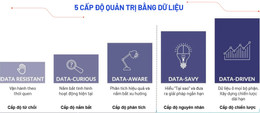
Nguyen Ngoc Le, Director of the Business Center at MISA, a leading Vietnamese tech firm, argued that companies should not wait until they reach a certain scale to invest in data architecture. "Many small and medium-sized enterprises (SMEs) in Vietnam are stuck in what we call ‘Level 2’ maturity," Le noted. "They capture data, but they do not know how to utilize it to drive strategy."
Le’s analysis suggests that the primary barriers for SMEs are fragmented applications and a lack of interoperability. In many firms, departments operate in silos—the accounting software does not speak to the CRM, and the HR platform exists independently. This leads to the "double entry" problem, where data must be manually input into multiple systems, increasing the likelihood of errors and preventing a holistic view of the company’s performance.
Overcoming Barriers: The MISA AMIS Ecosystem
To address these hurdles, MISA has developed the MISA AMIS platform, an ecosystem designed to unify management tasks on a single interface. By integrating finance, human resources, and customer management into one cloud-based environment, the platform aims to solve the problem of data fragmentation.
"We have seen the impact of data-driven management," said Le. "When SMEs connect their operational data, they unlock the ability to use Artificial Intelligence (AI) to forecast trends, optimize supply chains, and identify cost-saving opportunities."

The integration of AI tools, such as the MISA AVA virtual assistant, into business management software is a prime example of the next phase of digital transformation. AI can process massive datasets to provide real-time reports, allowing leaders to move from "intuition-based" decision-making to "evidence-based" strategy.
Broader Implications and Future Outlook
The transformation of Vietnam into a data-driven society carries profound implications for the labor market and economic policy. As the demand for data scientists, analysts, and AI specialists grows, the education sector must pivot to provide these skills. Furthermore, the government’s focus on data infrastructure is expected to attract greater foreign direct investment (FDI) from technology giants looking for markets with clear, reliable, and standardized data regulations.
However, the path forward is not without challenges. Critics and industry observers point to the need for robust cybersecurity measures. As the volume of national data grows, so does the risk of cyber threats. The Ministry of Information and Communications has acknowledged this, integrating cybersecurity into the very foundation of the national data strategy.
Moreover, the successful implementation of this strategy depends on the cooperation of all sectors. The government has urged local provinces and individual ministries to publish their own data catalogs and align their digital transformation budgets with the national strategy. This "top-down" guidance coupled with "bottom-up" execution is essential for the country to meet its 2030 targets.
Conclusion
The Vietnam-Asia DX Summit 2024 served as a clear signal that Vietnam is doubling down on its digital future. By framing data as the core resource of the modern era, the government is providing a cohesive vision for the nation. Whether it is a government agency optimizing public services or an SME leveraging cloud-based platforms to increase efficiency, the message is consistent: data is the new oil.
As the country moves forward, the success of this strategy will be measured not just by the amount of data collected, but by the value extracted from it. With the right infrastructure, a focus on interoperability, and a commitment to secure and ethical data practices, Vietnam is positioning itself to be a formidable player in the global digital economy. The era of the data-driven nation has begun, and the foundations laid today will likely determine the country’s economic standing for decades to come.