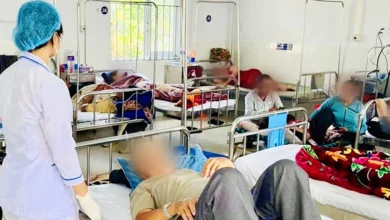
Poor Boy with Cancer Faces Narrowing Treatment Window Due to Financial Exhaustion

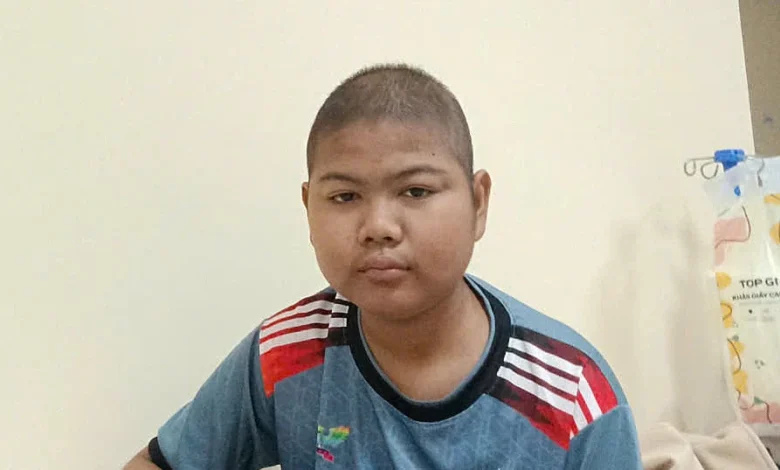
The medical prognosis for 13-year-old Chamaléa Khang is a harrowing reflection of the intersection between catastrophic illness and systemic poverty. Diagnosed with a severe form of cancer that has already led to respiratory failure, Khang’s path to recovery is being obstructed not just by the biological aggression of his tumor, but by the absolute depletion of his family’s financial resources. As the young boy from the Công Hải commune in Ninh Thuận Province undergoes intensive treatment at Hue Central Hospital, his story highlights the precarious nature of healthcare access for Vietnam’s rural poor and the devastating "poverty trap" triggered by chronic disease.
A Sudden Decline: From Silent Pain to Respiratory Crisis
The clinical history of Chamaléa Khang, born in 2012, began with subtle warning signs that were tragically overlooked due to the family’s economic circumstances. Starting in late 2023, Khang began experiencing persistent, dull chest pains. However, acutely aware of his mother’s daily struggle to provide for his three younger siblings, the boy chose to suffer in silence, hoping the discomfort would dissipate. This period of stoic endurance allowed the malignancy to progress unchecked for several weeks.
By the time the symptoms became impossible to ignore, the disease had reached a critical threshold. The pain evolved into severe chest constriction and acute respiratory distress. The physical manifestation of the tumor was so significant that Khang lost the ability to breathe while lying down. For weeks, the 13-year-old was forced to remain in a seated position even during sleep, a condition known as orthopnea, which is often indicative of a large mass pressing against the airway or heart.
The severity of his condition prompted an emergency intervention. Initially examined at the Ninh Thuận Provincial Hospital, the medical staff quickly recognized the complexity of his case and authorized an immediate transfer to Children’s Hospital 2 in Ho Chi Minh City, a leading facility for pediatric care.
The Medical Diagnosis: Hodgkin Lymphoma and Mediastinal Tumors
Upon arrival at Children’s Hospital 2, Khang was admitted to the Emergency Department in a state of severe respiratory failure. He was immediately placed on Nasal Continuous Positive Airway Pressure (NCPAP) to stabilize his breathing. Following a battery of tests, including imaging and biopsies, and a surgery that lasted several hours followed by nearly a month in the Intensive Care Unit (ICU), oncologists delivered a definitive diagnosis: Hodgkin lymphoma, specifically manifesting as a malignant mediastinal tumor.
Hodgkin lymphoma is a type of cancer that originates in the lymphatic system, which is part of the body’s immune system. In Khang’s case, the tumor is located in the mediastinum—the central compartment of the chest that holds the heart, esophagus, and trachea. While Hodgkin lymphoma is considered one of the most treatable forms of pediatric cancer in modern medicine, with survival rates exceeding 90% in developed healthcare systems, the outlook in resource-limited settings is starkly different. Without consistent and high-quality treatment, the mortality rate for this condition can soar to 85%.
The prescribed treatment protocol for Khang involves a grueling six-month regimen of combined chemotherapy and radiotherapy. To facilitate the specialized radiation sessions required for his specific tumor type, Khang was transferred again on June 30, this time to Hue Central Hospital, nearly 700 kilometers away from his home province.
A Life Shaped by Early Labor and Sacrifice
To understand the weight of Khang’s current struggle, one must look at the life he led before his diagnosis. Khang is the eldest of four children in a household headed by a single mother, Chamaléa Thị Mẫn. The family is officially classified by the local government of Công Hải commune as a "near-poor" household (hộ cận nghèo), a designation for those living just above the official poverty line but remains highly vulnerable to economic shocks.
Ms. Mẫn’s primary source of income is manual labor—farming and woodcutting. On a good month, her earnings hover around 5 million VND (approximately 200 USD), an amount that must support her four children and an elderly, ailing mother. Recognizing the immense pressure on his mother, Khang made the heart-wrenching decision to drop out of school after finishing the fifth grade in 2023.
At just 12 years old, Khang moved to Ho Chi Minh City to work in a garment factory. His mother had initially pleaded with him to continue his education, but the boy was resolute. He told her that his education was a luxury the family could not afford while his younger siblings were hungry. At the factory, Khang earned a monthly salary of 2.7 million VND (approx. 110 USD). He kept almost nothing for himself, sending the entirety of his wages back to his mother to pay for food and basic necessities for his brothers and sisters. This cycle of sacrifice was cut short only when the cancer rendered him physically unable to work.
The Financial Logistics of Survival
The transition from a low-income worker to a cancer patient has plunged the family into an inescapable debt spiral. While Khang possesses a health insurance card for near-poor households, which covers a significant portion of hospital fees, it does not account for the "co-payment" requirements, specialized medications outside the basic list, or the immense "hidden costs" of cancer treatment.
Medical experts estimate that the out-of-pocket expenses for Khang’s six-month treatment plan will reach at least 30 million VND (approx. 1,200 USD). For a family whose total monthly income has now vanished because the mother must act as a full-time caregiver, this sum is an insurmountable mountain.
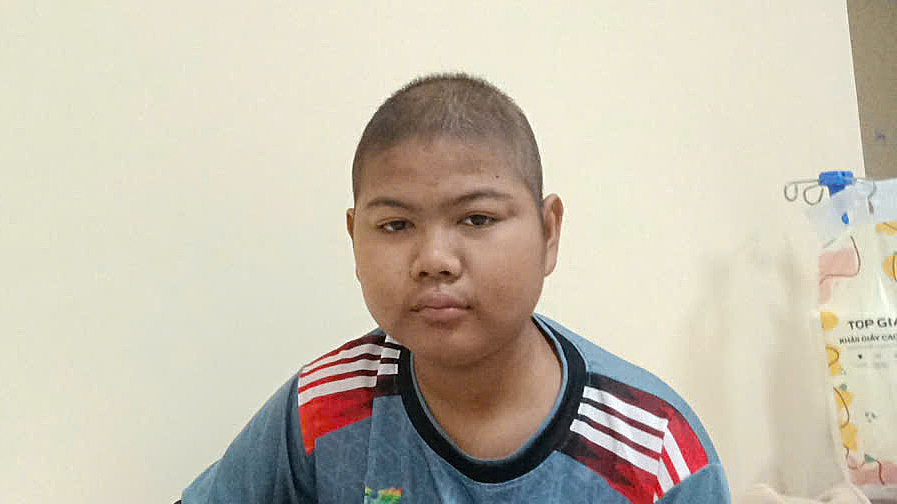
The daily costs of living in Hue, far from their support network, further exacerbate the crisis. Between specialized milk for Khang, meals, and basic hygiene supplies, Ms. Mẫn spends at least 200,000 VND per day—a figure that far exceeds any savings she ever held. When the hospital recently required a 2-million-VND deposit for the first round of 24 radiation sessions, Ms. Mẫn could only manage to scrape together 500,000 VND after pleading with acquaintances.
Chronology of Treatment and Current Status
The timeline of Khang’s battle illustrates the rapid escalation of the disease and the logistical hurdles of the Vietnamese healthcare system:
- November 2023 – January 2024: Onset of dull chest pain; Khang continues working to support his family.
- February 2024: Symptoms worsen; Khang develops severe orthopnea (inability to breathe while lying down).
- March 2024: Emergency admission to Ninh Thuận Provincial Hospital; immediate transfer to Children’s Hospital 2, HCMC.
- April – May 2024: ICU stay, surgery, and stabilization on NCPAP; diagnosis of Hodgkin lymphoma confirmed.
- June 30, 2024: Transfer to Hue Central Hospital to begin specialized radiotherapy.
- July 2024: Khang completes the first 8 of 24 planned radiation sessions.
The physical toll of the treatment is visible. The radiation and chemotherapy have left Khang’s body in a state of constant inflammation. He suffers from deep, painful mouth sores (mucositis), a common side effect that makes eating nearly impossible. He is currently in a state of physical exhaustion, losing significant weight as the treatment attacks both the tumor and his healthy cells.
The Role of Community and Social Support
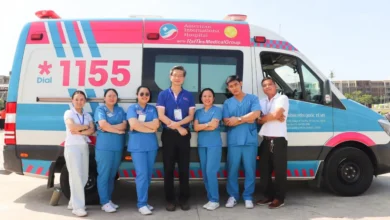
In the absence of a robust social safety net for catastrophic illness, Khang’s survival has relied on the haphazard but vital kindness of strangers. His journey to Ho Chi Minh City was made possible by his former employer at the garment factory, who paid for his bus ticket. His transfer from Ninh Thuận to HCMC was facilitated by a "0 VND bus"—a charity ambulance service—and a 2-million-VND donation from local benefactors.
At Hue Central Hospital, the mother and son rely on charity meals provided by the hospital’s social work department and local religious groups. However, these measures only address the immediate pangs of hunger; they do not solve the long-term need for specialized medical funding.
Furthermore, the family’s situation reached a breaking point recently when Ms. Mẫn contracted chickenpox while at the hospital. She was forced into isolation to prevent an outbreak in the oncology ward, leaving Khang alone in the recovery room. During this period, other parents of children with cancer in the same ward stepped in to care for Khang, illustrating the communal bond formed among those facing similar tragedies.
Broader Implications: Pediatric Cancer and Poverty in Vietnam
Khang’s case is emblematic of a broader public health challenge in Vietnam. According to data from the World Health Organization and national oncology reports, Vietnam sees approximately 2,500 new cases of pediatric cancer annually. While the country has made significant strides in expanding health insurance coverage, the "financial toxicity" of cancer remains a leading cause of treatment abandonment.
Families like Khang’s often face a "double burden." They lose their primary and secondary sources of income just as their expenses skyrocket. For the rural poor, the centralization of advanced oncology services in major cities like Hanoi, HCMC, and Hue creates an additional barrier of travel and lodging costs.
The "Sun of Hope" (Mặt trời Hy vọng) program, a collaborative initiative by the Hope Foundation and various partners, has been instrumental in providing financial cushions for such families. However, the demand for support far outstrips available resources. The survival of children like Khang depends heavily on whether the community can bridge the gap between what the state provides and what the treatment actually costs.
A Call for Collective Action
As of mid-July 2024, Chamaléa Khang has 16 radiation sessions remaining in his first phase of treatment. His doctors remain cautiously optimistic about his recovery potential, provided the treatment is not interrupted. However, his mother, Ms. Mẫn, describes their current situation as "reaching a dead end." With three children and an elderly mother waiting in Ninh Thuận—subsisting on little more than rice and fish sauce—the pressure to return home and abandon the treatment is a constant, haunting shadow.
Khang’s desire to live is intertwined with his desire to help his family. Even in his weakened state, he expresses a wish to return to work to support his siblings. The tragedy of his situation lies in the fact that his life, so full of potential and selflessness, is currently valued at the price of a few dozen million VND—a sum that is trivial to some but an impossible fortune to others.
The international and local communities are being called upon to support the "Sun of Hope" program to ensure that no child in Vietnam is forced to forfeit their life because of the price of their medicine. For Chamaléa Khang, the window of opportunity is still open, but it is closing with every passing day that his family remains in financial ruin.