New Astrobiological Study Challenges Decades-Old Theories by Suggesting Extraterrestrial Life May Be Common Across the Universe

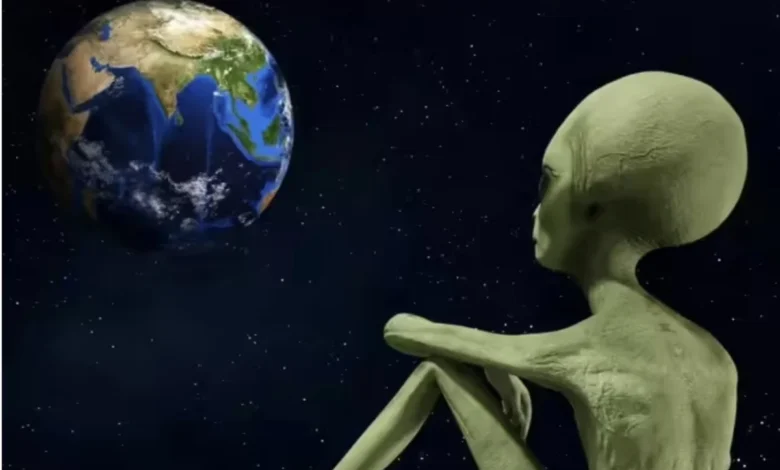
The quest to determine whether humanity is alone in the cosmos has driven scientific inquiry, philosophy, and imagination for centuries. For generations, the prevailing consensus among astrobiologists and astrophysicists has been anchored in the idea that intelligent life is a cosmic anomaly—a rare stroke of extreme good fortune resulting from an improbable sequence of biochemical and evolutionary events. However, a groundbreaking interdisciplinary study published in Science Advances by a collaborative team of researchers from the United States and Germany has fundamentally challenged this long-standing paradigm. By introducing a novel planetary evolution model, the researchers argue that complex and intelligent life may not only be possible on other worlds, but could actually be a common occurrence throughout the universe.
Challenging the Earth-Centric "Hard Steps" Hypothesis
Since 1983, a dominant school of thought in astrobiology has relied on the "hard steps" model of evolution. Rooted in theoretical physics and evolutionary biology, this framework suggests that while a planet might possess the basic ingredients for life—such as a stable orbit around a host star and liquid water—the transition from simple single-celled organisms to intelligent civilizations requires navigating a series of exceptionally difficult evolutionary hurdles.
Proponents of the hard steps model have traditionally pointed to the timeline of Earth’s own history to justify this view. On our planet, billions of years passed between the initial emergence of microbial life and the development of complex, technologically capable multicellular organisms. When compared to the expected lifespan of our Sun, this narrow window suggested that the emergence of human-like intelligence was an overwhelmingly unlikely event. Consequently, the hard steps model served as a primary mathematical explanation for why the cosmos appears conspicuously silent, leading to the unsettling conclusion that intelligent civilizations are exceedingly rare.
A Paradigm Shift in Astrobiology
Seeking to reevaluate these foundational assumptions, researchers from Ludwig Maximilian University of Munich in Germany, alongside colleagues from Pennsylvania State University and the University of Rochester in the United States, developed a sophisticated interdisciplinary model. Their research merges principles from astrobiology, astrophysics, earth science, and biochemistry to construct a comprehensive framework examining how life emerges and evolves on rocky planets.
Published in February 2025, the study pivots away from using the lifespan of a host star as the primary metric for calculating the probability of intelligent life. Instead, the international research team posits that the appearance of complex life forms and intelligence is a natural consequence of shifting environmental conditions on a planetary scale. Rather than relying on a miraculous string of unrepeatable coincidences, the model demonstrates that evolutionary milestones are closely tied to the dynamic interactions between developing life and its changing planetary environment.
Decoding Planetary Drivers of Evolution
The new research emphasizes that critical environmental factors—such as global sea-surface temperatures, oceanic salinity levels, and atmospheric oxygen concentrations—act as primary catalysts for evolutionary advancement. According to the study, specific historical epochs on Earth experienced combinations of environmental variables that effectively opened "windows of opportunity" for complex life to flourish and diversify.
Dr. Jennifer Macalady, a geoscientist at Pennsylvania State University and co-author of the study, noted that this alternative modeling suggests the evolution of complex life may depend far less on pure chance than previously assumed. Instead, it highlights a predictable feedback loop between biological organisms and their planetary habitats, opening promising new avenues for understanding humanity’s place in the universe.
Dr. Dan Mills, a researcher at Ludwig Maximilian University of Munich and lead author of the study, expanded on this perspective, explaining that humanity may have arrived precisely on schedule relative to the developmental trajectory of our planet. Under this framework, other exoplanets could reach similar environmental and biological thresholds faster or slower than Earth, depending on their unique geological and atmospheric composition.
Implications for the Search for Biosignatures
To test and validate this new theoretical model, the international research team has outlined several empirical approaches. Foremost among these is the ongoing search for biosignatures in the atmospheres of extrasolar planets located beyond our solar system. The detection of atmospheric gases such as oxygen serves as a critical indicator for the presence of biological activity, given that large-scale oxygen production on Earth was driven by the proliferation of photosynthetic microorganisms roughly 2.5 billion years ago.
Furthermore, scientists are working to subject various microbial and multicellular organisms to simulated extreme environments—characterized by fluctuating oxygen levels and severe temperatures—to measure their adaptability. Initial observations suggest that biological resilience may be significantly higher than previously modeled, indicating that the so-called "hard steps" of evolution are far more navigable than traditional theories dictate. If confirmed, this research provides strong theoretical backing for the hypothesis that life, and potentially intelligent civilization, has emerged repeatedly across the vast expanse of the cosmos.
Historical Context and the Search for Extraterrestrial Intelligence
The publication of this study arrives amid a broader, decades-long scientific movement to uncover definitive evidence of extraterrestrial life. Over the years, prominent astrophysicists and space agencies have systematically expanded the parameters of the search, shifting from passive radio astronomy to active exploration of planetary bodies within our own solar system and beyond.
In the realm of theoretical physics, scholars such as Harvard University astronomer Avi Loeb have continually pushed the boundaries of traditional investigation, frequently analyzing anomalous interstellar objects and conducting deep-ocean expeditions to search for microscopic technological or biological remnants. Similarly, theoretical physicist Michio Kaku has publicly expressed optimism regarding humanity’s timeline for interstellar contact, projecting that advancements in quantum computing and space telescope technology could bring humankind into communication with extraterrestrial intelligence by the end of the current century.
Concurrently, reports and statements from former NASA astronauts have historically fueled public discourse, with several spacefarers detailing their convictions regarding the ubiquity of biological systems throughout the galaxy. While these perspectives have often existed on the periphery of rigorous academic consensus, the introduction of peer-reviewed models like the one published in Science Advances bridges the gap between speculative astrobiology and hard empirical science.
Broader Impacts on Science and Philosophy
The implications of this interdisciplinary study extend far beyond the confines of theoretical astrophysics. If planetary evolution reliably produces complex and intelligent life when given stable conditions and appropriate chemical compositions, the Drake Equation—a probabilistic argument used to estimate the number of active, communicative civilizations in the Milky Way—may require significant upward revision.
Such a shift would fundamentally alter humanity’s philosophical and scientific self-understanding. Rather than viewing ourselves as a lonely, accidental byproduct of cosmic thermodynamics, humanity would be contextualized as part of a widespread biological continuum. As the scientific community continues to deploy advanced instrumentation, such as the James Webb Space Telescope and next-generation ground-based observatories, the theoretical models established by the Munich, Penn State, and Rochester research teams will serve as a crucial roadmap for decoding the signals of life hidden among the stars.