Tensions Escalate as Russian Drone Strikes Target Ukrainian Infrastructure Across Kyiv, Zaporizhzhia, and Odessa Regions


The ongoing conflict between Russia and Ukraine has seen a significant and destructive escalation following a coordinated wave of nighttime aerial assaults launched by Russian forces. According to reports from regional authorities and international news agencies, the strikes—which predominantly utilized uncrewed aerial vehicles (UAVs)—targeted critical civilian infrastructure, military logistical hubs, and energy-related facilities across multiple Ukrainian regions, including the capital city of Kyiv, Zaporizhzhia, and the southern port province of Odessa.
Ukrainian President Volodymyr Zelensky confirmed the extent of the human and material toll in a formal statement published on his official Telegram channel. The overnight barrage resulted in multiple casualties and exacerbated the humanitarian strain on urban centers that are already grappling with extensive infrastructure deficits as winter approaches. This latest escalation underscores the persistent vulnerability of Ukraine’s interior regions to long-range aerial bombardment, despite ongoing efforts by Western allies to reinforce the country’s integrated air defense systems.
Overview of Overnight Strikes and Casualties
The wave of drone attacks, initiated late on September 26, struck densely populated areas and strategic nodes simultaneously. In the Zaporizhzhia region, situated in Ukraine’s southeast, local emergency services reported that three civilians lost their lives as a direct result of explosive impacts near residential and logistical zones. Simultaneously, air defense batteries operating in and around Kyiv engaged multiple incoming threats, but debris and direct hits resulted in civilian casualties and significant property damage.
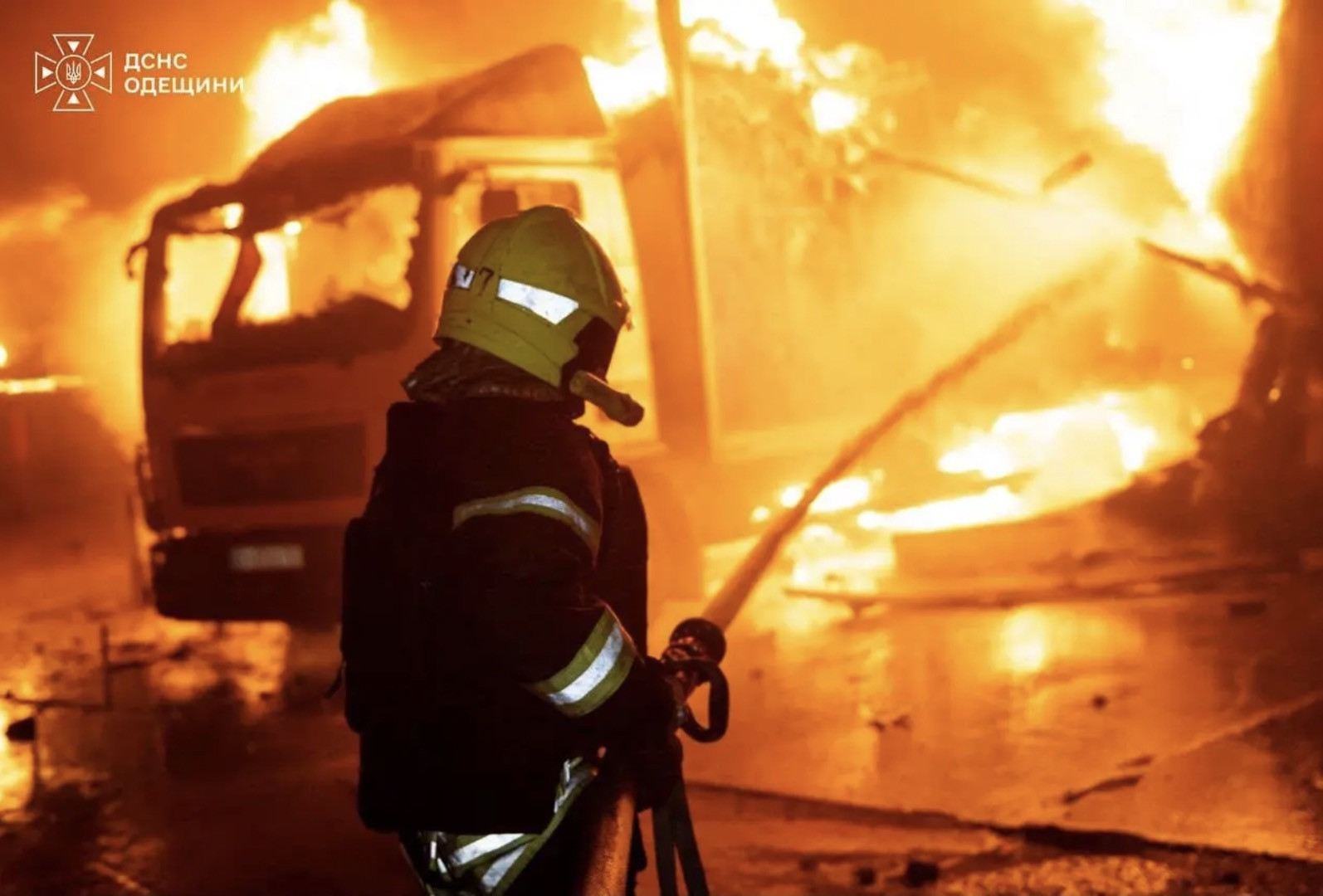
President Zelensky specifically highlighted that a critical data center facility located within the capital was targeted twice within a matter of hours during the morning sequence of raids. The initial strike on this technological hub caused immediate civilian casualties, wounding three individuals, notably including two children. Emergency medical teams and firefighters were swiftly deployed to mitigate secondary fires and rescue trapped personnel, though the facility sustained heavy structural damage that disrupted regional communications and digital services.
In addition to Kyiv and Zaporizhzhia, the southern province of Odessa—a vital economic and maritime gateway for Ukrainian grain and international trade—faced intense aerial bombardment. Local officials reported numerous blasts echoing across municipal districts, followed by massive fires that required prolonged efforts by local emergency responders to bring under control.
Military Objectives and Ministry of Defense Reports
Providing a contrasting perspective on the strategic utility of the raids, the Russian Ministry of Defense issued a detailed briefing claiming that the coordinated strikes successfully achieved their predetermined operational objectives. Moscow asserted that its armed forces targeted rear logistics installations, transportation arteries, communication nodes, and vessels allegedly utilized to service the military interests of the Ukrainian armed forces.
According to the Russian military command, the list of neutralized targets included a major data center belonging to the Vodafone telecommunications network in Kyiv, a key logistical hub within the broader Kyiv region, and two large UAV storage depots located in the southern Mykolaiv province. Furthermore, Russian forces claimed to have struck military administrative centers, a naval command post, coastal defense installations, and munitions storehouses situated in the city of Kiliia within the Odessa region.
Moscow also maintained that its strikes successfully damaged a commercial gas-carrier vessel at the port of Odessa, which Russian officials alleged was being exploited for the covert maritime transport of military hardware and dual-use goods. These assertions highlight a persistent point of contention between the warring nations, with Moscow frequently characterizing commercial and digital infrastructure as legitimate dual-use military targets, while Kyiv and its international partners condemn these actions as deliberate violations of international humanitarian law.
Concurrently, the Russian Ministry of Defense reported a tactical ground advancement in northeastern Ukraine. The ministry stated that elements of Russia’s North Group of Forces successfully seized operational control of the settlement of Khrypuny, located within the contested Kharkiv region, further testing the defensive lines of Ukrainian ground forces in that sector.
International Diplomatic and Defense Mobilization
In the wake of the devastating strikes, President Zelensky reiterated his urgent appeal to international partners for enhanced military assistance, expedited delivery of air defense assets, and stricter economic penalties against Moscow. In his address, Zelensky emphasized that Ukraine is actively consulting with representatives from European nations, the United States, Canada, Japan, Australia, and other global allies to reinforce its defensive capabilities and counter Russian aerial dominance.
The Ukrainian leadership continues to advocate for a comprehensive strategy aimed at curtailing Russian state revenues derived from energy exports and maritime commerce. Kyiv maintains that only through decisive economic strangulation and the widespread deployment of advanced anti-access and area-denial (A2/AD) weapon systems can the conflict be brought to a sustainable resolution. However, Moscow remains steadfastly opposed to any temporary ceasefires or unconditional pauses in military operations that do not align with its core strategic objectives.

Broader Geopolitical and Technological Developments
The latest battlefield developments unfold against a backdrop of wider geopolitical realignments and technological innovations reshaping modern warfare. Recently, Ukraine’s former Minister of Defense, Mykhailo Fedorov, made headlines by unveiling an ambitious defense technology initiative colloquially dubbed the "robot army." This program aims to accelerate the integration of uncrewed ground vehicles (UGVs) and autonomous combat systems to minimize human exposure on the front lines, reflecting the accelerating mechanization of the conflict.
Simultaneously, international diplomatic channels are navigating complex new frontiers of security. Notably, the United States and China recently agreed to establish a direct communication hotline dedicated to managing artificial intelligence-related incidents. This landmark diplomatic framework is designed to mitigate algorithmic miscalculations and reduce systemic friction between the world’s leading technological superpowers.
However, economic pressures remain a primary tool of statecraft. The U.S. Department of Treasury has reportedly issued strict warnings to senior officials across various Middle Eastern and European nations, setting firm compliance ultimatums regarding ongoing trade with Iran. Under these measures, nations continuing commercial exchanges with Tehran face the distinct prospect of being entirely excluded from the U.S. financial market—a policy shift that indirectly impacts broader global supply chains and geopolitical alignments.
Strategic Implications and Outlook
The continuation of high-intensity drone strikes against urban and technological infrastructure in Ukraine signals that neither side is prepared to scale back operations in the near term. As winter approaches, the vulnerability of Ukraine’s power grid, data networks, and transport links remains a central vulnerability.

The interplay between domestic technological adaptation—such as Ukraine’s push toward automated combat systems—and traditional attritional warfare suggests that the conflict will remain heavily reliant on industrial output, electronic warfare capabilities, and sustained international aid. While diplomatic initiatives and bilateral talks continue across various global forums, the immediate reality on the ground in Kyiv, Odessa, and Zaporizhzhia remains defined by air raid sirens, emergency reconstruction efforts, and an urgent quest for more robust defensive shields.
Related posts: