When Routine Life Collides with Silent Disease: How Early Screening Saved a Chef’s Life and Preserved His Family’s Future


At 51 years old, Mr. An, a professional chef residing in the northern province of Bắc Ninh, believed he had charted a predictable and secure course for the remainder of his life. Alongside his wife, an accountant whose meticulous budgeting matched his own pragmatic outlook on life, An had spent decades cultivating financial stability. Every utility bill, grocery receipt, and tuition installment had been carefully logged, reviewed, and minimized to ensure that savings accumulated steadily toward a shared, long-term horizon. For years, the centerpiece of this meticulous family planning was their only daughter’s ambition to study abroad in Japan—a goal that transcended simple academic aspiration, serving instead as the ultimate symbol of success for a working-class household that valued discipline, sacrifice, and forward-thinking.
Yet, despite their rigorous financial safety nets, prudent budgeting, and provisions for household expenses and rental costs, the couple had never truly accounted for the sudden, arbitrary intervention of a silent physical illness. In a health landscape where lethal pathologies often develop without triggering immediate warning signals, An’s life was about to intersect with a diagnostic reality that neither spreadsheets nor cautious savings accounts could anticipate.
The Chronology of an Unexpected Diagnosis
The warning signs began insidiously, disguised as the ordinary discomforts of seasonal shifts. For approximately two months, An experienced a persistent, dry cough. Believing it to be nothing more than a common respiratory reaction to the changing weather in northern Vietnam, he relied on over-the-counter cough syrups and lozenges, dismissing the prolonged irritation as a minor inconvenience associated with his grueling work environment in professional kitchens. It was only when weeks passed without the slightest improvement that the persistent cough compelled him to seek professional medical evaluation.
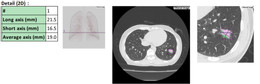
When the diagnostic imaging results were finally handed to him, the outcome shattered his worldview entirely. An was diagnosed with stage I lung cancer, harboring a localized malignant tumor measuring nearly two centimeters in diameter.

“I experienced a cascade of profoundly dark thoughts upon hearing the diagnosis,” An recalled, reflecting on the psychological shockwaves that rippled through his consciousness. “At one point, my mind wandered to visions of my daughter’s future graduation day, and the agonizing realization that I might not physically be there to stand in the crowd, sharing in her joy. The emotional weight was far heavier than any physical symptom.”
The immediate aftermath of the medical revelation plunged the household into turmoil. Both An and his wife were forced to step away from their respective careers, causing their household income to drop precipitously to zero. The immediate priority shifted entirely toward home-based care and recovery, a transition that carried immediate collateral consequences for their long-term plans. Their daughter was forced to cancel her impending departure schedule for Japan, effectively forfeiting a semester of orientation programs designed to welcome incoming international students.
Swift Medical Intervention and the Power of Early Detection
Despite the initial psychological devastation and the abrupt disruption of domestic life, the diagnosis carried one critical mitigating factor: the tumor was identified at stage 1, entirely localized within the lung parenchyma and completely devoid of distant metastasis. This favorable staging vastly elevated his clinical prognosis and opened the door for a minimally invasive therapeutic approach.
Roughly one week following his initial diagnostic consultation, An underwent video-assisted thoracoscopic surgery (VATS) to excise the malignant lesion. The procedure was swift, clean, and remarkably uncomplicated. An was discharged from the hospital after a brief five-day postoperative recovery period. Because the pathology was captured at its inception, he required neither adjuvant chemotherapy nor subsequent radiation therapy—interventions that typically inflict severe collateral damage on a patient’s physical stamina and emotional well-being. Furthermore, the total cost of the surgical intervention and hospitalization fell comfortably within the family’s pre-allocated emergency reserves, sparing them the burden of external debt or loans.
Reflecting on the trajectory of his recovery, An acknowledged the razor-thin margin between catastrophe and recovery. “I shudder to think what would have happened if the disease had remained undetected and progressed to an advanced stage before diagnosis,” he noted. “The consequences would not have been confined to my physical deterioration. Our entire family dynamic, our financial equilibrium, and our psychological resilience would have collapsed entirely. It was only through this ordeal that I fully grasped a fundamental truth: taking proactive charge of one’s health is, in itself, the ultimate act of protecting one’s family and securing their future.”
The Broader Clinical Perspective: The Rise of Silent Malignancies
An’s clinical trajectory is far from an isolated anomaly in modern oncology. According to Associate Professor, Dr. Nguyễn Hải Anh, Director of the Respiratory Center at Bạch Mai Hospital and Medical Director of NURA, an increasing number of aggressive malignancies are advancing insidiously within the human body without manifesting overt, unmistakable clinical symptoms in their early stages.
Medical literature increasingly emphasizes that malignancies such as lung cancer, colorectal cancer, and early-stage metabolic disorders frequently bypass the body’s early warning systems, presenting no pain, fatigue, or visible distress until the disease has breached critical physiological thresholds. Consequently, public complacency and the historical reliance on symptom-driven healthcare-seeking behaviors continue to act as primary catalysts for late-stage diagnoses, which inherently diminish the efficacy of available treatments and drastically lower long-term survival probabilities.
To counter this persistent epidemiological threat, international health organizations, including the World Health Organization (WHO), have issued updated clinical recommendations urging individuals in the 40-to-50 age bracket to transition away from reactive healthcare models. Instead, health authorities advise adults in this demographic to undergo comprehensive, systematic risk assessments for non-communicable diseases—encompassing oncological, cardiovascular, metabolic, and diabetic screenings. These evaluations should be calibrated against individual risk profiles, such as smoking history, obesity indices, occupational exposures, and familial genetic predispositions, rather than waiting for anomalous symptoms to trigger a medical visit.
The Integration of Artificial Intelligence in Preventative Oncology
Responding to the global shift toward proactive healthcare management, a growing number of advanced medical facilities and specialized diagnostic centers are integrating cutting-edge technological frameworks into routine wellness screenings. These initiatives are specifically designed to detect early-stage oncological pathologies and pre-cancerous lesions long before clinical symptoms manifest in the patient.

A prominent example of this technological evolution is the utilization of advanced artificial intelligence (AI) systems within specialized diagnostic environments. By deploying sophisticated AI diagnostic software—such as systems developed by Fujifilm—clinicians are empowered to analyze complex radiological imagery with unprecedented precision. These algorithms are capable of identifying microscopic structural anomalies, pulmonary nodules, and tissue densitometry shifts measured in fractions of a millimeter, effectively serving as an ultra-sensitive digital safety net that assists radiologists in flagging subtle, early-stage pathologies that might otherwise evade human observation during initial reviews.
Empirical data compiled by specialized diagnostic institutions illustrate the tangible impact of widespread screening initiatives. For instance, data released by NURA covering the period from July 1, 2024, to August 15, 2026, reveals that the facility has successfully administered preventative screenings to approximately 42,000 individual customers. During these assessments, the diagnostic infrastructure recorded 71,633 distinct health markers requiring clinical attention and successfully identified nearly 200 cases of early-stage cancer. Every individual whose screening yielded suspicious or anomalous findings received immediate clinical counseling and prompt referral to appropriate medical sub-specialties for diagnostic confirmation and targeted intervention.
Implications for Public Health and Family Resilience
While medical experts universally concede that diagnostic screening cannot entirely eliminate all future health risks, the institutional data and clinical outcomes underscore a profound reality: early identification fundamentally alters the trajectory of life-threatening diseases.
For An and his family, the unexpected brush with mortality served as an unsparing lesson in vulnerability and preparedness. With his health restored and his physical stamina returning, An has resumed his oversight of domestic life, while his daughter recalibrates her academic schedule to pursue her international education dreams under altered but stable circumstances. The experience has reshaped their philosophy of security, embedding preventative healthcare not as an optional luxury, but as the foundational pillar upon which all future family aspirations must rest.