President Donald Trump Delivers High-Stakes UN General Assembly Address Amid Global Crises and Policy Shifts

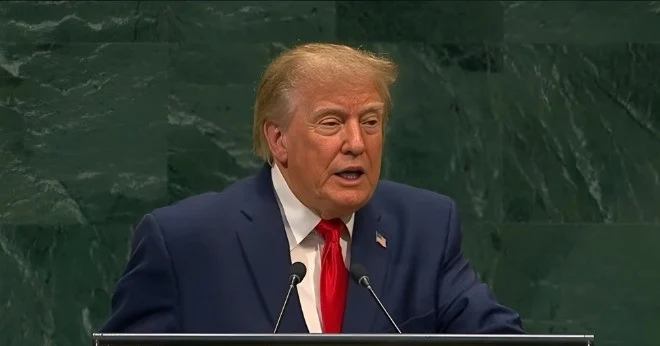
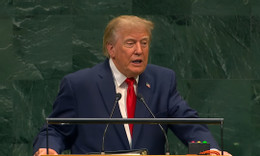
The United Nations General Assembly in New York convened this week against a backdrop of escalating geopolitical tensions, intersecting global crises, and profound institutional challenges. Among the world leaders addressing the high-level plenary, United States President Donald Trump delivered a comprehensive and assertive speech on September 22, touching upon a wide array of critical international issues. From U.S. domestic milestones and Middle Eastern strategy to the protracted conflict in Ukraine, relations with Venezuela, and sweeping reforms within the United Nations itself, the American leader outlined a vision defined by national sovereignty, military readiness, and a pragmatic approach to foreign policy.
Domestic Foundations and Border Security
President Trump opened his address by looking inward, tying his administration’s foreign policy objectives to a narrative of domestic strength and resilience. Noting that the United States is approaching the milestone of its 250th anniversary, the President highlighted several key administrative achievements that he claimed have fundamentally transformed the nation’s security profile.
Central to this domestic overview was the issue of national borders. "Before I assumed office, we had the worst and most dangerous border in the world, while right now we have the safest border in the history of our country," President Trump stated to the assembly.
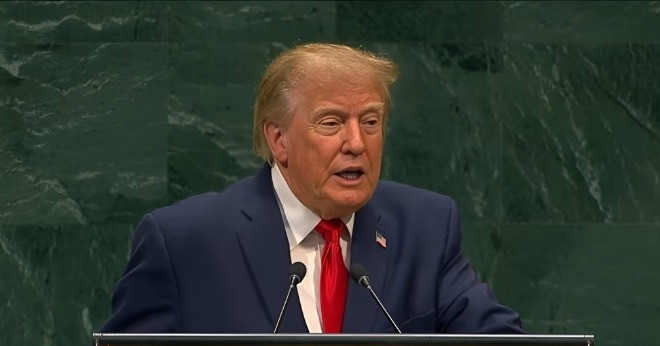
This framing served as a springboard for his broader thesis: that international stability begins with secure, sovereign nation-states capable of protecting their borders and domestic populations. Political analysts note that by emphasizing domestic security metrics early in his UN address, the President aimed to reassure both domestic audiences and international partners of the current administration’s grip on internal governance, thereby projecting strength onto the global stage.
The Middle East and Strategic Posture Toward Iran
Transitioning to international security, President Trump focused heavily on the Middle East, specifically addressing ongoing tensions with Iran. He firmly defended the United States’ military activities in the region, characterizing them as a necessary and long-overdue measure to neutralize threats that had been ignored or mismanaged by previous administrations.
"From the very first day I stepped into politics, I have not wavered. I will never allow Iran to possess a nuclear weapon. I believe that we will achieve a deal with Iran shortly after the midterm elections, because they will have every reason not to do otherwise," the President declared.
This stance underscores a persistent hardline policy regarding Tehran’s nuclear ambitions while simultaneously hinting at a diplomatic window opening post-midterms. The administration has previously weighed multiple strategic options regarding Iran, balancing economic maximum pressure with targeted military deterrence to prevent regional destabilization. By linking potential diplomatic breakthroughs to the domestic political calendar, the President signaled to Tehran that Washington operates from a position of calculated political momentum.
The Conflict in Ukraine and Humanitarian Focus
On the protracted conflict in Ukraine, President Trump offered a direct assessment of the human toll, reaffirming that Washington remains in active communication with both Moscow and Kyiv. He expressed optimism that the conflict could be brought to a close much sooner than many international observers currently anticipate.
"It is time to end the bloodshed in Ukraine. I want to commend my administration for having played a leading role in bringing the children who had to flee the conflict return to their families," President Trump emphasized.
The humanitarian aspect of the speech—specifically highlighting the return of displaced children—marked a deliberate effort to project empathy alongside firm statecraft. While international reactions to Washington’s peace initiatives vary, the administration continues to position itself as a vital mediator capable of compelling both sides toward a negotiated settlement, even as European and NATO allies debate the long-term architecture of regional security.
Venezuela, Oil Agreements, and Hemispheric Policy
Shifting focus to Latin America, the U.S. leader defended his administration’s hemispheric policies, specifically addressing the controversial campaign involving Venezuelan leader Nicolas Maduro. President Trump reiterated that Washington will continue to utilize its overwhelming military and economic power to safeguard national interests and secure regional stability.
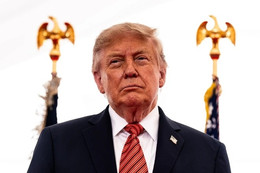
A centerpiece of this policy discussion was energy cooperation. "The United States and Venezuela have signed the largest oil deal in history. We are talking about 65 tankers of oil, this brings benefits to both countries, while contributing to reducing global energy prices," the President explained.
This pragmatic energy pact highlights a transactional approach to foreign policy, where historic adversaries can engage in resource-sharing agreements designed to alleviate global inflationary pressures and stabilize international energy markets. Critics, however, continue to scrutinize the diplomatic trade-offs inherent in such agreements, particularly regarding democratic governance and human rights in the region.
Unprecedented Reforms and Budget Cuts at the United Nations
Perhaps one of the most striking segments of the President’s address was his critique of the United Nations itself, accompanied by the announcement of historic financial measures taken by Washington. For the first time in the organization’s history, the United States has enacted significant budgetary retrenchment regarding its financial contributions to the global body.
"For the first time in history, the United States has cut 15% of its budget contribution to the UN in 2026, which means eliminating about 4,000 positions in the administrative machinery of this agency. The UN has very great potential, but this agency must stop the practice of imposing a radical agenda on countries," Trump asserted.
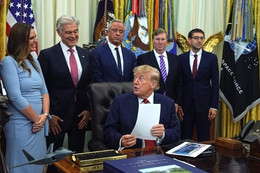
This direct challenge to the UN’s bureaucratic scope and operational priorities reflects a broader skepticism within the American political landscape regarding multilateral institutions. By tying funding levels to administrative downsizing and a return to core diplomatic functions, the U.S. administration is pushing for a leaner, more accountable global governance model.
Global Governance, Artificial Intelligence, and Technology
In the latter portion of his address, President Trump rejected growing international calls for a centralized global plan to regulate and control Artificial Intelligence (AI). This stance aligns with the administration’s recent announcements regarding the formation of a specialized national AI force designed to maintain American technological dominance without being hamstrung by international bureaucracy.
Furthermore, the President leveled sharp criticisms at the International Criminal Court (ICC), echoing long-standing American reservations about the court’s jurisdiction over non-party states. He concluded his remarks with a broad call for the global community to unite pragmatically against fundamental transnational threats to humanity, while rejecting supranational oversight that infringes upon national sovereignty.
Broader Impact and Geopolitical Implications
President Trump’s address at the 2026 UN General Assembly serves as a masterclass in "America First" multilateralism—engaging with global institutions and adversaries strictly on terms that favor U.S. national interests, economic pragmatism, and security dominance.
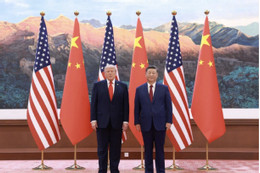
The implications of the speech are far-reaching. By combining unilateral pressure tactics—such as UN budget reductions and targeted Middle East deterrence—with transactional trade and energy deals (as seen with Venezuela), the administration is actively reshaping the post-Cold War international order. Whether these strategies will yield the desired peace agreements in Ukraine and the Middle East, or whether they will accelerate institutional friction within bodies like the United Nations, remains one of the defining questions of contemporary international relations. As global capitals digest the President’s declarations, diplomatic channels are expected to remain intensely active ahead of the upcoming U.S. midterm elections and the subsequent diplomatic engagements slated for the remainder of the year.
Related posts: