Hanoi’s tourism landscape stands on the precipice of a significant transformation as Sun Group, one of Vietnam’s leading developers, has formally proposed the construction of a massive eco-tourism complex in Ba Vi district. The project, which includes a highly anticipated safari park, aims to redefine the capital’s leisure offerings. According to official disclosures from the Hanoi Department of Finance, the proposal has been submitted by the Sun Real Estate Joint Stock Company—a key subsidiary of the Sun Group conglomerate—marking a strategic move to capitalize on the region’s natural potential under the current Investment Law.
A Landmark Vision for Ba Vi
The proposed eco-tourism and safari project is set to cover an expansive area of over 580 hectares within the Ba Vi commune. This development is not merely a zoo; it is envisioned as a multifaceted tourism hub designed to blend conservation, education, and high-end hospitality. The project is structured to be executed in two distinct phases: Phase 1 will span approximately 251 hectares, while Phase 2 will cover the remaining 330 hectares.
The financial scope of the project is equally substantial, with an estimated initial investment of 10 trillion VND (approximately 400 million USD). Of this total, Sun Group intends to contribute 1.5 trillion VND in equity, with the remaining capital sourced through strategic financing and investment mobilization. If the project receives the necessary government approvals, the company plans to commence development in the fourth quarter of 2026, with a complete rollout projected for the first quarter of 2030. Phase 1 is expected to reach completion as early as the fourth quarter of 2028.
Strategic Infrastructure and Spatial Planning
While the total land footprint is vast, the developers have emphasized a commitment to environmental harmony. The actual construction area is planned to occupy only 72.8 hectares, representing a building density of approximately 13%. The structures will range from one to five stories, carefully designed to integrate into the existing topography. The remaining 446 hectares are reserved for specialized parks, lush green landscapes, and water features, ensuring that the safari element remains the focal point of a broader, sustainable natural experience.
The economic implications for the capital are significant. In the first phase alone, the project anticipates attracting approximately 5 million visitors annually. Upon full completion, Sun Group estimates that the facility will have the capacity to serve 10 million guests per year, effectively doubling the current tourist throughput expectations for the Ba Vi area.
Filling a Gap in the Capital’s Market
Currently, Hanoi lacks a professional, large-scale safari park, despite the city’s status as a major tourism hub. While Sun Group has successfully developed various world-class resorts, theme parks, and cable car systems across Vietnam—most notably in Da Nang, Phu Quoc, and Quang Ninh—this represents their first venture into the safari segment.
This initiative sets the stage for a new competitive dynamic in the Vietnamese tourism market. To date, the safari model in Vietnam has been dominated by projects associated with Vingroup, such as Vinpearl Safari on Phu Quoc Island, as well as similar attractions in Nam Hoi An and other regional hubs. By bringing a safari to Ba Vi, Sun Group is diversifying the tourism portfolio of Northern Vietnam, providing a high-capacity attraction that could mitigate the seasonal fluctuations typical of traditional mountain tourism in the region.
The Geography of Ba Vi: A Natural Fortress
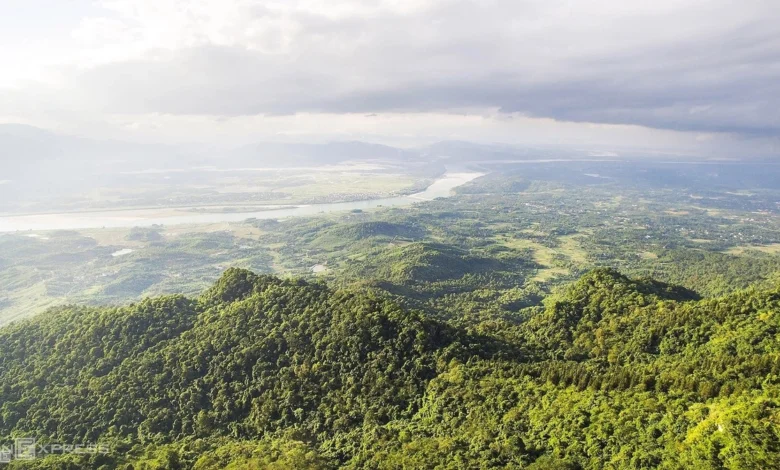
Ba Vi is located in the mountainous northwestern region of Hanoi, bordering Phu Tho province. Following administrative redistricting, the area now spans over 81 square kilometers with a population exceeding 26,650. Known for its diverse terrain—encompassing mountains, forests, waterfalls, streams, and rivers—the region is already a popular destination for domestic travelers.
Notable landmarks such as the Ba Vi National Park, the Khoang Xanh-Suoi Tien tourist area, and Ao Vua have long served as the backbone of local tourism. However, the introduction of a massive safari-centric complex would elevate the region from a weekend getaway destination to a primary tourism anchor, capable of competing with international-standard attractions in other parts of the country.
Economic and Environmental Implications
The entry of a major player like Sun Group into Ba Vi is expected to have a ripple effect on the local economy. Beyond direct employment opportunities for thousands of local residents, the project is likely to spur infrastructure upgrades, including road networks, utilities, and support services such as hospitality and retail.
From a conservation perspective, the development of a safari in an area adjacent to existing national forests poses both opportunities and challenges. While a well-managed safari can provide vital funding for wildlife conservation and public education, environmental groups and city planners are expected to scrutinize the project’s impact on local biodiversity and water management. The developer’s stated commitment to a low building density of 13% suggests an intent to preserve the ecological integrity of the site, a factor that will be central to the approval process.
Project Timeline and Milestones
The journey from proposal to operation involves several regulatory hurdles. The current timeline is structured as follows:
- Q4 2026: Commencement of Phase 1 construction.
- Q4 2028: Completion of Phase 1 and initial opening to the public.
- 2028–2030: Execution of Phase 2 infrastructure and landscaping.
- Q1 2030: Total project completion and full-scale operations.
Market Outlook and Industry Context
Market analysts suggest that the project is a calculated bet on the "revenge travel" trend and the increasing demand for experiential tourism among Vietnam’s growing middle class. With Hanoi’s population density rising, the appetite for accessible, high-quality outdoor experiences has never been greater.
The decision to invest 10 trillion VND underscores Sun Group’s confidence in the long-term growth of the domestic tourism market. By choosing Ba Vi, they are leveraging the district’s proximity to Hanoi’s city center—roughly a 90-minute drive—making it an ideal location for day trips and short-stay vacations.
Official Stance and Next Steps
As of now, the proposal is undergoing rigorous review by the Hanoi authorities. The process involves multiple government bodies, including the Department of Planning and Investment, the Department of Natural Resources and Environment, and the Department of Tourism. These agencies will evaluate the project’s compliance with land-use plans, environmental impact assessments, and its alignment with the city’s long-term master plan for sustainable development.
While there have been no formal objections, public discourse often centers on the balance between modernization and the preservation of Ba Vi’s cultural and natural heritage. For Sun Group, the primary challenge will be navigating the complex regulatory framework while maintaining the project’s ambitious timeline.
If approved, the Ba Vi safari project would represent a landmark achievement in Hanoi’s effort to modernize its tourism infrastructure. By integrating global standards of wildlife management with high-capacity leisure facilities, the development could set a new benchmark for eco-tourism in Vietnam, cementing Ba Vi’s status as the "green lung" and primary leisure destination of the capital.
Related posts: