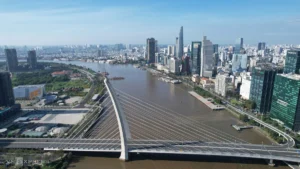
Ho Chi Minh City to Study Expanding To Huu Street in Thu Thiem New Urban Area to 7 Lanes to Connect with TP.HCM Administrative Center

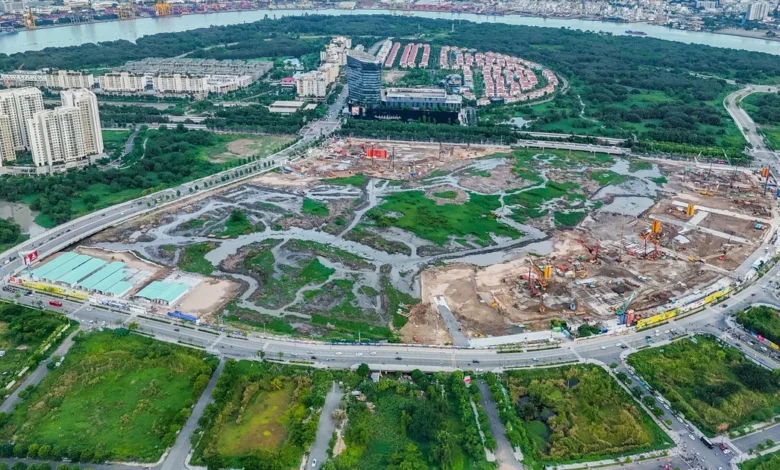
The Ho Chi Minh City People’s Committee has recently issued a directive to explore the expansion of To Huu Street within the Thu Thiem New Urban Area, a move aimed at significantly improving connectivity to the city’s future Administrative Center. This decision underscores the metropolis’s ongoing commitment to modernizing its infrastructure and realizing the ambitious vision for Thu Thiem as a vibrant new urban, financial, and administrative hub.
To Huu Street Expansion: A Critical Upgrade for Thu Thiem
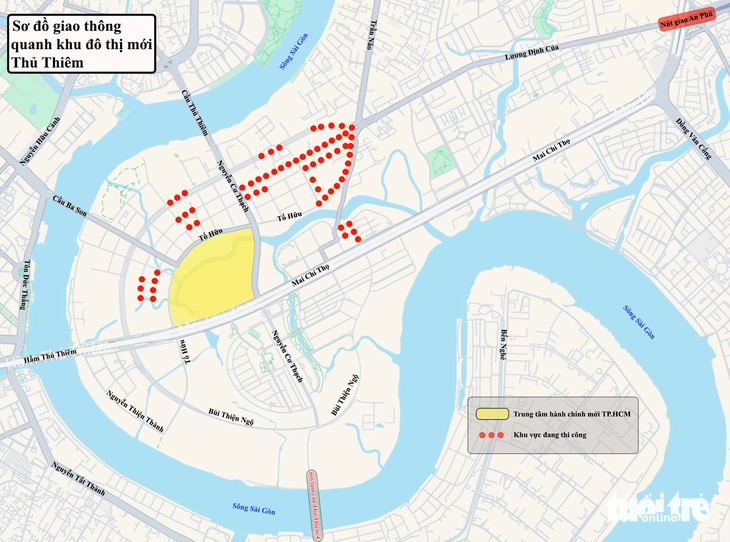
The core of the directive focuses on the segment of To Huu Street stretching from Mai Chi Tho Street to Nguyen Co Thach Street. Currently a four-lane thoroughfare, the proposal is to expand it to seven lanes. This enhancement is deemed crucial to accommodate the anticipated surge in traffic flow to and from the newly planned Ho Chi Minh City Administrative Center, a pivotal component of the Central Square and Riverside Park project.
Sai Gon Sun Investment and Development Co., Ltd. (SGISD), the project’s primary developer, has been tasked with incorporating this significant expansion proposal into the overall project dossier. This responsibility includes conducting a comprehensive feasibility study for the proposed upgrade. The city’s Department of Construction and Department of Planning and Architecture will collaborate to rigorously review the proposal, ensuring its alignment with existing urban planning frameworks, technical infrastructure requirements, and the overarching aesthetic and landscape objectives for the Thu Thiem New Urban Area.
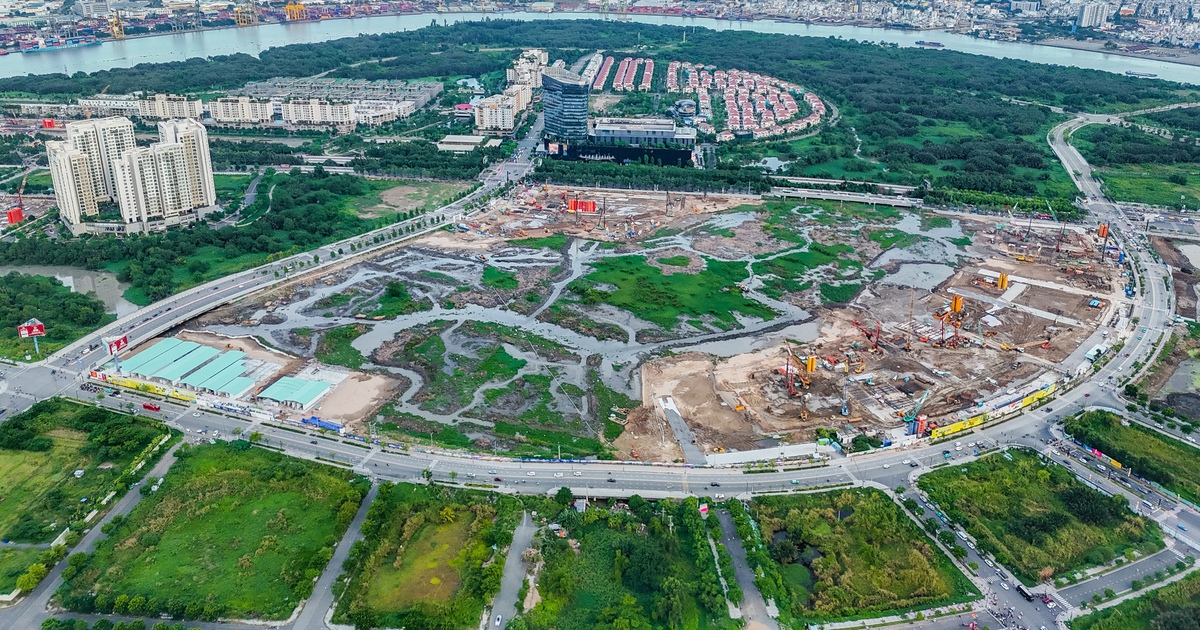
Beyond the direct expansion of To Huu Street, the directive also addresses related infrastructure adjustments. Specifically, the design of overhead items along Tran Bach Dang Street (also known as R1 Road), another critical artery in Thu Thiem, will be modified. These adjustments are intended to ensure seamless integration and synchronicity with the design of the Central Square, promoting a cohesive and aesthetically pleasing urban environment. The People’s Committee has stressed that all design changes, project adjustments, and any associated Build-Transfer (BT) contracts must strictly adhere to legal regulations, safeguard investment objectives, ensure overall investment efficiency, and, crucially, avoid any potential disputes or complaints.
The Vision for Thu Thiem’s Central Core
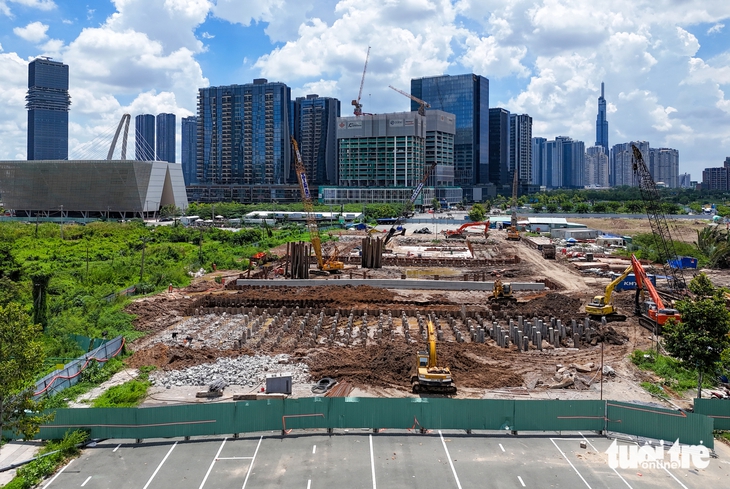
The decision to expand To Huu Street is inextricably linked to the broader Central Square and Ho Chi Minh City Administrative Center project, an initiative launched on April 29. This landmark project, spanning an expansive area of nearly 47 hectares in An Khanh Ward, is conceived as more than just a cluster of government buildings. It is envisioned as a dynamic focal point that will consolidate administrative, political, cultural, and public functions, serving as a new symbol of Ho Chi Minh City’s modern identity.
The estimated total investment for this colossal project is approximately 29,600 billion VND, equivalent to roughly 1.16 billion USD (based on an exchange rate of 1 USD = 25,500 VND). It is being implemented through a Public-Private Partnership (PPP) model, specifically a Build-Transfer (BT) contract, with financing derived from a combination of land allocation and the state budget. The involvement of international design consultants in its conceptualization highlights the city’s ambition to create a world-class urban space. This center aims to embody Ho Chi Minh City’s aspirations as a leading regional metropolis, blending functional efficiency with striking architectural and landscape design.
Enhancing Thu Thiem’s Arterial Network
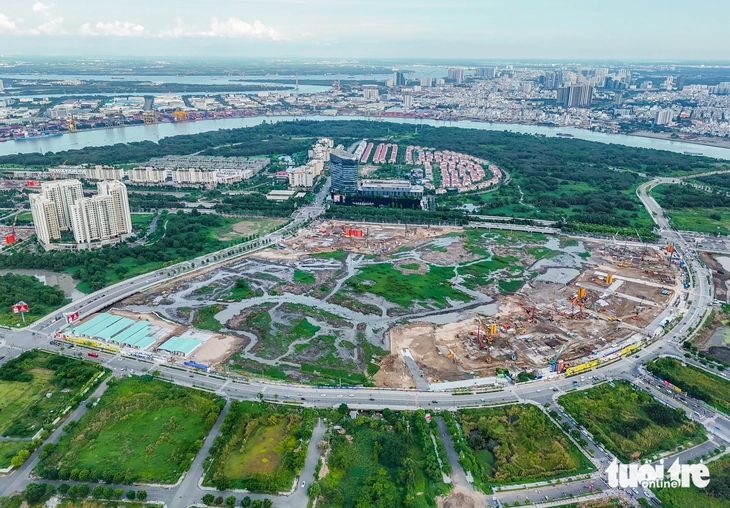
To Huu Street is not an isolated development but a vital component of Thu Thiem’s meticulously planned internal road network. Alongside Mai Chi Tho, Nguyen Co Thach, Nguyen Thien Thanh, and Tran Bach Dang streets, To Huu forms the primary circulatory system of the new urban area. This network is designed to facilitate smooth traffic flow, connecting the Thu Thiem core with other key districts of Ho Chi Minh City, most notably District 1 via the Thu Thiem Tunnel and various bridges. The strategic expansion of To Huu Street will therefore have a ripple effect, enhancing the efficiency of the entire network and ensuring optimal accessibility for residents, businesses, and government functions within the new administrative center.
The emphasis on integrated planning and design, as mandated by the People’s Committee, is crucial. This approach seeks to prevent isolated infrastructure projects and instead foster a harmonious urban fabric where roads, public spaces, and buildings complement each other. The adjustments to the Tran Bach Dang Street (R1) overhead items serve as a prime example of this integrated strategy, ensuring visual and functional coherence with the adjacent Central Square.
Implementation, Oversight, and Chronology
The execution of these infrastructure projects involves several key entities and a clear timeline. SGISD is tasked with swiftly completing the detailed 1/500 scale planning adjustments, a critical step for all subsequent design and construction phases. Đồng thời, Dai Quang Minh Real Estate Investment Joint Stock Company (an investor in some of Thu Thiem’s key infrastructure) will collaborate on refining the design of the overhead items, ensuring their technical viability and aesthetic integration.
A specific operational deadline has also been set for the relocation of a crucial substation. The Ho Chi Minh City Traffic Works Construction Investment Project Management Board (PMU) is responsible for adjusting the substation’s design and relocating it to a more suitable site by July 2026. The PMU will also coordinate with the Department of Finance to manage existing assets, utilize reusable equipment and materials, and ensure proper settlement in accordance with regulations, thereby safeguarding state assets and preventing any wastage.
This phased approach to development, with distinct responsibilities and deadlines, reflects the complexity of large-scale urban projects. The city’s rigorous oversight, involving multiple departments and adherence to legal frameworks, is designed to ensure transparency, accountability, and the successful realization of these critical infrastructure upgrades.
Broader Context: Ho Chi Minh City’s Infrastructure Drive
The expansion of To Huu Street and the development of the new Administrative Center are emblematic of Ho Chi Minh City’s broader and aggressive infrastructure development strategy. As Vietnam’s largest city and economic engine, HCMC faces immense pressure from rapid urbanization, a burgeoning population exceeding 10 million, and an ever-increasing demand for modern amenities and efficient transportation. Existing infrastructure, particularly in older districts, often struggles with congestion and capacity issues.
The Thu Thiem New Urban Area itself is a testament to the city’s long-term vision. Once a largely undeveloped marshland across the Saigon River from District 1, Thu Thiem was envisioned decades ago as a new central business district and a symbol of modern Vietnam. Despite facing significant challenges, including prolonged land acquisition disputes and compensation issues in the past, the area is now undergoing a rapid transformation. Billions of dollars have been poured into developing its core infrastructure, including bridges, tunnels, and a grid of arterial roads. The current push to complete the Central Square and Administrative Center, along with improved road connectivity, signifies a renewed commitment to making Thu Thiem a fully functional and vibrant urban area. These projects are not merely about improving traffic flow; they are foundational elements designed to attract domestic and foreign investment, foster economic growth, and elevate Ho Chi Minh City’s status as a leading financial and cultural hub in Southeast Asia.
Economic and Urban Implications
The implications of the To Huu Street expansion and the broader Thu Thiem development are far-reaching. Economically, the increased connectivity will reduce commuting times, lower logistical costs for businesses, and make Thu Thiem a more attractive location for corporate headquarters and commercial ventures. This, in turn, is expected to generate significant tax revenues for the city and create numerous job opportunities across various sectors. The investment in infrastructure also stimulates the construction industry and related sectors.
Urbanistically, the expansion of To Huu Street is a crucial step towards realizing Thu Thiem’s potential as a highly livable and functional urban space. Improved traffic circulation will enhance accessibility to the Central Square, cultural facilities, and residential areas, contributing to a higher quality of life for residents and visitors. The integration of the administrative center within a modern urban landscape also presents an opportunity for innovative public spaces, green areas, and pedestrian-friendly zones, aligning with global trends in sustainable urban development.
However, such large-scale projects are not without their challenges. Careful management will be required to mitigate potential construction disruptions, ensure environmental sustainability, and maintain the aesthetic integrity of the urban landscape. The city’s commitment to avoiding complaints and ensuring investment efficiency underscores the importance of transparent execution and effective stakeholder engagement throughout the development process. Ultimately, the expansion of To Huu Street is a strategic investment in Ho Chi Minh City’s future, laying down the arteries for a dynamic and connected urban core that will serve as a beacon of progress for decades to come.
Related posts: