Thanh âm Việt Nam The Sound of Vietnam officially announces Toc Tien as the Vietnamese representative for Eurovision Song Contest Asia 2026


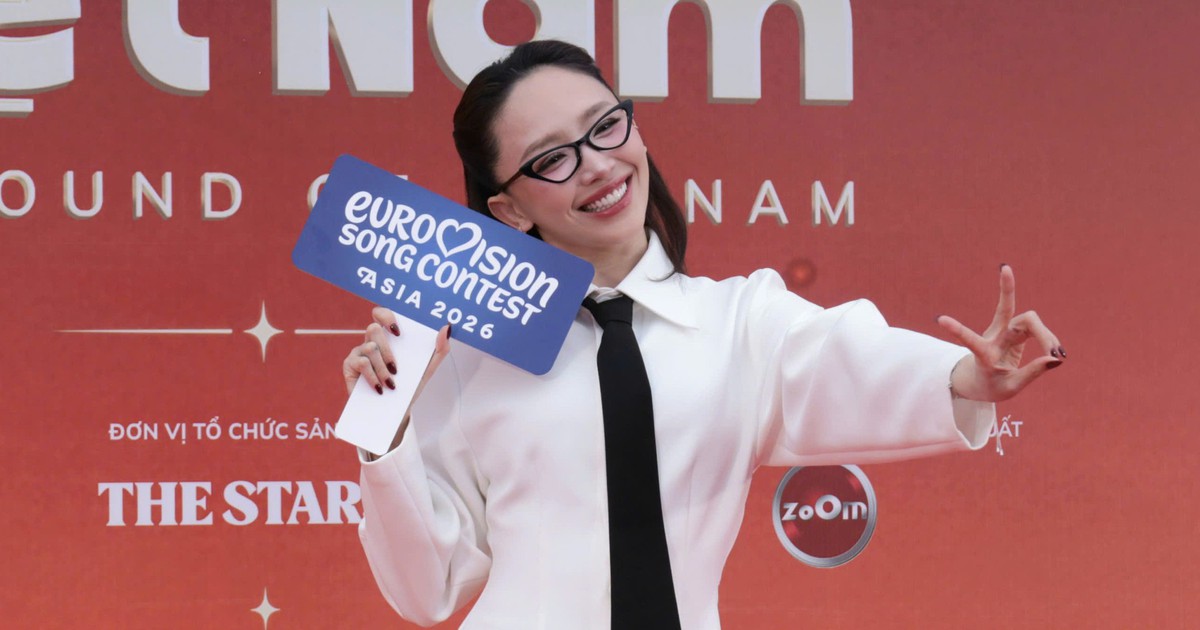
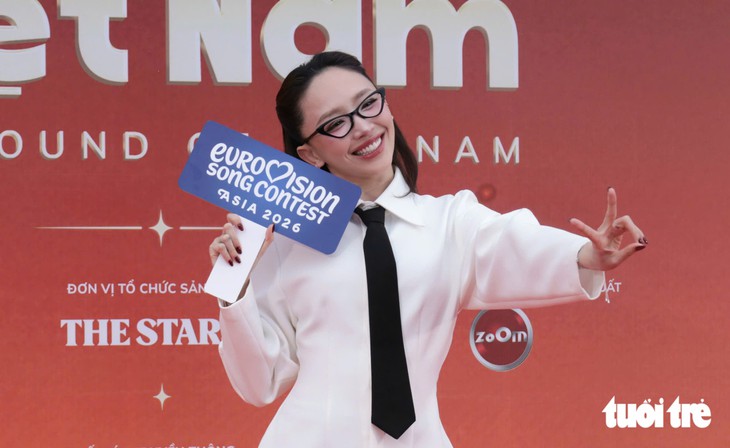
The official press conference for Thanh âm Việt Nam – The Sound of Vietnam convened on the afternoon of September 16 in Ho Chi Minh City, setting the stage for a nationwide selection process to determine Vietnam’s official entry for the upcoming Eurovision Song Contest Asia 2026. Amid high anticipation from industry professionals and fans alike, prominent pop singer Toc Tien was officially unveiled as the central artist and sole designated representative for the country in this monumental international musical endeavor.
The announcement marks a significant milestone for the Vietnamese music industry as it prepares to step onto one of the largest and most competitive regional music platforms in the world. Unlike traditional internal selections or open casting calls commonly seen in other territories, the Vietnamese preliminary format introduces a collaborative yet competitive ecosystem where five distinct production teams will develop five original tracks exclusively for the chosen artist, culminating in a high-stakes televised national selection show.
Strategic Selection and the Weight of International Representation
The decision to appoint Toc Tien as the centerpiece of the Vietnamese delegation was spearheaded by renowned musician and music director Huy Tuan. According to Tuan, the primary prerequisite for entering an international arena of this magnitude is the artist’s capacity to seamlessly adapt to a demanding global stage.
Evaluating the current landscape of the Vietnamese music industry, Tuan noted that finding an artist who simultaneously possesses elite vocal proficiency, commanding stage presence, extensive performance experience, and fluent English-speaking skills is an exceptionally rare feat. The music director emphasized that if Toc Tien had declined the invitation, the committee would have faced immense difficulty finding another candidate capable of meeting the stringent multi-disciplinary criteria required for international competition.
"When evaluating potential candidates for a platform as demanding as Eurovision, we had to ask ourselves who truly possesses the complete package," Tuan stated during the press conference. "A performer who can command a massive stage vocally, physically, and linguistically is remarkably scarce in our market today. Toc Tien was our unanimous first choice because she checks every single box required to represent Vietnam with pride and artistic excellence."
The unique structure of The Sound of Vietnam diverges from standard international Eurovision national finals. Rather than inviting multiple vocalists to compete for a ticket, the selection committee first locked in the nation’s premier performing artist, shifting the competitive focus entirely onto the creation and selection of the definitive musical composition.
Toc Tien Expresses Vulnerability and National Pride
For Toc Tien, accepting the mantle of national representative came with a complex mixture of professional excitement and profound pressure. Speaking candidly at the press conference, the singer revealed that she was approached and signed onto the project approximately two weeks prior to its official public announcement, during which all participants were bound by strict confidentiality agreements.
Initially viewing the proposal as just another challenging milestone following her successful run on reality television programs like Sisters Who Make Waves 2024, Toc Tien’s perspective shifted dramatically once the true scale and geopolitical weight of the project set in.
"When you participate in a standard music program or concert, your primary responsibility is to yourself, your own artistic vision, and your personal performance metrics," Toc Tien shared. "However, when the word ‘representative’ is attached to your name, the paradigm changes entirely. Suddenly, I am no longer just standing on stage as Toc Tien the individual; I am carrying the creative output of esteemed producers, the ambitions of the production unit, and the expectations of millions of Vietnamese music lovers."
The singer highlighted that the pressure stems not merely from executing a flawless live vocal or intricate choreography, but from the collective nature of the journey. Because five different music production teams are investing their creative energy into crafting tracks for her, Toc Tien expressed a deep desire for the domestic preliminary performances to resonate deeply with local audiences before she steps foot on the international stage.
"I feel a healthy sense of nervousness," she admitted. "This is a monumental responsibility, and my primary goal right now is to build a profound connection with the Vietnamese public. I hope everyone will follow this journey, offer constructive feedback, and walk alongside me as we prepare for this global showcase."
Five Production Teams, Five Musical Visions
A defining characteristic of The Sound of Vietnam is the unprecedented collaboration among top-tier Vietnamese hitmakers. Rather than competing against one another in a traditional sense, five distinct music production teams have been tasked with creating five unique singles tailored specifically for Toc Tien’s vocal and performance style.
The five officially introduced tracks slated for the project are Em Tiến, a to A, Khó Gì?, Follow Me, and Love Always Wins. The production lineup features some of the most influential figures in contemporary Vietnamese pop music, including esteemed producers and songwriters Nguyen Hai Phong, Huy Tuân, and Hua Kim Tuyền, among others.
This format transforms the national selection into a fascinating compositional battle. The core question for the panel and the public is no longer which singer will emerge victorious, but rather which musical composition possesses the universal appeal, lyrical depth, and sonic innovation required to best represent Vietnam on an international platform.
The selection of the winning entry will be determined through a balanced voting mechanism comprising 50% professional jury evaluation and 50% public televoting during the live broadcast. Once the winning track is chosen, the production team will spend the subsequent weeks refining, mixing, and mastering the arrangement before Toc Tien departs for Bangkok, Thailand, on November 14 to officially participate in the Eurovision Song Contest Asia 2026.
Chronology and Operational Guidelines of the National Selection
The operational framework of The Sound of Vietnam – The Sound of Vietnam is governed by strict broadcast and performance regulations designed to simulate the rigorous standards of the broader Eurovision network.
The grand national selection event is scheduled to broadcast live at 9:30 PM on October 3 on national television network VTV3. During this high-profile broadcast, Toc Tien will sequentially perform all five candidate tracks live on stage, presenting distinct theatrical and sonic interpretations for each piece.

The production guidelines enforce strict structural limitations:
- Time Constraints: Each competing song must not exceed three minutes in duration, forcing producers to pack maximum sonic impact and dynamic shifts into a concise timeframe.
- Live Performance Mandate: All vocals must be performed entirely live without pre-recorded lead vocal tracks, testing the artist’s stamina across five back-to-back performances.
- Stage Capacity: The maximum number of individuals permitted on stage during any single performance is capped at six, including the lead artist and any backing dancers or instrumentalists.
These regulatory parameters require meticulous calculation from both the artist and the creative teams, ensuring that the staging, choreography, and vocal delivery are executed flawlessly within a highly restricted window.
Broader Implications for the Vietnamese Music Industry
The participation of Vietnam in Eurovision Song Contest Asia 2026 via The Sound of Vietnam represents a watershed moment for the country’s entertainment sector. For decades, Vietnamese artists have achieved significant domestic success and localized regional acclaim, yet establishing a firm foothold within broader, institutionalized international music competitions has remained an elusive objective.
Industry analysts view this structured approach—pairing an elite, battle-tested performer with an elite collective of songwriters—as a sophisticated strategy to project modern Vietnamese pop culture onto the global map. By adopting international broadcasting standards, strict performance protocols, and a transparent dual-voting system, the project aims to elevate the production quality of local pop music while fostering a renewed sense of national pride among younger demographics.
As the countdown to the October 3 national selection continues, attention remains fixed on rehearsal studios across Ho Chi Minh City, where Toc Tien and her collaborators are fine-tuning the performances that will ultimately decide Vietnam’s musical ambassador to the world stage.