Serious Violations in Social Housing Land Fund Management Uncovered in Hanoi by Government Inspectorate

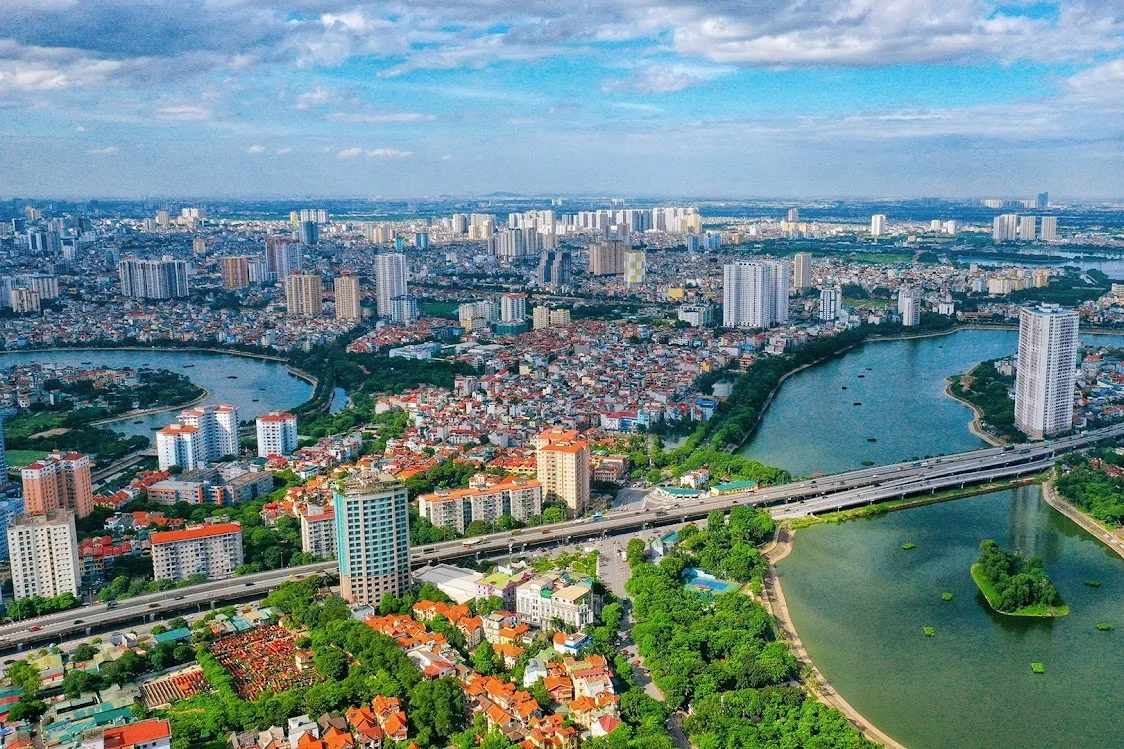
The Government Inspectorate of Vietnam has recently issued a comprehensive report detailing systemic failures, legal violations, and management oversights regarding the mandatory 20% land fund reserved for social housing development across the capital city of Hanoi. According to the inspection conclusions, which scrutinize land management, construction planning, and the issuance of building permits, the Hanoi People’s Committee and various departments have failed to adequately facilitate housing for low-income earners, despite a surging demand in one of Southeast Asia’s fastest-growing metropolitan areas. The findings highlight a decade of missed opportunities and administrative lapses that have directly hindered the national goal of providing affordable shelter to the working class.
A Decadelong Pattern of Negligence and Regulatory Non-Compliance
The inspection, covering the period from 2011 to 2022, reveals a stark discrepancy between urban development policies and their actual implementation on the ground. Under Vietnamese law, specifically Decree 100/2015/ND-CP (and later updated by Decree 49/2021/ND-CP), commercial housing projects and urban areas with a scale of 10 hectares or more are required to reserve 20% of their residential land for the construction of social housing. This "20% land fund" is intended to ensure that as cities modernize and expand, the needs of low-income workers, civil servants, and industrial zone laborers are not sidelined by high-end real estate interests.
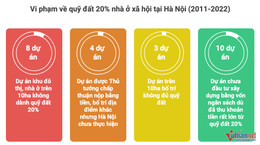
However, the Government Inspectorate (TTCP) identified eight major urban and housing projects in Hanoi that exceeded the 10-hectare threshold but were approved without any land allocated for social housing. This omission by the Hanoi People’s Committee represents a direct violation of federal housing mandates. By failing to carve out these spaces during the planning and approval phases, the city effectively privatized land that should have served the public interest, leading to a significant deficit in the available housing stock for the city’s most vulnerable residents.
Beyond the total omission of land, the TTCP pointed to three other projects where land was indeed allocated, but the area provided was insufficient according to the legally required ratios. Furthermore, a group of four projects was granted special permission by the Prime Minister to fulfill their social housing obligations by paying a cash equivalent instead of providing physical land. However, the inspection revealed that even after receiving these funds, the Hanoi People’s Committee failed to reallocate or develop equivalent social housing land at alternative locations as required by the terms of the approval.
The Xuan Phuong Case Study: Planning Mismatches and Impractical Solutions
One of the most egregious examples cited in the report involves the Xuan Phuong Ecological Housing Project. In an attempt to meet social housing requirements, the city authorities designated approximately 6,890 square meters across two land plots, identified as BT6 and BT11. These plots, however, were originally zoned for high-end ecological villas.
The Government Inspectorate criticized this decision as "impractical" and "incompatible" with the needs of low-income populations. Placing social housing within a luxury villa complex creates significant logistical and financial hurdles for the intended beneficiaries, as the infrastructure and service fees associated with "ecological" zones are typically far beyond the reach of those qualifying for social housing. This move was characterized as a planning maneuver that looked compliant on paper but was functionally useless for solving the housing crisis.
In another instance within the Xuan Phuong new urban area, a commercial housing project intended for high-ranking officials of the National Assembly was initially approved under a specific 1/500 scale detailed plan. By 2014, the city adjusted the planning to include this project within the 20% social housing land fund. The TTCP concluded that this adjustment was improper, as it deviated from the original project goals and the previously approved detailed planning, essentially mislabeling a targeted commercial project as "social housing" to satisfy a regulatory quota.
Financial Mismanagement and the "Lost" Billions
The administrative failures extend beyond physical land planning into the realm of financial transparency and accountability. Between 2011 and August 2019, the Hanoi People’s Committee did not maintain a separate accounting system for the funds collected from developers who opted to pay cash in lieu of providing the 20% land fund.
According to the TTCP, these payments were not tracked independently but were instead lumped into the general state budget under land use fees. This lack of earmarking meant that the city could not ensure the money was actually being reinvested into social housing development. Furthermore, the city authorities were found to be lax in urging and enforcing the payment of these obligations by project investors. By the time the Hanoi People’s Committee finally issued a formal document to manage and use these funds in August 2019, years of potential investment had been lost to general spending.
The consequences of this financial ambiguity are visible in the city’s construction landscape. The TTCP noted that at least 10 projects that had successfully reserved land for social housing remained stagnant because the city had not allocated the necessary state budget for construction. This occurs even as the city holds a massive, albeit poorly tracked, pool of funds collected specifically for this purpose. This "resource waste" has stalled the progress of thousands of affordable units, leaving land vacant and workers without homes.
Broader Context: The Struggle of the Working Class in Hanoi
The findings of the Government Inspectorate come at a time when the demand for affordable housing in Hanoi has reached a boiling point. As the city’s population swells due to rural-to-urban migration, the price of commercial apartments has skyrocketed, often exceeding 50 to 70 million VND per square meter in central districts. For a typical factory worker or entry-level civil servant earning 10 to 15 million VND a month, homeownership is an impossible dream without robust state-supported social housing.
The difficulty is not just a lack of supply but also an administrative gauntlet for those trying to buy. Recent reports have highlighted that citizens often spend weeks, or even months, attempting to submit applications for social housing, only to be met with "sub-licenses" or arbitrary demands for extra paperwork, such as residency confirmations and social insurance records that go beyond the requirements of national law. The TTCP’s report suggests that these hurdles at the consumer level are a symptom of the broader mismanagement at the planning and executive levels.
Connection to Other Major Violations: The Usilk City Scandal
The scrutiny of Hanoi’s land management is part of a wider crackdown on real estate violations. The Government Inspectorate also recently transferred files related to the Van Khe Urban Area extension, popularly known as the "Usilk City" project, to the Ministry of Public Security for criminal investigation. That project, led by the Song Da Thang Long Joint Stock Company, has been a "ghost project" for over a decade, leaving thousands of homebuyers in financial ruin.
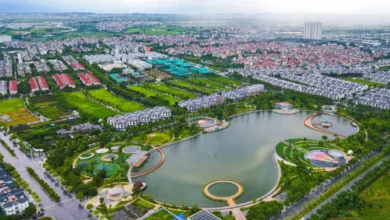
The link between the Usilk City scandal and the social housing land fund violations highlights a systemic issue in Hanoi’s urban governance: a tendency to prioritize developer interests and complex commercial schemes over the basic legal requirements of land use and public welfare. In many cases, land originally intended for public works or social housing has been "transformed" through planning adjustments into high-end villas or commercial apartments, as seen in the Trung Van new urban area in Nam Tu Liem district.
Recommendations and the Road to 2026
In light of these findings, the Government Inspectorate has proposed a series of stern measures to the Prime Minister. The Hanoi People’s Committee has been directed to:

- Reallocate Land: By 2026, the city must identify and arrange sufficient land funds to compensate for the deficits in the 8 projects that missed their 20% quota, the 4 projects that paid cash but saw no replacement land, and the 3 projects with insufficient area.
- Enforce Development: Authorities must demand that investors of commercial housing and urban area projects expedite the construction of social housing on the reserved 20% land funds. If developers fail to meet the approved timeline, the city is instructed to revoke the land and select new investors or use the state budget to build the units directly.
- Correct Planning Errors: For projects like the Xuan Phuong Ecological Housing, the city must review and re-adjust planning to ensure that social housing is located in viable, accessible areas that meet the actual needs of the target demographic.
- Financial Transparency: The Ministry of Construction has been tasked with supervising Hanoi’s management of the social housing fund to ensure that every dong collected from developers is used for its intended purpose.
Analysis of Implications and Future Impact
The TTCP’s report serves as a watershed moment for urban planning in Vietnam. It signals that the era of "flexible" interpretation of land funds may be coming to an end. For the real estate market, this could mean tighter scrutiny of new project approvals and a requirement for developers to demonstrate a genuine commitment to social housing rather than viewing it as a regulatory hurdle to be bypassed via cash payments.
For the citizens of Hanoi, the successful implementation of the TTCP’s recommendations could mean a significant influx of affordable housing units by the late 2020s. However, the challenge remains in the execution. Converting a legal conclusion into physical buildings requires a massive mobilization of capital, administrative willpower, and a shift away from the "villa-centric" development model that has dominated Hanoi’s outskirts for the last twenty years.
The social stability of the capital depends heavily on whether the government can bridge the gap between the luxury apartments rising on the horizon and the humble needs of the people who build and service the city. As the 2026 deadline approaches, all eyes will be on the Hanoi People’s Committee to see if they can rectify the "waste of land resources" and restore public trust in the city’s urban vision.