The Dawn of the 6-Minute Charge: Breaking the Convenience Barrier
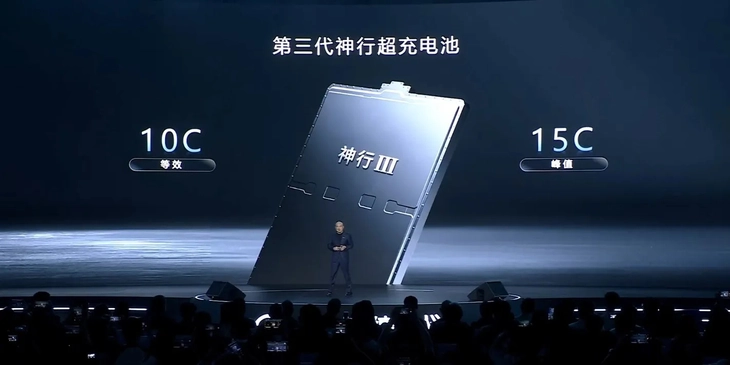
For over a decade, the primary obstacles to mass EV adoption have been range anxiety and charging duration. While range has steadily improved, the time required to recharge has remained a significant deterrent for consumers accustomed to five-minute fuel stops. CATL’s Shenxing battery addresses this directly. According to the data released by the company, the battery can jump from a 10% charge to 35% in a mere 60 seconds. Perhaps more significantly, reaching the 80% threshold—the standard metric for fast-charging efficiency—takes less than four minutes.
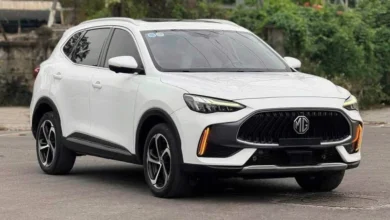
By achieving these speeds, CATL is effectively neutralizing one of the strongest arguments against electric mobility. The ability to add hundreds of kilometers of range in the time it takes to buy a cup of coffee transforms the EV from a city-bound commuter car into a viable long-distance touring machine. For partners like VinFast, which is aggressively expanding its footprint in North America, Europe, and Southeast Asia, this technology could serve as a massive competitive advantage, allowing their vehicles to offer charging metrics that lead the global market.
Engineering the Breakthrough: Low Resistance and Thermal Management
The technical foundation of this achievement lies in CATL’s focus on reducing internal electrical resistance and enhancing ion mobility. The company revealed that it has successfully lowered the internal resistance of the Shenxing battery to a mere 0.25 milliohms. This represents a 50% reduction compared to the industry average for high-performance LFP batteries. Lower resistance is critical because it reduces the amount of heat generated during rapid energy transfer, allowing the battery to accept higher currents without compromising safety or longevity.
Furthermore, CATL has integrated a “pulse self-heating” technology. One of the inherent weaknesses of LFP chemistry is its performance in cold climates. Typically, cold temperatures slow down chemical reactions within the cell, leading to sluggish charging and reduced range. CATL’s system uses high-frequency pulses to warm the battery internally. The results are startling: even in extreme conditions of -30°C (-22°F), the battery can charge from 20% to 98% in approximately 9 minutes. This makes the technology viable for northern markets in Scandinavia, Canada, and Northern China, where EV adoption has historically faced seasonal challenges.
The Competitive Landscape: CATL vs. BYD
The announcement places CATL firmly ahead of its closest rival, BYD, in the race for charging supremacy. BYD, which is both a car manufacturer and a battery supplier, recently introduced its Blade Battery 2.0. While highly regarded for its safety and structural integrity, the Blade Battery 2.0 currently requires about 9 minutes to charge from 10% to 97%. In identical cold-weather conditions, BYD’s charging time extends to approximately 12 minutes—three minutes slower than CATL’s new offering.

The rivalry between these two Chinese giants is the primary engine of global battery innovation. According to data from SNE Research, as of early 2025, CATL maintains a dominant 39.2% share of the global EV battery market. BYD holds the second position with a 16.4% share. While BYD benefits from the massive sales of its own vehicle brand, CATL’s strength lies in its diverse portfolio of clients, which includes Tesla, BMW, Ford, and the Vietnamese automaker VinFast. By maintaining a technological lead in charging speed, CATL ensures that its partner OEMs can remain competitive against BYD’s vertically integrated ecosystem.
Strategic Implications for VinFast and the Global Market
The relationship between CATL and VinFast is particularly noteworthy. VinFast has positioned itself as a “fast follower” that utilizes the world’s most advanced components to build its EV lineup. By leveraging CATL’s Shenxing technology, VinFast could potentially leapfrog established legacy automakers who are still struggling with 20-to-30-minute charging windows.
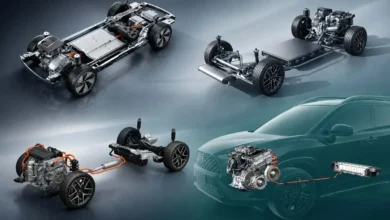
In late 2022, CATL and VinFast signed a Memorandum of Understanding to expand their collaboration into CIIC (CATL Integrated Intelligent Chassis) skateboard chassis products. The integration of 6-minute charging LFP batteries into a skateboard chassis would allow VinFast to produce a wide range of vehicle types—from SUVs to sedans—that all share the same market-leading charging performance. This modular approach, combined with ultra-fast charging, is expected to be a cornerstone of VinFast’s strategy to win over skeptical consumers in the United States and Europe.

Beyond Passenger Cars: The 350 Wh/kg Condensed Battery
While the Shenxing battery focuses on charging speed, CATL is also pushing the boundaries of energy density. The company highlighted its “Condensed Battery” technology, which boasts an energy density of up to 350 Wh/kg. For context, most current LFP batteries hover between 160 and 200 Wh/kg, while high-end NMC batteries reach about 250-300 Wh/kg.
Initially developed for the demanding requirements of electric vertical takeoff and landing (eVTOL) aircraft, or “flying cars,” the Condensed Battery is now being considered for premium high-performance electric vehicles. The high cost of this technology currently limits it to the aviation and luxury automotive sectors, but CATL’s history suggests that they will eventually find ways to scale and commercialize it for broader use. The existence of such high-density cells suggests that the future of electrification is not limited to ground transport but is rapidly moving toward the decarbonization of short-haul aviation.
Infrastructure: The Missing Piece of the Puzzle
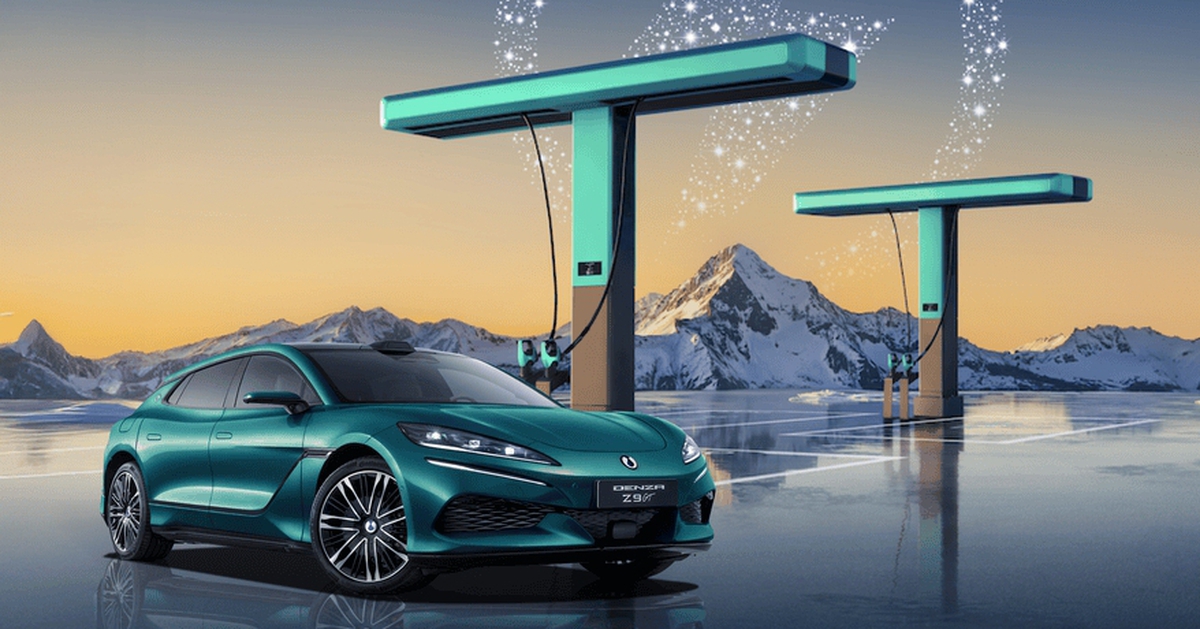
While CATL has provided the hardware, the global energy grid and charging infrastructure must now catch up. Charging a battery to 98% in six minutes requires an immense amount of power—often referred to as 6C charging (where the charging rate is six times the battery’s capacity). To support this, charging stations must be capable of delivering 480kW to 600kW of power.
Currently, China leads the world in the deployment of “Supercharging” stations, with companies like Huawei and Li Auto rolling out networks that support these high-speed protocols. However, in the United States and many parts of Europe, the majority of public fast chargers are still limited to 150kW or 350kW. The full potential of CATL’s Shenxing battery will only be realized as governments and private entities invest in high-power grid upgrades.
Analysis: The End of “Refueling Anxiety”?
The implications of this technology extend beyond mere convenience. If EVs can truly be charged in the same timeframe as an internal combustion engine vehicle can be refueled, the secondary market for used EVs will likely stabilize, and the transition to a fully electric fleet will accelerate. LFP batteries are inherently safer and more durable than the Nickel Manganese Cobalt (NMC) alternatives, as they are less prone to thermal runaway and can withstand more charge-discharge cycles.
By combining the safety and cost-effectiveness of LFP chemistry with the speed of ultra-fast charging, CATL has created what many consider the “Holy Grail” of battery technology. As this technology enters mass production, the automotive industry enters a new era where the “electric” part of the vehicle is no longer a compromise, but a superior alternative in every measurable metric.
Future Outlook: Solid-State and Sodium-Ion
CATL and BYD are not stopping at LFP. Both companies are heavily investing in the next frontiers: sodium-ion and solid-state batteries. Sodium-ion batteries promise to further reduce costs by eliminating the need for lithium, while solid-state batteries aim to provide even higher safety and energy density. However, with the current Shenxing LFP battery achieving 6-minute charging, the pressure to move to expensive solid-state technology may decrease for the average consumer, as the current LFP performance already meets the practical needs of most drivers.
The race for battery dominance is now a race of minutes and seconds. With CATL’s latest announcement, the benchmark has been set. The global automotive market now awaits the response from competitors and the rollout of these cells into the next generation of vehicles hitting the streets in 2025 and 2026. For consumers, the message is clear: the days of waiting hours at a charging station are rapidly coming to an end.