Kaito Kid and His Multifaceted Cinematic Evolution in the Detective Conan Franchise


The intricate dynamic between the legendary phantom thief Kaito Kid and high school detective Shinichi Kudo—more widely known by his alias Edogawa Conan—remains one of the most enduring and captivating rivalries in modern Japanese pop culture. While fundamentally operating on opposite sides of the law, their relationship has evolved substantially over decades of serialization across manga, television animation, and feature-length theatrical releases. Rather than functioning as a standard, one-dimensional antagonist, Kaito Kid has transitioned through various narrative roles within the Detective Conan cinematic universe, acting at times as a cunning adversary, an unexpected ally, a reluctant partner, and a complex catalyst for overarching mysteries. Created by legendary manga artist Gosho Aoyama, Kaito Kid—whose real identity is Kaito Kuroba—first originated in Aoyama’s independent manga series Magic Kaito before becoming a recurring, high-profile crossover fixture in the Detective Conan franchise. Within the multi-billion-dollar Detective Conan film catalogue, which routinely shatters box office records across Japan and international markets, Kid’s appearances have consistently commanded immense audience anticipation. This deep dive examines the chronological evolution of Kaito Kid’s cinematic appearances, exploring how his character dynamics with Conan Edogawa have shifted from cat-and-mouse confrontations to complex, high-stakes collaborations.
The Genesis of a Cinematic Rivalry and Early Magic Tricks

Kaito Kid’s historic introduction to the Detective Conan film series occurred in the franchise’s third theatrical feature, Detective Conan: The Last Wizard of the Century, released during the formative years of the cinematic adaptations. In this landmark film, the phantom thief targets a priceless imperial Faberge egg, setting off a complex investigation that forces both intellectual titans into a high-stakes chess match. However, the film subverted audience expectations by revealing that Kid’s theft was not motivated by traditional greed or malice, but rather by a noble intention to return the heritage artifact to its rightful descendants.
This early cinematic outing laid the crucial thematic foundation for the unique psychological and strategic relationship between Kid and Conan. Notably, when Kid was presumed assassinated by a mysterious syndicate during the plot, the remaining clues regarding his survival became essential intellectual keys that Conan utilized to solve the central murder mystery. Kid’s propensity for utilizing elaborate disguises—most notably masquerading as Shinichi Kudo—introduced an element of comedic tension combined with high-pressure storytelling. This narrative device forced Conan into compromising social scenarios while inadvertently prompting Conan to protect Kid’s true identity from external threats, establishing a mutual, albeit reluctant, professional courtesy.
Subsequent early features continued to experiment with Kid’s screen time and functional utility within the plot. In Detective Conan: Magician of the Silver Sky, Kid’s role was initially designed to kick off the primary narrative arc before an unexpected airborne crisis forced an emergency convergence of interests. Here, Kid began weaponizing public knowledge of Conan’s true identity to outmaneuver him, occasionally donning the guise of Shinichi to deceive characters like Ran Mouri. Despite the logistical constraints of his screen time in certain mid-era films, such as Magician of the Silver Sky, his calculated interventions consistently raised the narrative stakes, transforming standard locked-room murder mysteries into sprawling, dynamic thrillers that demanded rapid adaptation from the junior detective.

From Foe to Collaborative Partner: The Evolution of Dynamic Team-Ups
As the Detective Conan cinematic franchise matured into an annual box office powerhouse grossing tens of billions of yen globally, the interactions between Conan and Kaito Kid evolved past simple antagonism into complex tactical partnerships. This shift became exceptionally pronounced in Detective Conan: The Lost Ship in the Sky, a film widely regarded by animation critics and fandom analysts as a masterclass in showcasing the full extent of the phantom thief’s technical prowess, magical ingenuity, and adaptive resourcefulness.
The narrative of The Lost Ship in the Sky commences when a routine heist announcement is violently interrupted by a ruthless eco-terrorist organization that hijacks a massive airship carrying a coveted jewel. What begins as a classic duel of wits between Kid and Conan rapidly transforms into a high-altitude survival operation. Forced into an alliance of necessity, Kid saves Conan from execution, drops him onto strategic targets, and independently investigates the motives of the hijackers. Utilizing the unique cognitive framework of a master illusionist, Kid frequently identifies environmental anomalies and structural vulnerabilities long before the analytical mind of the detective registers them.

This cooperative template was further refined in Detective Conan: The Fist of Blue Sapphire, set against the backdrop of Marina Bay Sands in Singapore. In this international installment, Kid employs aggressive tactics, even abducting Conan to coerce the young detective into participating in a cross-border investigation. Operating under duress, Conan is pulled into Kid’s intricate web without full transparency regarding the master thief’s ultimate objectives. Nevertheless, the partnership proves mutually beneficial; Kid leverages Conan’s peerless deductive reasoning to clear obstacles and solve labyrinthine homicide cases, while Conan utilizes Kid’s peerless reconnaissance network and disguise proficiency to neutralize transnational security threats. Industry analysts note that these collaborative features have consistently driven record-breaking attendance, proving that the palpable chemistry between the brilliant detective and the theatrical thief remains a primary commercial driver for the franchise.
Unearthing Familial Roots and Deeper Lore
In recent years, the creative teams behind the Detective Conan film property have steered Kaito Kid’s narrative arcs toward deeper emotional territory, connecting his heists directly to his family history and long-standing vendettas against criminal syndicates. A prime example is found in Detective Conan: The Million-dollar Pentagram, which shattered previous box office benchmarks upon its theatrical release. In this feature, Kid’s motivations transcend simple gem acquisition; instead, he pursues historical artifacts intrinsically linked to his deceased father, trading blows and sharing intel with both Conan Edogawa and western high school detective Heiji Hattori.
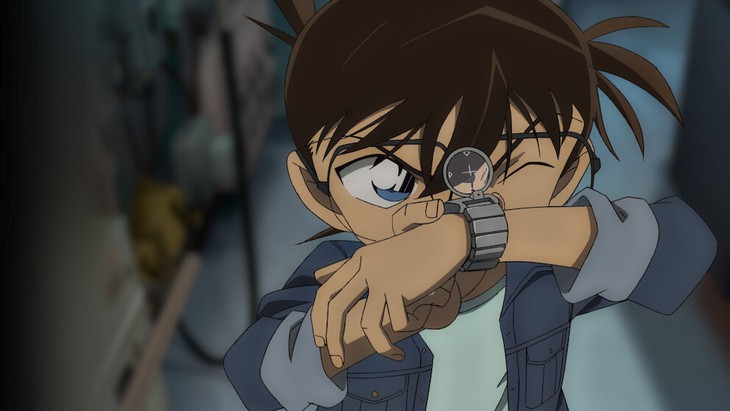
This iteration of Kaito Kid highlights a more vulnerable side of the character. When Inspector Ginzo Nakamori—the indefatigable lead investigator persistently tasked with capturing Kid—sustains severe injuries during the course of the investigation, it becomes glaringly apparent that the phantom thief’s theatricality masks genuine personal attachments. By embedding Kid within a multi-party treasure hunt alongside Conan and Heiji, the narrative elevates the character from a disruptive narrative device to a fully realized dramatic figure whose personal stakes mirror those of the core cast.
Industry Impact and Cultural Legacy
The enduring popularity of Kaito Kid within the Detective Conan cinematic universe underscores a masterclass in character writing and franchise expansion. By maintaining a delicate balance between mystery, theatricality, moral ambiguity, and intellectual parity with the protagonist, Kaito Kid has cemented his status as one of anime’s most beloved anti-heroes. As Toho and the production committee behind the franchise continue to develop future cinematic projects, the shadow of the white-suited phantom thief will undoubtedly continue to loom large, promising audiences worldwide that wherever the next great treasure is hidden, an unforgettable spectacle of magic, deduction, and rivalry is sure to follow.
Related posts: