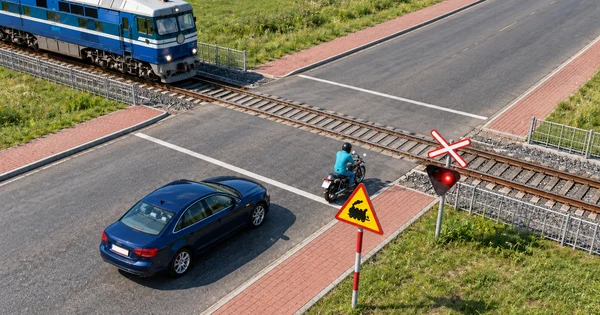
Navigating a railway level crossing in the modern urban landscape is a routine yet potentially perilous activity for millions of motorists. As traffic density increases, the tension at these intersections often manifests in reckless driving behaviors, particularly when warning systems—flashing lights, sirens, and lowering gates—are activated. A common, dangerous misconception among some drivers is that they have sufficient time to accelerate and bypass the barriers before an oncoming train arrives. However, this maneuver is not only a violation of traffic safety laws but also a primary cause of catastrophic accidents globally.
The Anatomy of a Rail Crossing Incident
The intersection of road and rail is a high-risk zone where the physics of heavy machinery—the train—overwhelmingly favors the locomotive over the motor vehicle. When a gate begins to lower, it serves as a non-negotiable signal for all road users to halt. Despite this, data from transit authorities suggests that "beating the train" remains a persistent issue, driven by driver impatience and a lack of situational awareness.
In many jurisdictions, including Vietnam, the official traffic code is explicit: when a warning signal is active, or a barrier is in motion, motorists must come to a complete stop at a safe distance. This rule is designed to prevent vehicles from becoming trapped on the tracks or obstructing the movement of the barrier arms themselves.
Regulatory Framework and Legal Consequences
According to Article 24 of the 2024 Road Traffic Safety Law, once a railway barrier begins to move, or if the red warning light is flashing and the siren is audible, drivers are legally obligated to stop on their side of the road, behind the designated stop line. Any attempt to accelerate or maneuver around a lowering gate constitutes a serious traffic infraction.
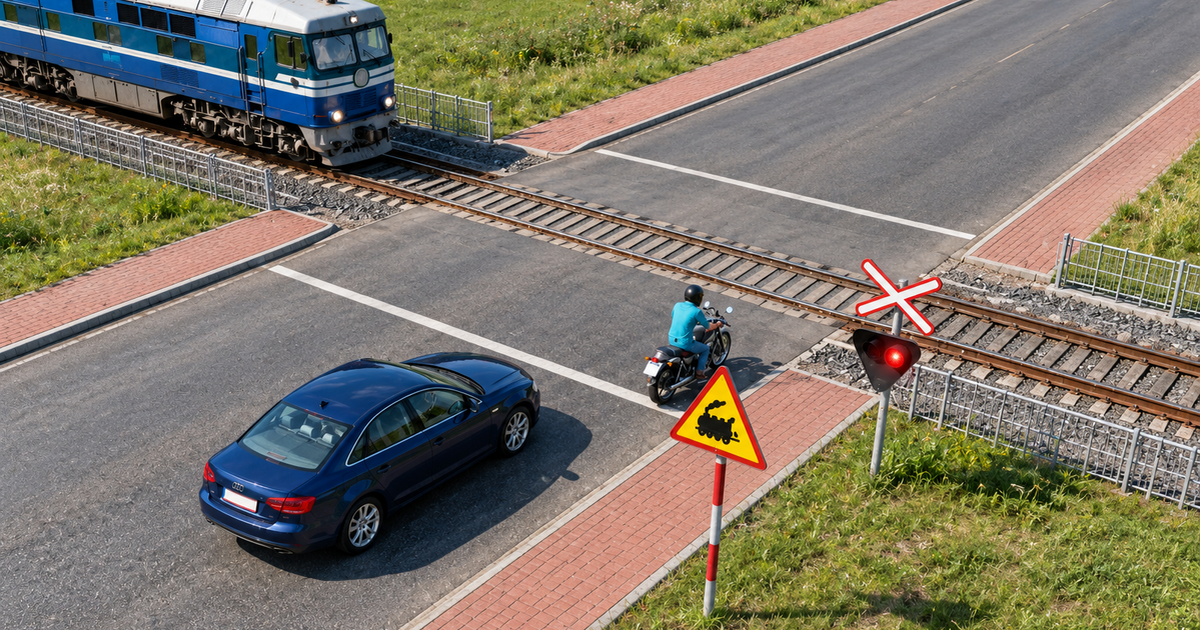
The implications for such behavior are severe. Under the newly implemented Decree 81/2026/ND-CP, motorists found violating these safety protocols face substantial administrative penalties. Specifically, a driver of an automobile who fails to adhere to rail crossing safety signals can be fined between 18 million and 20 million VND. Beyond the financial burden, the law mandates the suspension of the driver’s license for a period of one to three months. This punitive measure reflects the legislative intent to prioritize human life over the convenience of a few minutes of travel time.
Defining the "Safe Distance"
A frequently debated topic among drivers is the exact distance required for a safe stop at a railway crossing. Clarity on this is vital for both safety and legal compliance. According to Clause 3, Article 21 of Circular 34/2025/TT-BXD, the stop line at a level crossing must be positioned at a minimum distance of 5 meters from the nearest rail.
This 5-meter buffer serves several critical purposes. First, it provides a physical safety margin that prevents a vehicle from being struck by the train’s overhang. Second, it allows the driver sufficient space to observe the crossing area without encroaching into the path of the train. In instances where the stop line is obscured or absent due to road wear, the prudent and legally required action is to stop at a position that is clearly behind the lowered gate, ensuring that the vehicle does not cross the threshold into the immediate rail environment.
Chronology of Safety Evolution
The implementation of stricter regulations has been a gradual process, necessitated by an increasing number of "near-miss" incidents and fatal collisions. Historically, enforcement at rail crossings was sporadic, relying heavily on the discretion of crossing guards. However, with the integration of automated signaling systems and surveillance technology, the enforcement landscape has shifted toward a more data-driven, objective model.
- Phase One (Pre-2020): Reliance on manual gates and human observation. Accidents were often attributed to mechanical failure or human error by the crossing operator.
- Phase Two (2020–2024): The introduction of modernized, automated flashing signals and synchronized gate systems. Educational campaigns were launched to familiarize drivers with new, standardized stopping distances.
- Phase Three (2025–Present): Full implementation of digital enforcement. High-definition cameras at crossings now capture traffic violations in real-time, leading to automated citations. This shift has removed the ambiguity of traffic stops, as the evidence is now objective and indisputable.
Behavioral Analysis and Driver Psychology
Psychological studies on driver behavior at rail crossings indicate that "time pressure" is the most significant factor contributing to illegal maneuvers. When a driver is late for work or an appointment, their risk-assessment capabilities are often compromised. The sight of a lowering gate is sometimes perceived as a temporary obstacle rather than a life-or-death warning.
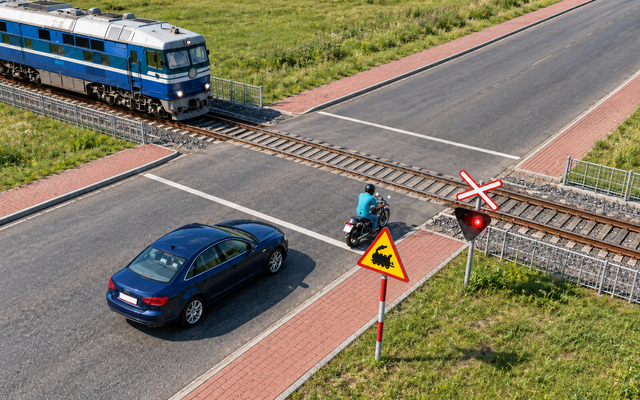
Experts in traffic psychology suggest that the solution requires a dual approach: improved infrastructure and cognitive behavioral training. During the standard driver licensing examination, applicants are tested on their response to these scenarios. For instance, in a common assessment question, drivers are presented with three options: accelerate to cross, stop at a safe distance, or ask a guard to lift the gate. The only correct answer is to stop at a safe distance. The persistence of this question in the curriculum underscores its importance in developing responsible driving habits.
Broader Implications for Infrastructure
The responsibility does not lie solely with the driver; infrastructure managers also play a pivotal role. The standardization of road markings, the visibility of warning lights, and the maintenance of the physical barriers are essential. If a barrier is poorly maintained or a signal is obscured by overgrown vegetation or poor lighting, the legal burden on the driver becomes more complex.
Furthermore, the economic impact of rail crossing accidents is significant. A single collision can result in hours of track closure, causing massive delays to both freight and passenger rail services, not to mention the emergency response costs and the long-term societal costs of fatalities or injuries. The integration of "smart" crossings—which communicate directly with traffic light systems to prioritize clearing the tracks—is the next frontier in urban transit planning.
Conclusion: A Mandatory Shift in Culture
The laws governing railway crossings are not merely bureaucratic hurdles; they are fundamental safety protocols designed to mitigate the inherent risks of shared transport corridors. For the modern driver, the rule of thumb remains simple and absolute: if the lights are flashing, the siren is sounding, or the gate is in motion, you must stop.
The recent increase in fines and the strict enforcement of distance requirements serve as a stern reminder that the safety of the public cannot be compromised by individual impatience. As transportation networks continue to expand, adherence to these rules will be the defining factor in reducing the occurrence of preventable tragedies. Drivers are encouraged to prioritize situational awareness, observe the 5-meter rule, and always err on the side of caution when approaching the tracks. In the context of road safety, waiting an extra two minutes is a small price to pay for the preservation of life.