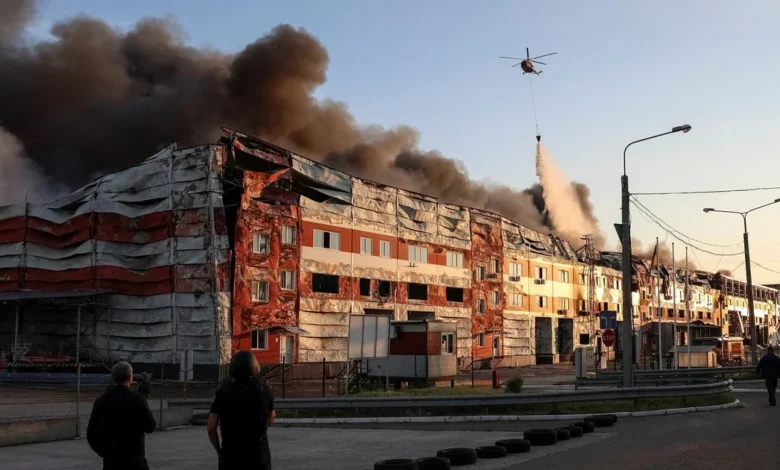
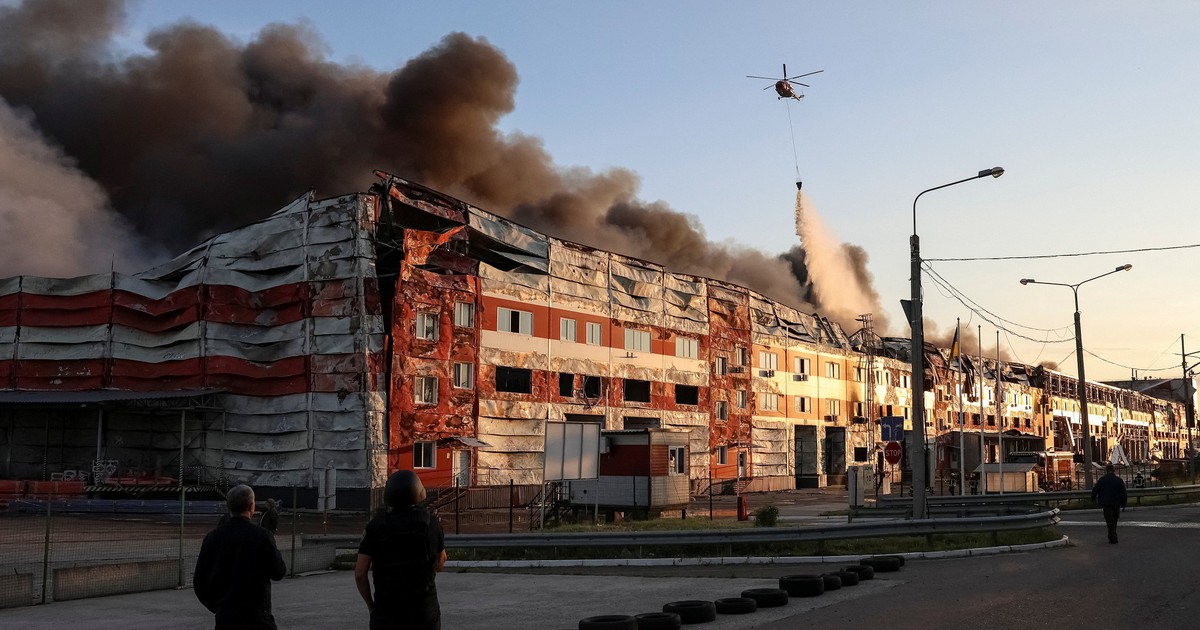
Kyiv, Ukraine – Ukrainian air defenses reported thwarting a massive Russian aerial assault on June 19th, claiming to intercept 125 unmanned aerial vehicles (UAVs), 25 cruise missiles, 10 Zircon hypersonic missiles, and an additional six other missiles. The majority of these projectiles were reportedly aimed at the capital city of Kyiv. This intense barrage, described by Ukrainian President Volodymyr Zelensky as one of Russia’s "largest missile attacks on Kyiv," underscores the persistent and escalating nature of the conflict between the two nations.
The pre-dawn hours of June 19th were punctuated by a series of explosions as air raid sirens wailed across Kyiv. This initial wave of attacks, commencing around 1:30 AM, was followed by a prolonged period of aerial bombardment that continued until 2:38 AM. Russian forces reportedly deployed a significant number of cruise missiles and supersonic missiles during this extended assault.
According to Ukrainian air force reports, the initial salvo of cruise missiles targeting Kyiv began at approximately 1:24 AM. Air defense systems registered over 20 cruise missile attacks within a single hour. In total, Ukrainian air defenses claimed to have successfully intercepted 108 Russian UAVs, one Kh-59/69 guided missile, and 17 Kalibr cruise missiles or Zircon hypersonic missiles. These intercepted projectiles were said to have targeted 10 locations, with fragments from 18 UAVs falling across various regions. Additional UAV attacks were reported in the Kyiv region around 10:00 AM on the same day.
The scale of the offensive, as detailed by Ukrainian officials, has led to significant casualties. Ukrainian sources claim that these Russian attacks have resulted in the deaths of at least 20 civilians and injured no fewer than 142 civilians across Ukraine within a 24-hour period.
Russian Ministry of Defense Claims Successes
In contrast to Ukraine’s defensive claims, the Russian Ministry of Defense issued its own statement on June 19th, asserting that its forces had targeted and destroyed fuel and logistics depots used by the Ukrainian military. Moscow also claimed to have neutralized assembly sites and deployment points for Ukrainian forces operating near the front lines. The Russian news agency TASS reported these claims.
As of June 19th, there had been no immediate response from Russia to Ukraine’s specific claims regarding the intercepted missiles and drones. Both sides have consistently accused each other of targeting civilian populations throughout the ongoing conflict.
Ukraine Claims Strikes on Russian Oil Facilities
Adding another dimension to the aerial exchanges, the Russian Ministry of Defense also reported that its air defenses had successfully destroyed 140 Ukrainian unmanned aerial vehicles (UAVs) across eight Russian regions, as well as over the Crimean Peninsula and the Sea of Azov and Black Sea. These alleged interceptions occurred between July 18th and 8:00 AM Moscow time on July 19th, according to TASS.
The Russian regions reportedly targeted by Ukrainian UAVs include Belgorod, Bryansk, Voronezh, Kaluga, Kursk, Rostov, Moscow, and Krasnodar. In the Kursk region, Governor Roman Starovoit announced via Telegram that a Ukrainian attack had resulted in one fatality.
Concurrently, Ukrainian President Volodymyr Zelensky announced on July 19th that Ukrainian forces had attacked three oil depots and one fuel depot in the Stavropol region of southern Russia. Zelensky stated on his social media platform X, "SSU units launched coordinated strikes on 3 oil depots in Stavropol region, while units of the Armed Forces of Ukraine attacked another fuel depot in the same region." He further noted that the three oil storage facilities belonged to "pirates" and had also been attacked in the Black Sea.
As of July 19th, Ukraine had not yet responded to Russia’s claims regarding the intercepted UAVs, nor had Russia commented on Ukraine’s reported strikes in Stavropol.
Internal Political Unrest Amidst the War
Against the backdrop of intense military operations, internal political tensions have also surfaced within Ukraine. On July 18th, thousands of people gathered in major Ukrainian cities for three consecutive days to protest against the perceived inaction of Deputy Prime Minister Mykhailo Fedorov. Protesters are demanding the dismissal of Fedorov, who is also the Minister of Digital Transformation.
The demonstrators also called for the removal of the Commander-in-Chief of the Ukrainian Armed Forces, Oleksandr Syrsky. The protests were reportedly sparked after Fedorov allegedly made conciliatory remarks towards Syrsky regarding the ongoing Russian military offensive. Following the protests, two high-ranking Ukrainian military officials publicly supported Syrsky, urging an end to internal divisions that could weaken the war effort against Russia.
Colonel Oleg Apostol, commander of an airborne assault brigade, criticized Fedorov’s remarks, stating, "It is a disgrace to hear the arguments and accusations from those who have never been in the trenches, have never commanded combat missions, and have never taken responsibility for the lives and health of soldiers." He was referring to Fedorov’s accusations against Syrsky.
Major General Oleksiy Neizhpapa of the Ukrainian Navy emphasized the unity of the Ukrainian Armed Forces (AFU), asserting, "Doubts about the AFU during wartime are simply unacceptable. The AFU are the only force that can win, regardless of what happens."
Fedorov, 35, who has no prior military service, reportedly requested Syrsky, 60, to divide the country’s land.
Background and Context
The current escalation of aerial attacks follows a protracted period of intense fighting since Russia’s full-scale invasion of Ukraine in February 2022. Both nations have engaged in a war of attrition, with significant territorial gains and losses on both sides. Ukraine, supported by Western allies, has been seeking to repel Russian forces and reclaim occupied territories. Russia, meanwhile, maintains its objectives, which have evolved throughout the conflict.
The use of drones and advanced missile systems, including hypersonic weapons, by both sides highlights the technological advancements and the evolving nature of modern warfare. The Zircon missile, in particular, has been a point of concern for NATO allies due to its speed and maneuverability, making it difficult to intercept.
The civilian toll from such attacks remains a critical concern. Reports of civilian casualties and damage to infrastructure underscore the devastating human cost of the conflict. International organizations and human rights groups have consistently called for the protection of civilians and adherence to international humanitarian law.
Broader Implications and Analysis
The sustained aerial assaults and reciprocal attacks suggest a strategic shift or intensification by both Russia and Ukraine. For Russia, the continued targeting of Kyiv and critical infrastructure may aim to degrade Ukraine’s military capabilities, disrupt civilian morale, and pressure the government into negotiations. Ukraine’s reported strikes on Russian oil facilities and logistics depots indicate a strategy to disrupt Russia’s war-fighting capacity and economic resources, potentially influencing Russia’s ability to sustain its military operations.
The internal political discord within Ukraine, while seemingly a domestic issue, could have broader implications for the war effort. Unity and strong leadership are crucial during wartime, and any significant internal divisions could be exploited by the adversary. The public’s demand for accountability from military and government officials, while a sign of democratic engagement, can also present challenges in maintaining a cohesive front during a critical conflict.
The ongoing stalemate on the ground, coupled with the intensification of aerial warfare, points towards a prolonged and attritional conflict. The effectiveness of air defense systems against advanced missile technologies, the sustainment of logistical capabilities for both sides, and the resilience of civilian populations will continue to be critical factors shaping the trajectory of the war. International involvement, through military aid and diplomatic efforts, also remains a significant element influencing the conflict’s dynamics. The coming weeks and months will likely reveal whether either side can achieve a decisive breakthrough or if the conflict will continue to be characterized by intense, localized fighting and widespread aerial exchanges.