Ford Unveils Mustang Mach-E Special Service Vehicle (SSV) to Lead Law Enforcement Fleet Electrification

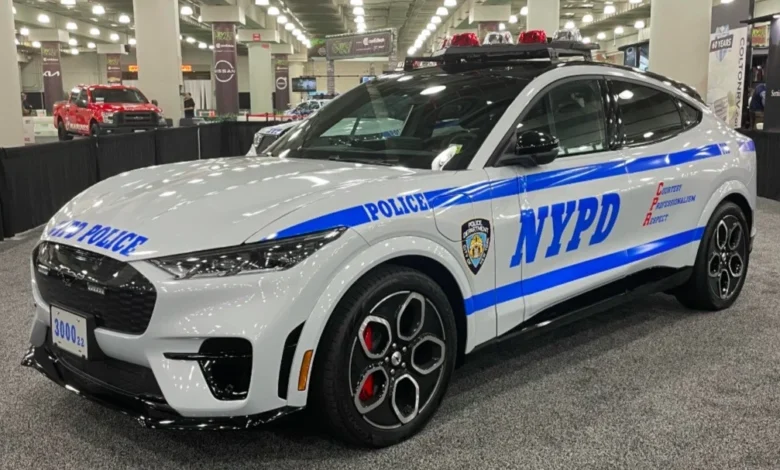
Ford Motor Company has officially expanded its law enforcement lineup with the introduction of the Mustang Mach-E Special Service Vehicle (SSV), a purpose-built, all-electric cruiser tailored for modern police fleets. Slated as part of the 2027 model year lineup, this specialized electric vehicle represents a significant strategic shift by the American automotive giant, aiming to accelerate the transition of municipal law enforcement agencies across the United States toward zero-emission patrol operations.
While several local police departments in North America have previously taken it upon themselves to retrofit and adapt civilian-spec Mustang Mach-E models for active duty, the factory-developed SSV variant is designed to streamline this process. By offering a dedicated police-ready platform straight from the production line, Ford intends to make high-performance electric vehicles a mainstream, accessible choice for agencies seeking efficient, durable, and technologically advanced patrol vehicles.
Engineered for Law Enforcement: Performance and Practicality
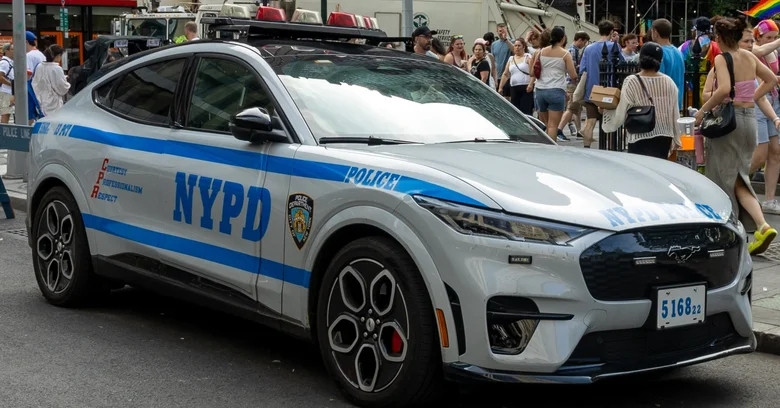
According to industry reports from Carscoops, the Mustang Mach-E SSV is built upon the foundation of the standard Select trim level while incorporating high-performance hardware derived from higher-tier variants. Rather than focusing on luxury amenities, the vehicle prioritizes operational durability, functional utility, and high-speed handling to accommodate the rigorous demands of law enforcement agencies that plan to install specialized emergency equipment before deploying the vehicle into active service.
Beneath the exterior, the Mustang Mach-E SSV utilizes a robust 91 kWh battery pack paired with a dual-motor, all-wheel-drive powertrain. While Ford has not yet disclosed the precise horsepower output specifically tuned for this police iteration, standard dual-motor all-wheel-drive configurations on the consumer-facing Select and Premium models typically generate approximately 370 horsepower. Higher-performance variants, such as the GT, push output up to 480 horsepower. The inclusion of subtle design cues and styling hints reminiscent of higher-performance trims has sparked significant interest among automotive analysts, though official performance metrics remain under wraps pending final homologation.
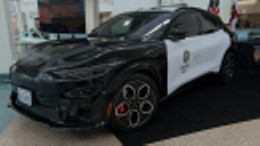
To ensure the vehicle can withstand the harsh realities of daily police work, the SSV is equipped with 20-inch alloy wheels, high-performance Brembo front brakes with red-painted calipers, and uniquely designed front and rear fascias paired with a gloss-black grille. Furthermore, the vehicle features Ford’s advanced Co-Pilot360 Active 2.0 driver-assistance suite, front parking sensors, and a specialized front trunk (frunk) equipped with drainage capabilities. These practical additions facilitate easier cleaning, maintenance, and the storage of wet or muddy tactical gear.
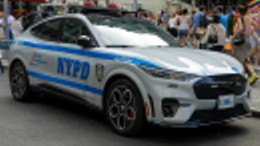
The Mustang Mach-E SSV also integrates the aggressive "Unbridled" drive mode. This setting optimizes throttle response, sharpens steering feedback, and enhances regenerative braking capabilities, supporting the dynamic driving maneuvers often required during high-speed pursuits or emergency responses.
A Growing Trend of Electrification in American Police Fleets
The introduction of the Mustang Mach-E SSV builds upon a growing history of electric vehicle experimentation by American law enforcement agencies. Early initiatives began as localized pilot programs, most notably in 2021 when the Michigan State Police rigorously tested a prototype Mustang Mach-E to evaluate its viability for patrol duty.
More recently, in early 2026, police officers in Dearborn, Michigan, integrated specialized Mustang Mach-E GT units into their fleets. These high-performance electric crossovers were specifically assigned to assist law enforcement personnel in deterring and intercepting reckless and aggressive drivers on municipal roadways.
Ford is not alone in driving the electrification of law enforcement. Over recent years, several other electric vehicle manufacturers have entered the space. In 2025, the Palo Alto Police Department added a Rivian R1S electric SUV to its fleet for daily patrol operations. Meanwhile, the Las Vegas Metropolitan Police Department integrated heavily modified Tesla Cybertrucks into its active fleet, supported through funding provided by technology entrepreneur Ben Horowitz and his spouse. According to preliminary data released regarding the Cybertruck deployment, each electric vehicle can save law enforcement agencies an estimated $8,800 to $12,000 annually in fuel costs, translating to substantial long-term operational savings over the lifetime of the vehicle.
Broader Implications and Future Outlook
The integration of electric vehicles into law enforcement fleets offers undeniable advantages, chief among them being drastically reduced energy expenses, lower maintenance overheads, and the elimination of tailpipe emissions during idling and low-speed patrols. However, fleet managers emphasize that real-world efficiency ultimately depends on daily duty cycles, the deployment and availability of robust local charging infrastructure, the duration vehicles must remain continuously operational, and the initial capital investment required for acquisition.
By developing the Mustang Mach-E SSV, Ford is proactively targeting specialized institutional customers rather than relying solely on individual retail consumers. Comprehensive pricing details, official EPA-estimated driving ranges per charge, and the exact delivery timeline for the initial wave of police agency allocations remain undisclosed. As municipal governments increasingly prioritize sustainability and carbon reduction goals, factory-backed electric pursuit vehicles like the Mustang Mach-E SSV are poised to redefine the future of American law enforcement transportation.