A Grand State Dinner at the White House Brings Together Tech Titans and Global Superpowers Amid Rising Artificial Intelligence Rivalry

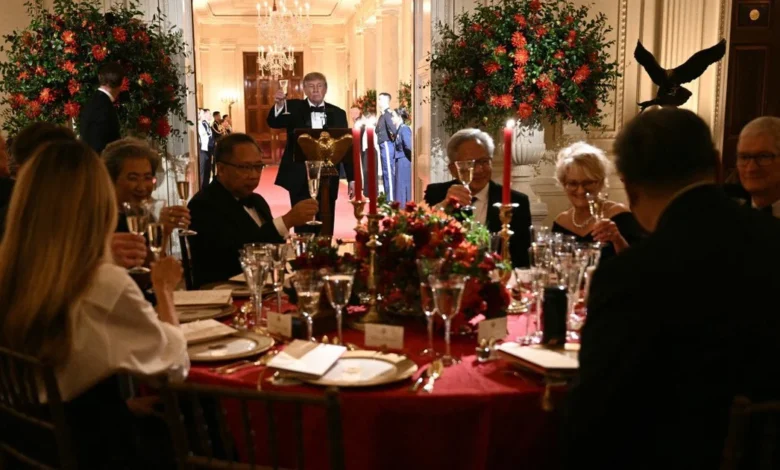
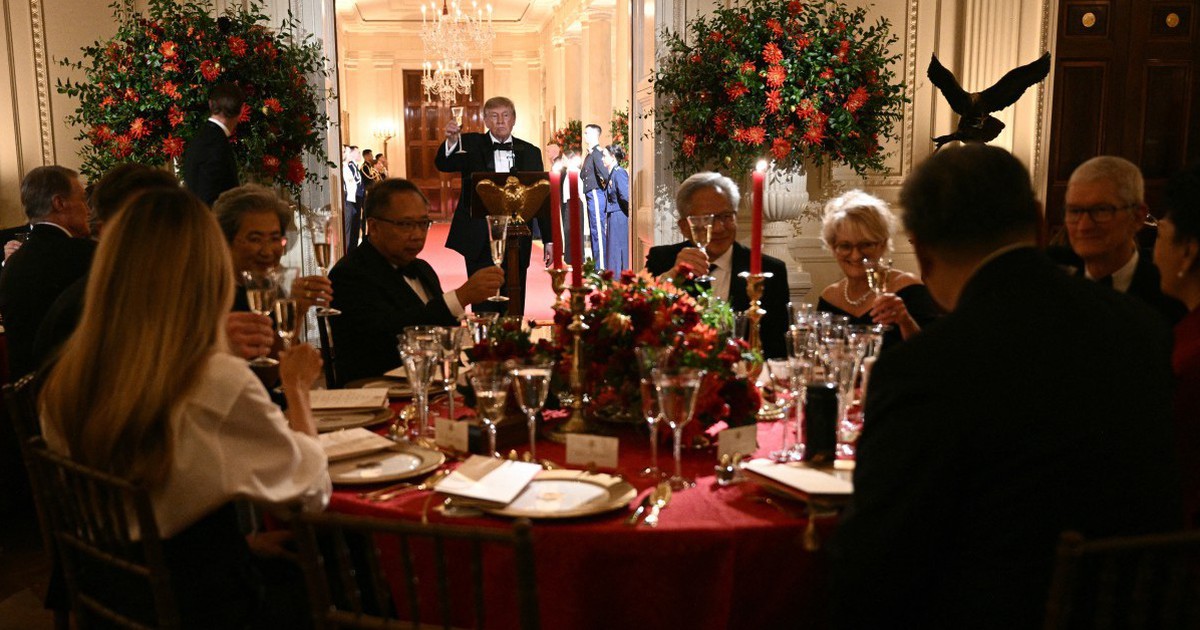
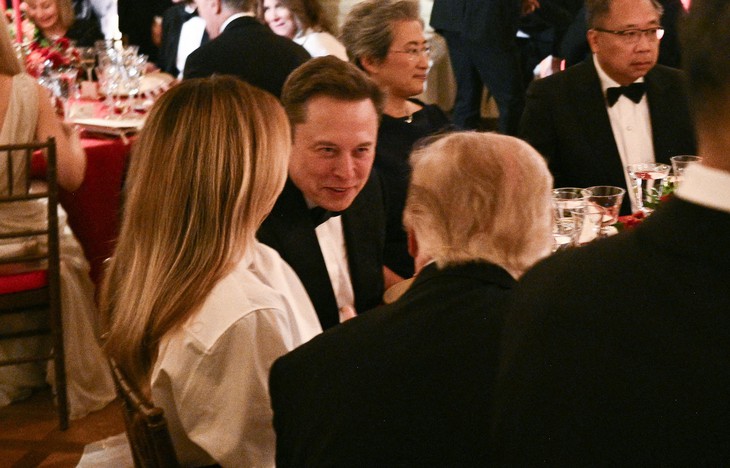
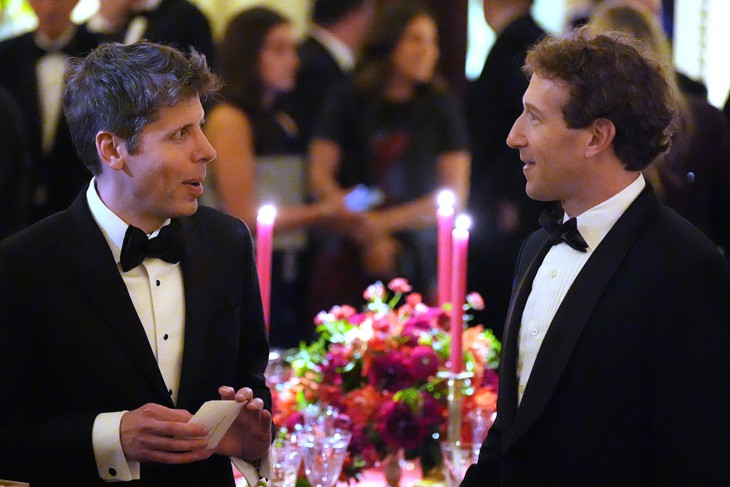
The East Room of the White House played host to an extraordinary gathering of economic and technological royalty on September 24, as United States President Donald Trump and Chinese President Xi Jinping welcomed over 130 elite guests for a high-profile state banquet. Designed to showcase geopolitical diplomacy while honoring the luminaries shaping the global technology landscape, the guest list served as a veritable who’s who of the world’s most influential innovators. Yet, despite the presence of billionaires and pioneering executives driving the artificial intelligence boom, the event drew intense global scrutiny just as much for the prominent figures who were conspicuously absent as for those in attendance.
The opulent banquet floor brought together traditional industrialists, financial titans, and the architects of the modern digital age. Among the American technology pioneers filling the historic halls were Tesla and SpaceX CEO Elon Musk, Amazon founder Jeff Bezos, Nvidia CEO Jensen Huang, Meta CEO Mark Zuckerberg, OpenAI CEO Sam Altman alongside Chairman Greg Brockman, Microsoft CEO Satya Nadella, and Google CEO Sundar Pichai. Other notable figures included Apple Chairman Tim Cook, AMD CEO Lisa Su, Qualcomm CEO Cristiano Amon, Micron CEO Sanjay Mehrotra, Zoom CEO Eric Yuan, and Michael Dell, co-founder of Dell Technologies. High-ranking leaders from the financial and industrial sectors—such as JPMorgan CEO Jamie Dimon, BlackRock CEO Larry Fink, Citigroup Jane Fraser, and Boeing CEO Kelly Ortberg—also secured invitations to the high-stakes diplomatic gathering.
The timing of the summit and its heavy emphasis on the artificial intelligence sector underscored the shifting geopolitical realities of the 21st century. Artificial intelligence has rapidly transformed from a niche academic pursuit into the primary arena of strategic competition between the world’s two largest economies. As Washington and Beijing grapple with the economic, social, and national security implications of rapidly advancing machine intelligence, the inclusion of tech moguls at a diplomatic state banquet highlighted how private-sector innovation has become inextricably linked to national sovereignty and foreign policy.
Notable Absences and Silicon Valley Conundrums
Despite the dense concentration of wealth and technological power gathered at the White House, the empty seats belonging to several prominent Silicon Valley leaders generated significant discussion among industry analysts and foreign policy observers.
Most notably, Anthropic—the developer of the Claude AI model and one of OpenAI’s fiercest competitors in the United States—had no official representation at the banquet. The absence of CEO Dario Amodei was particularly glaring given his vocal advocacy for strict AI safety guardrails and robust regulatory frameworks to mitigate existential risks. Amodei has frequently positioned himself as a leading voice urging policymakers to implement rigorous oversight before advanced AI systems surpass human control, making his exclusion or absence from a summit addressing AI governance a subject of intense speculation.
Similarly, Palantir co-founder Peter Thiel was absent from the roster due to his presence in Berlin, Germany, on the evening of September 24 to accept the prestigious Axel Springer Award. Palantir has evolved into one of Silicon Valley’s most critical defense technology contractors, providing advanced software and artificial intelligence analytics to all six branches of the United States armed forces, as well as intelligence and law enforcement agencies including the Federal Bureau of Investigation (FBI), the National Security Agency (NSA), and the Defense Intelligence Agency (DIA).
Other foundational pillars of the American technology establishment, such as Intel, IBM, and Oracle, were also missing from the guest list, even though the event successfully marshaled nearly the entirety of the nation’s premier artificial intelligence and computing enterprises.
Equally striking was the complete absence of Chinese corporate executives from the banquet. Despite earlier diplomatic expectations and rumors suggesting that select Chinese business leaders might travel to Washington to interact with President Xi, the delegation accompanying the Chinese leader consisted strictly of high-ranking government officials and state representatives. This omission highlighted the strict diplomatic protocols governing the summit, even as the two nations navigate deeply intertwined technological supply chains.
The Geopolitical Backdrop: AI Governance and Supercomputing Supremacy
The convergence of American technology executives occurred against the backdrop of intense high-level discussions between Presidents Trump and Xi regarding the escalating rivalry in artificial intelligence and advanced semiconductor manufacturing. The dialogue between the two leaders reflects a growing realization that technological dominance in the coming decades will dictate global economic and military supremacy.
In bilateral statements preceding the banquet, President Xi emphasized the shared responsibility of both nations to ensure that artificial intelligence remains firmly under human control and is harnessed for the collective benefit of humanity. The Chinese leader called for cooperative frameworks to manage the risks associated with autonomous systems and advanced computing models.
President Trump, meanwhile, reiterated his administration’s prioritization of artificial intelligence—frequently referring to the technology as "superintelligence"—as a central pillar of domestic and foreign policy. Trump reaffirmed his opposition to excessive regulatory frameworks that could stifle domestic innovation, advocating instead for policies that encourage rapid technological development. However, this pro-innovation stance is balanced by mounting national security concerns within Washington regarding the proliferation of advanced computing chips and dual-use technologies.
In an effort to avert potential escalations or misunderstandings regarding breakthrough AI capabilities, the United States and China have explored novel diplomatic mechanisms. Notably, U.S. Treasury Secretary Scott Bessent and Chinese Vice Premier He Lifeng discussed a proposed bilateral communication channel ahead of the presidential summit. This mechanism would allow Washington and China to notify one another regarding any sudden, unforeseen artificial intelligence incidents or anomalous model behaviors that could pose direct threats to national security.
Economic Implications and the Future of Trans-Pacific Tech Relations
The high-level interactions at the White House underscore a profound paradox defining contemporary U.S.-China relations: while geopolitical tensions, export controls on advanced semiconductors, and regulatory scrutiny continue to mount, the economic and technological dependencies binding the two superpowers remain deeply entrenched.
American tech giants rely heavily on global supply chains that intersect with East Asian manufacturing hubs, while Chinese firms continue to adapt to stringent American restrictions on cutting-edge hardware. The presence of figures like Jensen Huang of Nvidia and Satya Nadella of Microsoft at a dinner with the leader of China—the primary target of U.S. semiconductor export controls—illustrates the delicate tightrope walked by multinational technology enterprises. These companies must navigate a complex web of national security mandates at home while maintaining commercial viability in the world’s second-largest economy.
Furthermore, the absence of safety-focused advocates like Dario Amodei alongside the heavy representation of hyper-scalers and commercial developers highlights ongoing debates within the industry over the proper balance between rapid commercial deployment and precautionary safety governance. As the race toward artificial general intelligence (AGI) accelerates, the intersection of corporate ambition and statecraft will likely remain volatile, with leaders in Washington and Beijing exerting increasing influence over the trajectory of technological innovation.
As the smoke clears from the state banquet and the diplomatic delegations return to their respective capitals, the long-term implications of these high-level discussions remain to be seen. What is certain, however, is that artificial intelligence has firmly established itself as the defining frontier of international relations, binding the fortunes of Silicon Valley executives and global heads of state in an unprecedented partnership of ambition, competition, and caution.