Tension rises as United States confirms deployment of space-based weapons amid global concerns over militarization of orbit

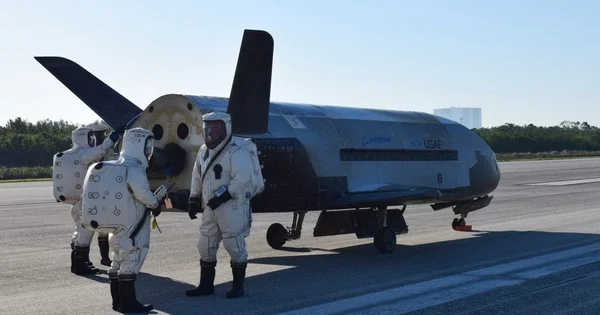
The United States has officially confirmed the deployment of space-based defensive weapon systems, a move that has drawn immediate and sharp condemnation from both Russia and China. This development marks a pivotal shift in the long-standing status of the orbital environment, signaling the end of an era where space was viewed primarily as a sanctuary for scientific cooperation. The announcement, confirmed by Pentagon officials on September 16, has effectively reignited anxieties regarding a potential space-based arms race, prompting urgent calls for new international legal frameworks to regulate military activities beyond the atmosphere.
The Strategic Shift in Orbital Defense
During a high-level security conference on September 14, U.S. Secretary of the Air Force Troy Meink articulated the necessity of the new military posture. According to Meink, the decision to deploy these assets is a direct response to the "increasingly complex and aggressive threats" posed by rival nations. The U.S. strategy focuses on "defensive space control" capabilities, designed to protect critical orbital infrastructure—including military communications, navigation, and surveillance satellites—against potential anti-satellite (ASAT) maneuvers by adversaries.
While the specific technical details of these systems remain classified, the shift marks a departure from the traditional U.S. policy of keeping kinetic weapon systems out of orbit. Pentagon officials emphasized that the current capabilities are strictly defensive, aimed at ensuring the resilience of the U.S. space architecture against jamming, cyber-attacks, or kinetic interceptors.
Chronology of Escalation
The militarization of space has been a slow-moving but accelerating trend over the past two decades.
- 1967: The signing of the Outer Space Treaty established a foundational legal framework, prohibiting the placement of nuclear weapons or other weapons of mass destruction in orbit.
- 2007: China conducted a successful kinetic ASAT test, destroying one of its own defunct weather satellites, which generated a massive debris field and signaled the vulnerability of orbital assets.
- 2019: The United States formally established the U.S. Space Force, the first new branch of the military in over 70 years, signaling the elevation of space to a primary theater of war.
- 2023-2024: Increased reporting of "proximity operations," where satellites from various nations have been observed maneuvering dangerously close to the assets of rivals.
- September 2026: The U.S. confirms the active deployment of defensive space-based systems, prompting an international outcry.
Global Reactions: Moscow and Beijing
The response from the Kremlin and the Chinese Ministry of Foreign Affairs was swift. Dmitry Peskov, the spokesperson for the Kremlin, described the U.S. initiative as a "dangerous trajectory" that threatens global security. In a briefing on September 15, Peskov stated that Russia remains committed to the "peaceful, non-militarized use of outer space" and called for international cooperation to prevent a new arms race.
Similarly, Chinese Foreign Ministry spokesperson Quo Jiachen issued a stern warning, urging the United States to cease the expansion of its military footprint in space. Beijing has consistently argued that the United States is seeking to turn space into a "battlefield" for hegemony. China’s official stance maintains that outer space is a global commons that should be utilized for peaceful exploration and that any attempt to weaponize it undermines international strategic stability.
The Legal Gray Area: Limitations of the Outer Space Treaty
The 1967 Outer Space Treaty, while landmark, contains significant loopholes. As noted by legal experts, including Laetitia Cesari of the United Nations Institute for Disarmament Research (UNIDIR), Article IV of the treaty specifically prohibits weapons of mass destruction and nuclear weapons in orbit. However, the treaty is conspicuously silent on conventional, non-nuclear weapon systems, such as lasers, kinetic interceptors, or electronic warfare suites.
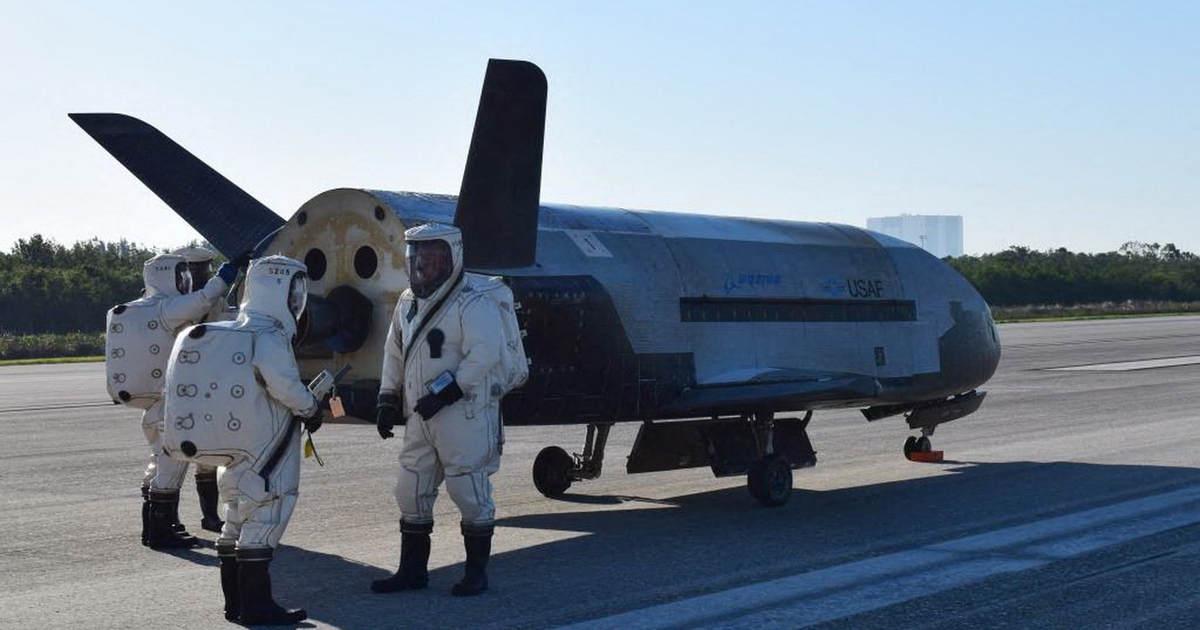
This legal "blind spot" has created an environment where nations can legally develop and test various forms of space weaponry as long as they do not constitute weapons of mass destruction. The lack of a comprehensive legal framework has left the international community struggling to define what constitutes a "hostile act" in orbit, as opposed to routine satellite maneuvering.
Implications for Global Security
The deployment of space-based weapons introduces a high degree of instability. Unlike terrestrial conflicts, where escalation can often be managed through communication channels, space operations involve extreme velocities—where a collision or a strike can occur in seconds, leaving little room for diplomacy.
The strategic risk is further amplified by the "Kessler Syndrome," a phenomenon where a collision or the use of kinetic weapons creates a cascade of orbital debris. This debris, traveling at orbital speeds, can destroy other satellites, rendering low-Earth orbit (LEO) unusable for decades. Given the world’s dependence on satellite networks for banking, GPS, weather forecasting, and military command, an uncontrolled space conflict could have catastrophic consequences for the global economy.
Analytical Perspective: The Future of Space Governance
Military analysts suggest that the U.S. decision is driven by a "deterrence through capability" strategy. By demonstrating the ability to neutralize threats in orbit, the U.S. hopes to dissuade Russia and China from targeting the vital satellite constellations that underpin the American military and civilian infrastructure.
However, this strategy carries a significant "security dilemma." As the U.S. deploys its defensive assets, rivals are likely to respond with their own counter-measures, leading to an iterative cycle of technological competition. This is particularly problematic in the absence of a "hotline" or clear rules of engagement for space.
Looking forward, the international community is set to convene at the United Nations in November to discuss the future of space disarmament. Experts suggest that the focus will likely shift toward "responsible behavior" in space—a set of norms that, while not legally binding, could provide a baseline for avoiding accidental escalation. Whether these discussions can bridge the widening divide between the major powers remains the most critical question in modern space policy.
As the global community faces this new reality, the consensus among scientists and policy experts remains clear: the cost of a space-based conflict would be universal, affecting every nation on Earth regardless of their involvement in the space race. The challenge for the coming decade will be whether the major spacefaring nations can prioritize the preservation of the orbital environment over the immediate tactical advantages of militarization.