Navigating Inheritance Tax Deadlines: Why Real Estate Heirs in Hanoi Face Compliance Confusion and Penalties


The intricacies of Vietnam’s property laws and tax regulations often present a labyrinthine challenge for citizens, particularly when multiple legal frameworks intersect during the estate settlement process. A recent case involving a Hanoi resident, Mrs. N.T.H., has brought to light a significant discrepancy between civil land registration rules and tax administration guidelines regarding real estate inheritance. This administrative gray area has left many property heirs questioning whether they have inadvertently violated tax filing deadlines, exposing them to potential administrative penalties despite complying fully with land registration timelines.
The confusion centers on the timeline permitted for registering property fluctuations versus the strict deadlines imposed for filing Personal Income Tax (PIT) returns on inherited real estate. As local tax authorities increasingly crack down on late filings, understanding the precise statutory requirements has become crucial for heirs navigating property transfers across urban centers like Hanoi.
Chronology of an Inheritance Dispute: From Partition to Tax Notice
The events leading to Mrs. H.’s administrative dilemma began in mid-2026, marking a standard yet legally sensitive journey of asset distribution within an urban Vietnamese family.
On June 20, 2026, Mrs. H.’s family successfully finalized and signed a formal written agreement on the partition of an estate. The inherited assets comprised a residential land use right alongside assets attached directly to the land, situated within the capital. Following civil procedures and family consensus, the family initiated the mandatory administrative steps to transfer ownership.
By July 7, 2026—just seventeen days after the execution of the partition agreement—the family completed and submitted their comprehensive dossier for the registration of land use right fluctuations at the Public Administration Service Center. Believing they had acted with commendable promptness well within standard administrative windows, the family awaited the processing of their property titles.
However, on July 27, 2026, Mrs. H. received an official notice from local authorities demanding a supplementary document. Specifically, the state agency requested a signed working protocol or minute confirming the exact number of days that had elapsed since the inheritance partition, noting what they deemed to be a delayed submission of the personal income tax return associated with the inherited real estate.

This unexpected requirement sparked a regulatory conflict between different branches of Vietnam’s legal code, prompting Mrs. H. to publicly question the synchronization of administrative procedures.
The Regulatory Clash: Land Law Versus Tax Administration Law
At the heart of Mrs. H.’s confusion lies a stark contradiction between the Land Law and the Law on Tax Administration, compounded by guidance from the Ministry of Finance.
According to Mrs. H.’s analysis, the Land Law explicitly permits citizens an extended timeline to execute mandatory land registration procedures—including scenarios involving inheritance or asset partition—up to 30 days from the date a property fluctuation arises. Having submitted her family’s dossier within 17 days of drafting the partition agreement, she operated under the assumption that her actions were fully compliant with the spirit and letter of property laws.
Conversely, the tax authorities view the matter through the stringent lens of tax administration statutes. When the case was reviewed, Tax Branch No. 6 in Hanoi cited a web of legal provisions to justify the determination that Mrs. H.’s family had indeed submitted their PIT declaration late.
To substantiate this stance, the tax office referenced Point 4, Article 8 of Decree 126/2020/ND-CP, which explicitly stipulates that Personal Income Tax derived from real estate transfers, inheritances, and gifts falls under the category of taxes declared upon each separate occurrence. This is reinforced by Point 6, Article 26 of Circular 111/2013/ Министерства Tài chính (Ministry of Finance), which mandates that individuals receiving income from inheritances or gifts must file tax returns per occurrence, even in instances where the assets are ultimately exempted from taxation.
Crucially, the timeline governing this tax obligation is dictated by Point 3, Article 44 of the 2019 Law on Tax Administration (Law No. 38/2019/QH14). The law sets the deadline for submitting tax returns for obligations arising on a per-occurrence basis no later than the 10th day from the date the tax obligation arises.
Because the tax obligation for an inheritance is generally understood by tax authorities to arise upon the legal formalization of the estate partition, the 10-day limit starkly clashes with the 30-day land registration window granted under the Land Law. Consequently, Tax Branch No. 6 concluded that despite filing within 17 days for land fluctuation registration, the family had breached the 10-day tax filing threshold, triggering a late-submission classification.

Broader Context and Implications for Property Heirs
The predicament faced by Mrs. H. is far from an isolated incident. Across major metropolitan areas like Hanoi and Ho Chi Minh City, citizens frequently encounter friction when coordinating multi-agency procedures involving local People’s Committees, land registration offices, and sub-department tax authorities.
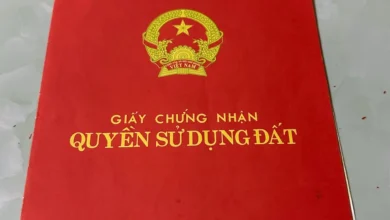
Inheriting real estate in Vietnam involves a two-pronged administrative process: civil/land registration to update the pink book (Certificate of Land Use Rights), and financial/tax clearance to fulfill state fiscal obligations. While government initiatives over the past decade have focused heavily on digital transformation and establishing "one-stop-shop" (Bộ phận Một cửa) administrative centers, the underlying legal harmonization between specialized laws remains incomplete.
Legal experts note that the discrepancy creates a hidden trap for unsuspecting heirs. While families focus on gathering documents, clearing notary fees, and submitting land fluctuation files within the generous 30-day window provided by land regulations, the tax clock ticks down much faster. Failing to file the PIT declaration within the strict 10-day window can lead to administrative fines for late filing, ranging from minor monetary penalties to delays in issuing the updated property title, as tax clearance is a mandatory prerequisite for finalizing land registration.
Furthermore, the requirement to file tax returns even when an inheritance qualifies for tax exemption adds another layer of procedural burden. Under Vietnamese tax law, direct blood relatives and certain family members are often exempt from paying PIT on inherited real estate. However, the exemption does not waive the administrative requirement to file the tax declaration dossier within the statutory timeframe. Many citizens mistakenly believe that if no tax is owed, no formal tax filing deadline applies.
Recommendations for Citizens and Administrative Reform
In light of rulings such as the one issued by Tax Branch No. 6, legal advisors and real estate professionals strongly recommend that citizens approach property inheritances with heightened procedural vigilance.
- Decouple Timelines: Heirs should not assume that the deadlines for land registration and tax filing run concurrently. Tax obligations must be prioritized independently of land fluctuation procedures.
- Consult Early: Engaging a legal or tax professional immediately upon signing an estate partition agreement can prevent costly miscalculations regarding the 10-day tax filing window.
- File Regardless of Exemption Status: Even if an inheritance is entirely exempt from personal income tax under family relation rules, the mandatory declaration dossier must still be compiled and submitted to the local tax office within 10 days of the estate’s legal establishment.
From a governance perspective, the case underscores an urgent need for legislative synchronization. Legal scholars argue that reconciling the timelines within the Law on Tax Administration, the Land Law, and related implementation decrees would alleviate unnecessary administrative friction for citizens. Until such regulatory alignment is achieved at the ministerial level, property heirs in Vietnam must remain exceptionally vigilant, treating tax filing deadlines as an immediate priority that supersedes standard property transfer timelines.