A harrowing fire broke out early on the morning of September 27 in a five-story residential building located in a narrow alley on Thanh Liet Street, Hoang Mai District, Hanoi. The incident, which occurred at approximately 5:10 AM, prompted an immediate and high-stakes emergency response from the municipal fire and rescue services. While four residents managed to escape the burning structure through an emergency exit window, two individuals remained trapped within the building, necessitating a complex rescue operation.
The fire reportedly originated on the ground floor, which spanned approximately 30 square meters. Due to the presence of multiple motorcycles and a significant volume of combustible household materials stored in the area, the flames intensified rapidly. The fire quickly consumed the ground floor and spread upward, utilizing the building’s internal staircase as a chimney, which allowed thick, toxic smoke to permeate the upper levels, obstructing escape routes for those inside.
Chronology of the Emergency Response
Upon receiving reports of the blaze, the Hanoi Fire and Rescue Police Department dispatched units from the Number 12 and Linh Dam divisions. Upon arrival, emergency responders were confronted with a high-intensity fire and dense, black smoke that severely limited visibility and hindered immediate entry.
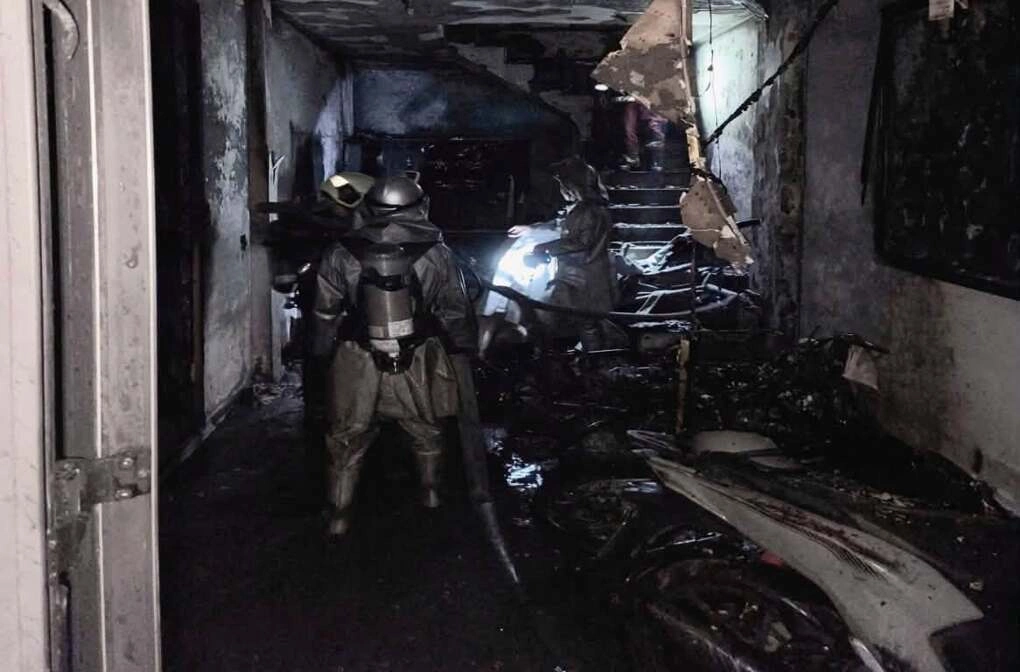
At 5:20 AM, approximately ten minutes into the operation, the incident command structure was fully established. The fire captain directed the efforts by dividing the personnel into specialized teams. One group, equipped with self-contained breathing apparatus (SCBA), was tasked with conducting a search and rescue operation to locate the two individuals reported missing. A second team focused on direct suppression, deploying water lines to contain the fire and prevent it from spreading to adjacent properties, which are situated in close proximity in the densely populated neighborhood.
By 5:30 AM, after an intense 20-minute search and containment effort, firefighters successfully reached the two trapped victims. The rescuers navigated through the smoke-filled upper floors and successfully evacuated both individuals through the rooftop access of an adjacent building. By 5:40 AM, the fire was officially declared under control, and the process of total extinguishment was completed shortly thereafter. Preliminary inspections revealed significant fire damage to the ground floor, while the staircase and upper levels sustained severe smoke and soot damage. The cause of the ignition remains under active investigation by local authorities.

Contextualizing the Wave of Urban Fires in Hanoi
The incident on Thanh Liet Street is the latest in a troubling series of fire-related emergencies that have plagued Hanoi over the past few weeks. The city, characterized by its "tube house" architecture—narrow, multi-story buildings often with limited secondary exits—presents unique challenges for fire safety and emergency extraction.
On September 23, a massive warehouse fire in Son Dong Commune, situated along the Thang Long Boulevard, resulted in the destruction of thousands of square meters of inventory. Just one day prior, a major warehouse facility near the base of Vinh Tuy Bridge became engulfed in flames, destroying a substantial quantity of goods. On September 21, firefighters were called to a clothing store on Tran Vu Street in Phuc Dien Ward to rescue five people who were trapped by an aggressive fire. Most tragically, on September 16, a four-story house on Thuy Khue Street in Tay Ho District caught fire, resulting in the loss of five lives.
These repeated incidents have highlighted a critical vulnerability in urban fire management. The combination of high-density housing, narrow alleyways that restrict the access of large fire engines, and the storage of flammable materials in residential spaces continues to be a recurring factor in these tragedies.
Data and Safety Implications
According to public safety data from the Hanoi Department of Fire and Rescue, the majority of urban fires in the capital are linked to electrical malfunctions and the improper storage of hazardous or flammable items in living spaces. In many "tube house" structures, the lack of secondary exits—such as balcony access or emergency ladders—compounds the danger when a fire originates on the ground floor, which often serves as a garage or storage area for motorbikes.
Urban planning experts note that the rapid development of Hanoi has frequently outpaced the implementation of modern fire safety infrastructure. Many of the older residential structures were built before the current, more stringent fire codes were strictly enforced. Consequently, the city is currently engaged in a massive inspection campaign, urging residents to install fire alarms, fire extinguishers, and to clear obstructions from emergency exits.
Official Responses and Preventive Measures
Following the recent spate of fires, the Hanoi People’s Committee has urged district-level authorities to increase oversight of residential safety. Officials have emphasized that property owners must take proactive steps to ensure that their buildings meet safety standards, including the removal of "tiger cages"—the metal security grilles that, while effective against burglary, often act as death traps during fires because they prevent escape and hinder firefighter access.
"The safety of our residents is our top priority," a spokesperson for the local police department noted in a briefing regarding recent fire safety protocols. "While our fire services are equipped to respond rapidly, the design of the buildings in these older districts requires residents to be equally prepared. Simple measures, such as maintaining clear paths to windows and keeping fire extinguishers on every floor, can be the difference between life and death."
Broader Societal Impact
The recurring nature of these fires is beginning to shift the public discourse in Hanoi. There is a growing demand for stricter enforcement of building codes and the mandatory installation of fire-suppression systems in residential high-rises and dense housing blocks. Furthermore, the psychological impact on the community is significant, as residents in older neighborhoods express increased anxiety regarding the safety of their homes.
From an economic perspective, the frequent loss of warehouses and commercial spaces near major transit arteries like Thang Long Boulevard and Vinh Tuy Bridge suggests a need for better fire-safety zoning. Many of these businesses are located in mixed-use areas that are not originally designed for large-scale storage, creating a higher risk of fire spreading to neighboring residential units.
As the investigation into the Thanh Liet Street fire continues, the incident serves as a stark reminder of the limitations of fire suppression in a city built on centuries-old urban patterns. The success of the rescue operation on September 27, while commendable, underscores the necessity of continued investment in specialized training for first responders who operate in these confined and dangerous environments.
Moving forward, the city’s ability to reduce the frequency and severity of these events will depend on a multi-pronged approach: strengthening the enforcement of safety regulations, promoting public awareness regarding fire hazards, and retrofitting existing housing stock to ensure that residents have viable escape routes in the event of an emergency. The resilience of Hanoi’s citizens is tested repeatedly, but the focus must remain on systemic change to prevent future tragedies.