Bamboo Capital Group Restructures After Divesting Key Real Estate and Energy Assets to Focus on Core Pillars and Emerging Growth Sectors

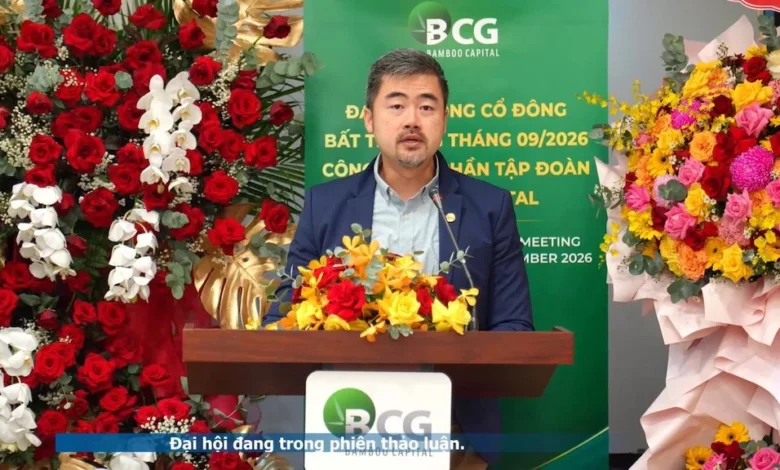
The corporate landscape of Vietnam witnessed a significant strategic pivot on September 17, as CTCP Tập đoàn Bamboo Capital (HOSE: BCG) officially greenlit a sweeping corporate restructuring program during an extraordinary general meeting (EGM). The resolution marks a definitive turning point for the multi-industry conglomerate, which has decided to divest its entire ownership stakes in two of its most prominent subsidiaries: BCG Land and BCG Energy, alongside several other non-core investments.
This decisive maneuver effectively removes two foundational pillars that historically drove a substantial portion of the group’s consolidated revenues and asset valuation. By shedding its heavy exposure to real estate development and renewable energy infrastructure, Bamboo Capital is signaling a profound philosophical shift in its long-term corporate vision. While the move instantly slims down the group’s balance sheet and operational footprint, it simultaneously triggers critical questions among institutional investors, creditors, and market analysts regarding the future trajectory of the enterprise, its near-term liquidity management, and its ability to maintain structural continuity amidst a challenging macroeconomic climate.
Background Context: The Evolution and Re-evaluation of the BCG Ecosystem
To understand the weight of the September 17 EGM resolution, it is necessary to examine the historical architecture of Bamboo Capital Group. Founded and built upon a diversified business model, the conglomerate previously operated across five principal operational pillars. These included infrastructure development managed through Transport and Industry Development Investment Joint Stock Company (Tracodi), real estate spearheaded by BCG Land, renewable energy spearheaded by BCG Energy, as well as distinct commercial portfolios in manufacturing and insurance.
For years, BCG Land and BCG Energy served as the twin engines of growth, absorbing massive capital investments, attracting foreign project financing, and anchoring the group’s high-profile brand presence in Vietnam’s dynamic property and clean energy sectors. However, mounting regulatory complexities, shifting capital market conditions, and a prolonged liquidity squeeze across the domestic corporate bond and real estate markets prompted the board of directors to reassess the long-term viability of maintaining such capital-intensive subsidiaries under the parent company’s direct consolidated umbrella.
During the extraordinary meeting, Chairman Tan Bo Quan, Andy, elaborated on the strategic rationale behind the divestments. According to executive leadership, the board determined that the capital requirements and cyclical nature of large-scale real estate and green energy projects no longer aligned with the group’s immediate risk appetite and broader capital allocation strategy. Consequently, the conglomerate has chosen to exit these domains entirely, paving the way for a streamlined operating model centered on its remaining core divisions: infrastructure, manufacturing, and insurance.
Retaining Core Foundations: Infrastructure, Manufacturing, and Insurance

Following the successful execution of the divestment plans for BCG Land and BCG Energy, Bamboo Capital will anchor its operational foundation on three remaining segments. Leadership maintains that these divisions possess resilient business models, steady cash flow generation capabilities, and a reduced dependence on volatile project-based financing.
In the infrastructure sector, Tracodi continues to maintain its status as a publicly listed entity, weathering broader market headwinds to post a return to profitability during the first half of the year. Tracodi’s ongoing civil engineering and infrastructure projects provide a stable, fee-based revenue stream that cushions the parent company against cyclical downturns in the property market.
Meanwhile, the insurance sector—represented by AAA Insurance—has successfully emerged from a comprehensive restructuring phase. Having systematically cleared its accumulated historical losses, AAA Insurance has begun recognizing recurring net profits, transforming from a capital-consuming asset into a stable contributor to the group’s financial health.
The manufacturing segment, which encompasses operations in wood processing via Nguyen Hoang and pharmaceuticals via Tipharco, continues to maintain a steady operational baseline. Company executives note that while these businesses are currently focused on fortifying their footprints within the domestic market, the board is evaluating strategic opportunities to expand their reach regionally as part of the broader 2026–2030 corporate roadmap.
The Governance and Liquidity Challenge: Addressing Market Confidence
Despite the strategic clarity offered by the divestment blueprint, executive leadership has openly acknowledged the immediate hurdles facing the enterprise. A critical topic of discussion during the EGM centered on the conglomerate’s corporate status and its subsequent impact on investor trust and credit accessibility.
Mr. Ng Wee Siong, Leonard, Board Member and Chief Executive Officer of Bamboo Capital, addressed the financial community regarding the implications of the restructuring. He noted that the ongoing portfolio rationalization and corporate transitions have introduced temporary friction in stakeholder relationships.
"The structural changes and the transition of certain entities out of the publicly traded umbrella have naturally influenced market sentiment," Mr. Leonard stated during the meeting. "Partners, banking institutions, and commercial lenders have adopted a considerably more cautious stance regarding capital access and credit extensions."

To counter these pressures, executive management has outlined a stringent set of immediate priorities aimed at fortifying the group’s liquidity buffers. These measures include prioritizing cash-generating operations, aggressively restructuring investment portfolios and debt service obligations, and conducting exhaustive financial health audits across every individual subsidiary and affiliate.
Short-Term Priorities: Financial Stabilization Over Growth Ambitions
While the medium-to-long-term strategic blueprint envisions expansion into cutting-edge sectors, the overarching mandate for Bamboo Capital through the remainder of the year is unambiguous: operational stabilization, debt resolution, and balance sheet fortification.
At present, the parent company’s primary revenue streams derive from financial investments, dividend distributions from remaining affiliates, and management fees. Management confirmed during the proceedings that these underlying business units continue to function without major disruption, ensuring a continuous trickle of operating cash flow to the holding entity. Crucially, as of the EGM date, the conglomerate reported no systemic default risks that would threaten its operational continuity.
The financial roadmap presented to shareholders emphasizes that any prospective capital deployment into new ventures will remain strictly subordinated to debt resolution and liquidity management. Management has reiterated that new investment projects will only be greenlit when clear, low-risk opportunities materialize and the parent company possesses adequate surplus capital. Until those conditions are met, the singular focus remains on reinforcing the financial foundation before returning to aggressive growth targets.
Venturing into New Horizons: International Trade, Artificial Intelligence, and Semiconductors
Even as management underscores the necessity of near-term financial consolidation, Bamboo Capital’s forward-looking framework for the 2026–2030 period reveals an ambition to pivot toward modern, asset-light, high-margin growth drivers. Beyond the three retained pillars of infrastructure, manufacturing, and insurance, the conglomerate is actively exploring two emerging economic vectors: international trade and high-technology industries, specifically artificial intelligence (AI) and semiconductor ecosystems.
In the domain of international trade, the board of directors has laid out preliminary infrastructural frameworks. If the strategic initiative moves past the exploratory phase, the executive board plans to systematically construct operational supply chains and forge partnerships with established global trade entities.

Concurrently, the technology vertical—highlighted by explorations into artificial intelligence and the semiconductor value chain—represents a bold conceptual departure from the group’s traditional industrial roots. Company representatives confirmed that preliminary exploratory discussions are underway with various industry partners to evaluate potential collaboration models. However, leadership was careful to temper market expectations, emphasizing that these technology initiatives currently reside strictly within the conceptual planning phase of the restructuring roadmap and do not represent committed capital expenditure projects.
Implications and Broader Market Outlook
The strategic metamorphosis undertaken by Bamboo Capital reflects a wider trend among Vietnamese conglomerates navigating a tightening credit environment and shifting regulatory paradigms. By shedding heavy assets in real estate and energy, BCG is effectively reducing its leverage ratio and mitigating exposure to asset-liability mismatches that have historically plagued capital-intensive enterprises in emerging markets.
However, the success of this transition hinges heavily on execution. The ability of management to successfully resolve legacy financial obligations, rebuild institutional credibility, and manage stakeholder relationships will dictate whether the conglomerate can successfully pivot toward its envisioned future in high-technology and international commerce.
As the corporate sector digests the sweeping resolutions passed on September 17, market participants will closely monitor Bamboo Capital’s upcoming financial disclosures, debt restructuring milestones, and the practical implementation of its refined operational model. For now, the leadership’s disciplined adherence to financial stabilization serves as a pragmatic anchor in a period of profound organizational transition.