Beyond the Midlife Myth: Rising Thyroid Cancer Rates Among Young Adults Demand Urgent Medical Attention

Thyroid cancer has long been categorized by the general public and even within certain clinical circles as a condition predominantly affecting middle-aged and older populations. However, a significant epidemiological shift is currently rewriting medical expectations. Healthcare facilities across Vietnam, most notably at Viet My General Hospital in Ho Chi Minh City, report a striking increase in thyroid cancer diagnoses among younger demographics, including individuals in their twenties and early thirties. This emerging health trend challenges the traditional paradigm that endocrine malignancies are primarily diseases of maturity, prompting oncologists and endocrinologists to reevaluate screening protocols, diagnostic thresholds, and the multifaceted drivers behind this rising incidence.
The clinical reality of this demographic shift was recently underscored at Viet My General Hospital, where multidisciplinary surgical teams successfully treated a 34-year-old female patient from Tay Ninh Province, identified in records as Ms. B.N. Despite her youthful appearance and active lifestyle, Ms. N. sought medical intervention after experiencing persistent, unexplained fatigue, excessive hair thinning, and a palpable abnormality in her neck region. Before this presentation, she had a documented medical history of Hashimoto’s thyroiditis, a common autoimmune condition characterized by chronic inflammation of the thyroid gland.
Unlike many aggressive malignancies that present with rapid physical deterioration, Ms. N. reported no localized pain, maintained a normal diet without any special restrictions, and experienced no overt swallowing difficulties. It was only the chronicity of her fatigue and the noticeable physical changes that prompted her to seek specialist evaluation. Diagnostic workups, including high-resolution ultrasound and fine-needle aspiration biopsies, confirmed the presence of multifocal thyroid carcinoma involving both thyroid lobes. Given the bilateral nature of the lesions, attending specialists recommended a total thyroidectomy to eliminate the disease entirely while minimizing the risk of recurrence.
Navigating Complex Surgical Interventions for Younger Patients
Performing thyroid surgery on younger patients introduces distinct clinical challenges, particularly when complicated by pre-existing autoimmune conditions. Dr. Ton Nu Phuong Duyen, a specialist from the General Surgery Department at Viet My General Hospital who led the surgical team, noted that chronic conditions like Hashimoto’s thyroiditis often induce fibrotic changes and tissue adherence within the thyroid bed. This chronic inflammation alters the tissue planes, making the meticulous dissection and preservation of critical anatomical structures significantly more difficult.
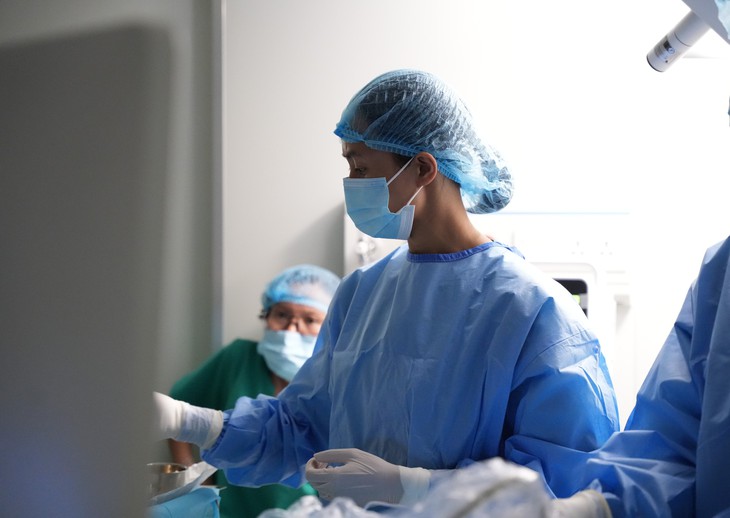
In Ms. N.’s case, the surgical team faced the delicate task of navigating inflamed tissue while identifying and preserving the recurrent laryngeal nerves—which control vocal cord function—and the parathyroid glands, which regulate systemic calcium levels. To achieve optimal therapeutic outcomes without compromising the patient’s aesthetic expectations or long-term quality of life, the surgical team opted for an advanced endoscopic approach. Rather than utilizing the traditional Kocher incision across the anterior neck, which leaves a permanent and often psychologically distressing scar, surgeons performed a trans-vestibular and axillary remote-access endoscopic thyroidectomy.
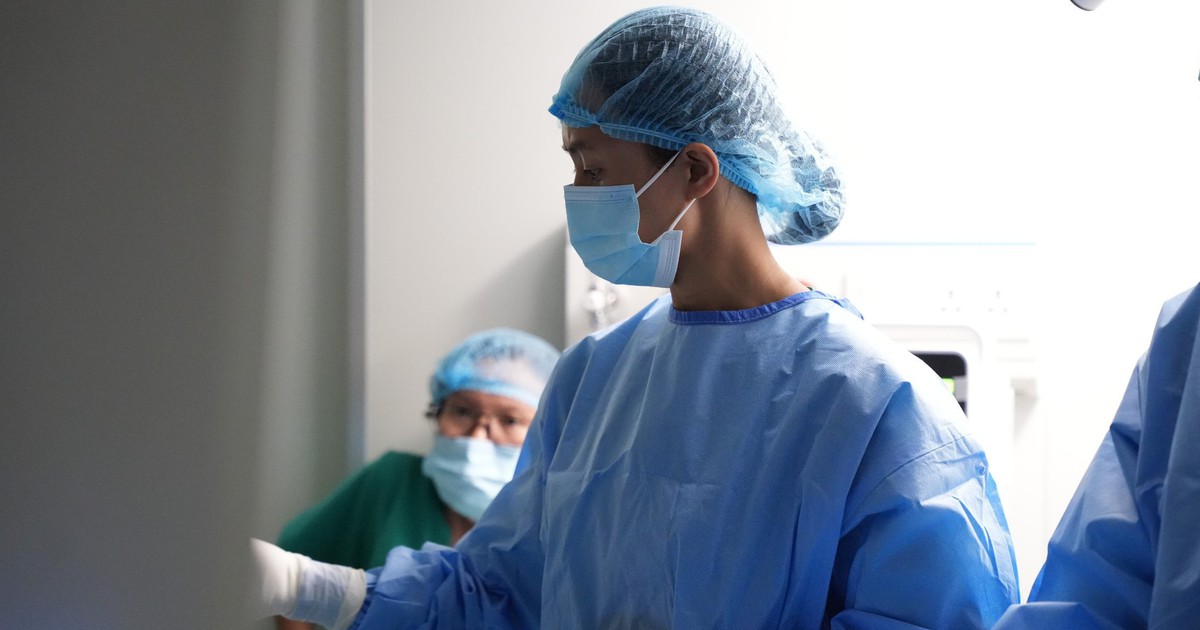
This innovative technique utilizes small, concealed entry ports in the chest and underarm regions to access the neck space. By circumventing a direct cervical incision, the method successfully eliminates visible scarring on the neck, an outcome of paramount importance for younger patients. Furthermore, the minimally invasive approach facilitates rapid postoperative recovery. Ms. N. was able to resume ambulation and oral intake shortly after the procedure, exhibiting stable vital signs and no evidence of recurrent laryngeal nerve injury or hypocalcemia. She was successfully discharged on the second postoperative day, highlighting the safety and efficacy of modern minimally invasive endocrine surgery when executed by experienced surgical teams.
The Broader Epidemiological Landscape: Why Are Rates Climbing?
The case of Ms. N. is far from an isolated anomaly. Medical institutions throughout Vietnam are reporting a steady influx of young thyroid cancer patients, with recent hospital admissions recording diagnoses in individuals born as recently as 2007. This phenomenon mirrors a global upward trajectory in endocrine cancer diagnoses over the past few decades, driven by a combination of technological advancements, environmental exposures, and shifting lifestyle factors.
Statistical data from major oncology centers illustrate the sheer scale of this public health trend. In 2025, the Oncology Hospital of Ho Chi Minh City recorded approximately 1.08 million patient visits, representing a 22 percent increase compared to the previous year. Within this vast volume of outpatient and inpatient care, newly diagnosed cancer cases were projected at over 42,000. Among these, thyroid cancer emerged as the most frequently diagnosed malignancy, accounting for 23.2 percent of all new cancer cases at the facility, closely followed by breast cancer at 18.1 percent. Across the broader medical landscape in Vietnam, thyroid cancer constitutes roughly 90 percent of all endocrine-related malignancies and consistently ranks among the top ten most common cancers nationwide.
Medical experts attribute this apparent surge to several distinct factors. Foremost among them is the widespread integration and technological advancement of high-resolution diagnostic ultrasonography. Modern ultrasound equipment possesses unprecedented sensitivity, capable of detecting microscopic nodules and microcarcinomas that historically would have gone unnoticed and caused no clinical harm during a patient’s lifetime. This heightened detection capability has led to an increase in diagnoses, capturing indolent tumors that may have previously remained subclinical.
Beyond diagnostic scrutiny, researchers are investigating the potential contributions of environmental pollutants, metabolic syndrome, and lifestyle modifications. Epidemiological studies demonstrate a clear parallel between rising obesity rates and the increasing incidence of thyroid malignancies. Adiposity and chronic metabolic dysfunction are known to alter systemic hormone levels, insulin pathways, and inflammatory markers, all of which can influence cellular proliferation within the endocrine system. Furthermore, increased public health awareness and expanded access to routine preventative health check-ups have democratized early detection, allowing physicians to identify abnormalities in asymptomatic individuals who otherwise would not have sought care.
Clinical Guidance: Balancing Vigilance with Reassurance
The rising incidence of thyroid cancer among younger populations has understandably generated anxiety among the general public. However, medical professionals emphasize a crucial distinction: not every thyroid nodule or abnormality is malignant. The vast majority of thyroid nodules identified during routine imaging are benign, non-cancerous growths that require only periodic monitoring rather than aggressive surgical intervention.
Specialists advise the public to maintain a balanced perspective when encountering thyroid-related diagnoses. Discovering an irregularity in the neck or receiving a thyroid nodule diagnosis should not trigger panic, nor should it be dismissed with absolute complacency. The appropriate course of action involves seeking timely evaluation by qualified endocrinologists or endocrine surgeons to accurately characterize the lesion through specialized imaging, blood tests, and, when indicated, cytological examination.
Treatment paradigms for thyroid cancer have also evolved toward personalized medicine. Physicians stress that therapeutic strategies must be individualized based on the specific histological characteristics of the tumor, staging, and individual recurrence risk profiles. While total or partial thyroidectomy remains the cornerstone of curative treatment, adjuvant therapies such as radioactive iodine ablation or thyroid hormone suppression therapy are not universally required. Decisions regarding postoperative management are tailored meticulously to each patient, ensuring that overtreatment is minimized while safeguarding long-term survival and quality of life.
Public Health Implications and Preventative Recommendations
As endocrine malignancies continue to claim a prominent share of cancer statistics in Vietnam and globally, public health authorities underscore the importance of proactive health management. The early detection of thyroid abnormalities—facilitated by routine physical examinations, targeted neck ultrasound during general health screenings, and prompt investigation of persistent symptoms such as neck swelling, hoarseness, or unexplained fatigue—remains the most effective strategy for mitigating advanced disease progression.
Healthcare providers reiterate that youth is not an absolute shield against oncological diseases. By fostering greater clinical awareness among primary care physicians and encouraging patients to take charge of their health through regular check-ups, the medical community can continue to improve outcomes. Adhering strictly to professional medical guidance, embracing personalized treatment plans, and avoiding unnecessary alarm are foundational steps in navigating the complex landscape of modern thyroid health. Through continued advancements in minimally invasive surgical techniques and refined diagnostic criteria, patients diagnosed with thyroid cancer can look forward to not only surviving their condition but preserving their long-term health and well-being.
Related posts: