Donald Trump Considers Three Options to Resolve Conflict with Iran Amid Escalating Global Tensions

The geopolitical landscape is facing a series of profound shocks as tensions escalate across multiple regions, spanning from Washington’s strategic deliberations regarding Tehran to fierce drone assaults on the Russian capital, a maritime collision near Singapore, and a worsening energy crisis gripping the European Union. These overlapping crises have heightened global anxiety, forcing international leaders to recalibrate their foreign policy and security postures.
Washington Weighs Strategic Alternatives for Iran
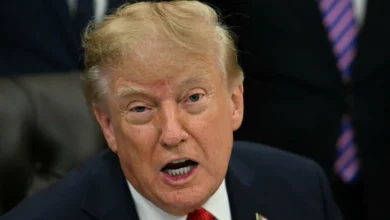
United States President Donald Trump has issued a stern warning to Iran, emphasizing the necessity for Tehran to alter its regional conduct or face decisive consequences. During recent security briefings, President Trump outlined three distinct strategic options currently under consideration by his administration: a severe military campaign aimed at neutralizing Iran’s critical infrastructure, intensifying economic sanctions designed to push the nation’s economy to the brink of complete collapse, or reaching a comprehensive diplomatic peace settlement.
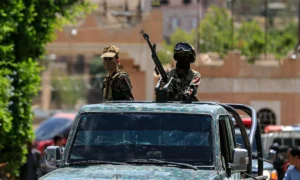
While President Trump indicated a willingness to consider a direct meeting with Iranian President Masoud Pezeshkian, administration officials remain skeptical about Tehran’s genuine commitment to sealing a lasting agreement. Analysts note that Washington’s current posture balances deterrence with an implicit threat of overwhelming force. Meanwhile, the administration has acknowledged recent diplomatic signals from the Houthi movement indicating a temporary halt to attacks against American naval assets in the region, providing a minor reprieve in the broader Middle Eastern theater.
In immediate response to Washington’s pronouncements, Mohammad Bagher Ghalibaf, Chairman of the Iranian Parliament, asserted that the United States is operating from a position of strategic vulnerability despite its continuous projection of military might. Ghalibaf characterized the current geopolitical standoff through the conceptual lens of Schrödinger’s paradox, arguing that Washington cannot successfully execute its maximum pressure campaign against Iran without absorbing severe and cascading regional blowback. Iranian leadership maintains that its defensive and retaliatory capabilities remain robust enough to deter any direct military adventurism.
Maritime Collision Near Singapore Involves Large Container Ship and Chinese Fishing Vessel
On the maritime front, a dramatic collision occurred on September 17 near the vital shipping lanes of the Singapore Strait. The incident involved the Panama-flagged container vessel First Margaux, measuring 229 meters in length, which collided with the 49-meter Chinese fishing vessel Luqing Yuanyu 108.
Footage captured by passing observers and shared widely by maritime agencies depicted the Chinese fishing vessel listing heavily, with seawater washing over its deck immediately following the impact. Both vessels were operating in the vicinity of designated traffic separation schemes when the collision took place.
Initial reports from regional maritime authorities indicate that the Chinese fishing vessel remained afloat after the incident and managed to navigate toward a nearby dock under its own power. As of the latest updates, no official casualties or severe environmental pollution have been reported. Port authorities and maritime safety investigators in Singapore have launched a comprehensive inquiry to determine the exact sequence of events, navigational errors, or communication failures that led to the near-disaster in one of the world’s busiest commercial waterways.
Moscow Repels Massive Unrestrained Drone Assault
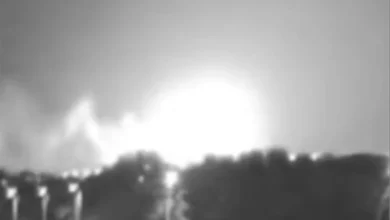
In Eastern Europe, the capital of Russia experienced one of its most severe aerial bombardments since the onset of the conflict, as Ukrainian forces launched a massive swarm of unmanned aerial vehicles (UAVs) targeting Moscow.
Sergey Sobyanin, the Mayor of Moscow, reported that Russian air defense forces successfully intercepted and destroyed nearly 1,600 Ukrainian drones, including approximately 450 sophisticated loitering munitions aimed directly at urban infrastructure. Russian authorities asserted that the timing of the large-scale attack was deliberately planned to disrupt the ongoing parliamentary elections in the country, although they maintained that the assault ultimately failed to achieve its strategic objectives.
Despite the high interception rate, falling debris and direct impacts caused localized structural damage within the Moscow region, including a petroleum processing facility and several residential apartment blocks. Local emergency services confirmed that the strikes resulted in two fatalities and injured at least twenty individuals in the outer suburbs of Moscow. A tragic fatality occurred in the village of Sofyino when a drone struck a multi-story residential building, while an elderly resident perished in Orekhovo-Zuyevo after a private home caught fire due to falling debris.
Despite the widespread panic and security disruptions occurring just ahead of the final day of voting, election officials confirmed that all 1,443 polling stations across Moscow remained operational, opening their doors precisely on schedule under heightened security protocols.
Europe Faces Historic Energy Crisis Amid Supply Disruptions
Compounding these security concerns, Europe is confronting what Kremlin Envoy Kirill Dmitriev described on September 20 as the most severe energy crisis in modern history. Dmitriev attributed the crisis directly to the European Union’s deliberate policy decisions to phase out and drastically reduce imports of affordable energy resources from Russia.
The ongoing energy crunch has been exponentially exacerbated by disruptions to maritime transit through the Strait of Hormuz, alongside persistent Houthi attacks on commercial shipping lanes in the Red Sea and surrounding waters. The cumulative impact of these supply chain bottlenecks has sent shockwaves through European markets. Across the EU, retail gasoline prices have surged by 24%, diesel prices have jumped by 38%, and aviation fuel costs have nearly doubled compared to the previous year.
The severe fuel shortages have translated into localized infrastructural strains. In France, approximately 15% of all fuel stations have reported severe supply disruptions, leading to rationing and long queues. Meanwhile, fuel prices in Germany have climbed to historic record highs, placing immense pressure on industrial production, transportation networks, and consumer purchasing power. Despite Moscow offering to assist in bridging the energy deficit through alternative supply routes and renewed Middle Eastern coordination, European capitals have struggled to formulate a cohesive and effective policy response, leaving the continent vulnerable to prolonged economic instability as the winter heating season approaches.
Related posts: