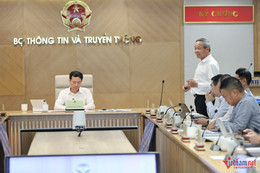
Hanoi, Vietnam – In a landmark gathering underscoring Vietnam’s commitment to fostering its domestic digital technology prowess, the Ministry of Information and Communications (MIC) convened a significant working session with the leadership of CMC Group on the afternoon of October 25, 2024. This unprecedented meeting, the first of its kind in CMC’s 31-year history, saw Minister Nguyen Manh Hung preside over discussions with Chairman Nguyen Trung Chinh and other key executives and personnel from CMC, a venerable name in Vietnam’s technology landscape. The high-level delegation from MIC also included Deputy Ministers Nguyen Thanh Lam and Bui Hoang Phuong, alongside leaders from various departments within the Ministry, signaling the strategic importance placed on nurturing national digital champions.
Context and Significance of the Historic Meeting
The invitation extended by the MIC to CMC Group for an in-depth dialogue about its future development trajectory speaks volumes about the Ministry’s recognition and high regard for the company’s contributions to the national technology sector and the country at large. It also reflects a profound trust in CMC’s potential to evolve into a formidable, internationally recognized digital technology enterprise, extending its influence beyond domestic borders. This meeting arrives at a pivotal time for Vietnam, as the nation actively pursues an ambitious digital transformation agenda, aiming for a robust digital economy that contributes significantly to its GDP and enhances its global competitiveness.
Vietnam has set a strategic goal for its digital economy to contribute 20% of its GDP by 2025 and 30% by 2030, alongside universalizing digital infrastructure and services. Achieving these targets necessitates the active participation and robust growth of domestic technology firms like CMC. The Ministry of Information and Communications plays a crucial role in this national endeavor, acting as both a policymaker and a strategic partner for businesses, providing guidance, removing bottlenecks, and fostering an environment conducive to innovation and expansion. The personalized nature of this four-hour meeting, where MIC leaders dedicated substantial time to addressing CMC’s concerns and offering specific strategic advice, highlights this proactive, supportive role.

Minister Hung’s Vision: The Imperative of "Mastering Technology"
Opening the session, Deputy Chairman of CMC, Dang Tung Son, presented a concise overview of the group’s journey over three decades, its business performance in the first half of fiscal year 2024, and its strategic development roadmap leading up to 2028. Following this presentation, Minister Nguyen Manh Hung articulated the Ministry’s profound expectations. He expressed great hope that CMC would emerge as a pioneering Vietnamese digital technology enterprise, urging its leadership and key personnel to adopt a renewed mindset and unwavering determination. This collective effort, he stressed, is vital for contributing to Vietnam’s national digital transformation revolution and propelling the nation into a "mighty new era."
A central theme of Minister Hung’s address was the critical importance of "mastering technology." He unequivocally declared that Vietnam must achieve technological self-reliance, a mandate echoed by General Secretary To Lam, who recently emphasized this as a prerequisite for national development. For Vietnam, digital transformation is not merely an economic strategy but a fundamental pathway to becoming a developed nation. To master technology and effectively lead the nation’s digital transformation process, Minister Hung advised CMC and other Vietnamese digital technology enterprises to prioritize significant investment in research and development (R&D). This investment should initially focus on mastering applications, then progress to mastering core technologies – a sequential yet interconnected approach to achieving digital sovereignty.
Strategic Growth and National Mission
Minister Hung’s message resonated deeply with the concept of tying corporate growth to national aspirations. He challenged CMC to overtly declare its ambition to become a leading, large, and internationally prominent digital technology enterprise. To realize this vision, he asserted, CMC must embrace substantial projects that align with national missions and execute them with utmost diligence and commitment. "If an enterprise desires to grow and endure alongside the nation, it must link itself with the national mission," Minister Hung declared, emphasizing that true corporate success is intertwined with societal progress and national development. This statement serves as a powerful reminder for Vietnamese tech companies to think beyond commercial gains and embrace a broader role as drivers of national advancement.
This call for businesses to align with national missions reflects a broader governmental philosophy in Vietnam, where major enterprises are encouraged to leverage their resources and expertise to solve critical national challenges, from infrastructure development to technological self-sufficiency. For CMC, this means taking on complex projects that might involve national cybersecurity, large-scale public digital services, or the development of foundational digital infrastructure, thereby contributing directly to Vietnam’s strategic goals while simultaneously expanding its own capabilities and market presence.
CMC’s Vision for Global Leadership
In response to the Ministry’s expectations, Deputy Chairman Dang Tung Son outlined CMC’s ambitious strategic plan for 2028. The group aims to transform into a global digital and AI conglomerate, operating under international standards. This vision includes a target of tripling its current revenue and expanding its workforce to over 10,000 employees, effectively doubling its present staff. A significant allocation of this expanded human capital will be directed towards artificial intelligence (AI), with 40% of the workforce dedicated to AI development. This strategic pivot towards AI aligns with global technological trends and Vietnam’s own aspirations to become a hub for AI innovation in Southeast Asia.
The emphasis on international standards and global reach highlights CMC’s aspiration to compete with major international tech players. This involves not only exporting services and products but also integrating global best practices into its operations, R&D, and talent development. Achieving these aggressive growth targets will require substantial investment in technology, talent, and market expansion, positioning CMC as a key player in Vietnam’s outward-looking digital economy strategy.
Navigating New Frontiers: Submarine Cables and Innovation Spaces

During the four-hour session, MIC leaders thoroughly addressed numerous questions and recommendations from CMC’s management, offering insights and concrete proposals for the group’s future focus areas. A notable discussion point revolved around the regulatory hurdles faced by CMC in investing in new international submarine cable landing stations. These stations are crucial for enhancing the resilience and capacity of Vietnam’s international telecommunications network, thereby ensuring national security and uninterrupted digital connectivity.
In response to CMC’s concerns, the MIC leadership provided specific guidance. They advised CMC to diligently study the provisions of the new Land Law and to coordinate closely with the Telecommunications Authority. This collaboration would enable the Ministry to propose that provinces incorporate the planning of new submarine cable landing stations into their land use plans. This proactive approach aims to streamline the investment process for critical digital infrastructure, underscoring the government’s commitment to facilitating private sector involvement in strategic national projects.
Regarding expansion into new development spaces, Minister Hung offered a nuanced perspective. He encouraged CMC to seek out "green ocean" opportunities – unexplored or nascent markets where competition is minimal. However, he also emphasized that even within "red ocean" (highly competitive) sectors, innovation and a unique approach can yield significant results. "The sectors within the information and communications industry, such as telecommunications, digital technology, digital infrastructure, and cyber information security, are always evolving and presenting new opportunities," Minister Hung stated. He then challenged CMC, asking, "The question is whether enterprises dare to take on these challenges and execute them thoroughly?!" This provocative question served as a call for bold leadership and relentless pursuit of excellence, regardless of the competitive landscape.
Deep Dive into AI and Foundational Infrastructure
The discussion also delved into specific technological priorities. For companies like CMC that have a strategic focus on the Internet of Things (IoT), the MIC leadership suggested that Artificial Intelligence (AI) and chip design should be considered parallel and essential development branches. This advice reflects the growing convergence of these technologies, where intelligent IoT devices increasingly rely on specialized AI processing and custom chip solutions.

Regarding AI development, the Ministry offered a strategic recommendation for CMC and other Vietnamese digital technology enterprises: focus on "narrow AI," specialized AI, custom AI, and AI tailored for individuals and specific enterprises. Instead of competing directly with global giants in general-purpose AI, Vietnamese firms could carve out niches by developing highly specific AI solutions. Furthermore, CMC was encouraged to develop foundational AI platforms that enable individuals and organizations to create their own virtual assistants by inputting their unique data. This strategy aligns with the concept of empowering users and businesses to leverage AI in a customized manner, fostering a broader AI ecosystem.
Minister Hung also stressed that as a large and mature enterprise, CMC should prioritize developing foundational infrastructure and core software. This includes vital components such as cloud computing services and data centers, as well as fundamental software platforms upon which other enterprises can build their own solutions – effectively allowing other companies to "stand on CMC’s shoulders." This approach positions CMC as a critical enabler for the wider digital economy, providing the backbone infrastructure and tools necessary for smaller businesses and startups to thrive.
Leading by Example: Internal Digital Transformation
A crucial directive from Minister Hung was for CMC to undergo its own internal digital transformation before embarking on similar projects for other businesses. "Before digitally transforming other enterprises, you must digitally transform your own unit first," he advised. The rationale behind this mandate is pragmatic: by experiencing digital transformation firsthand, CMC would gain invaluable insights, understand the practical challenges, and acquire the necessary expertise to effectively guide other organizations through their digital journeys. This "practice what you preach" philosophy ensures credibility and deepens the company’s understanding of the intricacies of digital adoption.
This internal transformation would serve as a living laboratory, allowing CMC to test methodologies, identify best practices, and develop robust solutions tailored to real-world scenarios. This experience would not only refine its service offerings but also enhance its reputation as a knowledgeable and empathetic partner for digital transformation initiatives across various sectors.

Mutual Commitment and Future Outlook
Throughout the meeting, Minister Hung reaffirmed the MIC’s steadfast commitment to supporting Vietnamese digital technology enterprises. He emphasized that the Ministry considers itself the "home" for these businesses – a place where they can seek counsel, share difficulties, and receive support when facing challenges. "The MIC recognizes that if digital technology enterprises do not develop, then the Ministry and the industry itself cannot develop, and the national digital transformation story cannot be realized," Minister Hung clarified, underscoring the symbiotic relationship between government policy and private sector growth.
In his concluding remarks, CMC Chairman Nguyen Trung Chinh expressed profound gratitude to Minister Hung, the Deputy Ministers, and other MIC leaders for their candid and dedicated contributions, which he believed would significantly aid CMC’s continued development. He reiterated CMC’s commitment to not only growing its own enterprise but also actively contributing to national development and bringing Vietnamese intellect to the international stage, thereby asserting Vietnam’s position globally.
Chairman Chinh acknowledged the challenging yet exciting development goals that lie ahead. He expressed hope that, beyond the internal efforts of CMC Group, the company would continue to receive the ongoing companionship, support, guidance, and assistance from the Ministry of Information and Communications. This reciprocal commitment highlights a collaborative ecosystem where government and industry work hand-in-hand to achieve shared national aspirations.
Broader Impact and Implications

This meeting between the MIC and CMC Group carries significant implications for Vietnam’s digital future. Firstly, it signals a strong governmental emphasis on nurturing domestic tech champions capable of competing globally. By providing direct guidance and removing regulatory obstacles, the MIC is actively shaping an environment where local companies can thrive and contribute strategically to national goals.
Secondly, the focus on "mastering technology" and specialized AI development points towards a strategic direction for Vietnam to achieve digital sovereignty and avoid over-reliance on foreign technologies. This not only enhances national security but also fosters a vibrant local innovation ecosystem, creating high-value jobs and intellectual property.
Thirdly, the emphasis on foundational infrastructure (Cloud, Data Centers) and internal digital transformation for leading companies like CMC means that the entire Vietnamese digital economy will benefit from a more robust and efficient backbone. When large players build strong foundations, smaller enterprises can innovate more rapidly and cost-effectively, accelerating the overall pace of digital adoption across sectors.
Finally, the collaborative spirit demonstrated during the meeting, with the MIC positioning itself as a "home" for tech businesses, fosters trust and open dialogue. This model of government-industry partnership is crucial for navigating the complexities of rapid technological change and ensuring that national strategies are effectively translated into actionable business initiatives. The exchange of books on "Information and Communications Industry" and "Digital Transformation Overview: Strategy & Roadmap" symbolizes not just a gift, but a shared intellectual foundation and a collective journey towards a digitally empowered Vietnam.