Xiaomi Responds to Viral Test Drive Crash Involving Newly Launched Pengcheng SUV in China


Automotive industry observers and technology enthusiasts across China experienced a brief period of intense speculation following the rapid spread of viral social media footage showing a newly released Xiaomi Pengcheng electric SUV violently colliding with a roadside median. The incident, which took place on September 8 during a customer test drive at an unspecified urban intersection, immediately triggered widespread online debates concerning the vehicle’s autonomous driving capabilities, structural integrity, and electronic control systems.
The speculation reached a fever pitch primarily due to the timing of the accident. The Pengcheng lineup had just been officially introduced to the public a day prior, on September 7, during Xiaomi Auto’s highly publicized autumn product launch event hosted by company CEO Lei Jun. Because the vehicle was so fresh to the market, early social media commentators quickly hypothesized that software glitches or mechanical failures might have been the root cause of the sudden loss of control. However, official clarifications released by Xiaomi the following morning on September 9 decisively dispelled these technical rumors, attributing the crash entirely to human error during a high-stress driving moment.
Chronology of the Incident
According to detailed statements released by Xiaomi Auto, the mishap occurred on the afternoon of September 8 as a prospective customer was evaluating the dynamic performance of the Pengcheng SUV under real-world traffic conditions. While navigating a busy urban intersection, the test driver attempted a routine turning maneuver to yield the right-of-way to oncoming traffic approaching from the front.
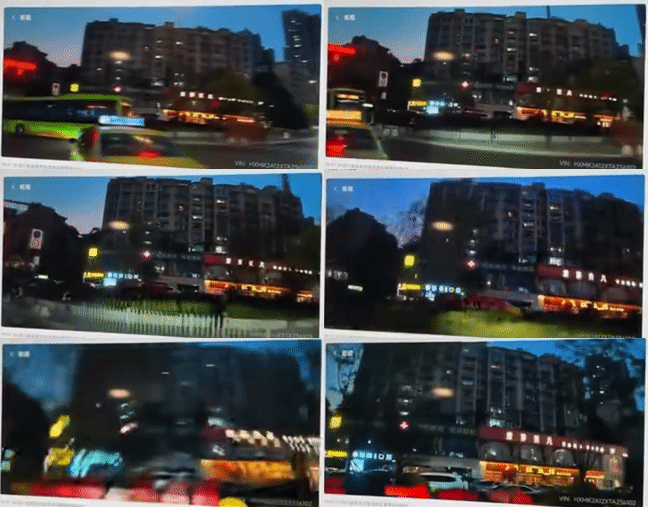
Dashcam footage and traffic monitoring videos subsequently published by local media outlets illustrate the sequence of events clearly. During the execution of the turn, the test vehicle made minor contact with another vehicle positioned ahead. Visibly startled and overwhelmed by the unexpected bump, the driver panicked and mistakenly depressed the accelerator pedal firmly to the floor instead of engaging the braking system.
The vehicle’s electronic powertrain responded immediately to the sudden torque input, causing the SUV to lurch forward, jump the curb, cross the pedestrian walkway, and crash directly into a landscaped central median lined with trees before finally coming to a complete halt. Fortunately, due to the low-speed nature of the initial contact and the rapid dissipation of momentum against the urban foliage, no pedestrians were present in the immediate path of the vehicle, and no injuries were reported among the test driver, the accompanying dealership sales representative, or bystanders.
Background and Vehicle Specifications
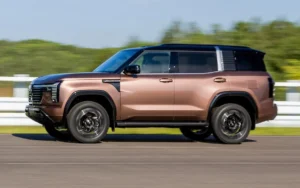
The vehicle involved in the high-profile incident belongs to the Pengcheng series, a brand-new line of long-range electric SUVs developed by Xiaomi Auto to expand its footprint in the increasingly competitive new energy vehicle (NEV) market. Unveiled amid significant fanfare on September 7, the Pengcheng lineup represents a strategic push by the consumer electronics giant to solidify its presence in the premium automotive sector.
During the launch event, Xiaomi CEO Lei Jun detailed the four distinct variants that comprise the Pengcheng family: the N70 Pro, N70 Max, N90 Max, and the flagship N90 Max Explorer Edition. Positioned as technologically advanced vehicles equipped with cutting-edge smart cabin architectures and sophisticated driver-assistance suites, the lineup was designed to appeal to tech-savvy urban consumers seeking high performance and extended driving ranges.
Pricing for the Pengcheng series was announced to range from 209,900 to 299,900 Chinese yuan, which translates approximately to 766 million to 1.09 billion Vietnamese dong (or roughly $29,000 to $41,500 USD). This competitive pricing strategy places the SUV squarely in the crosshairs of established domestic and international electric vehicle competitors in China, heightening the scrutiny surrounding every aspect of the vehicle’s rollout, safety profile, and public perception.
Official Responses and Company Transparency
Following the rapid circulation of the accident video across platforms such as Bilibili and Autohome, Xiaomi’s public relations and engineering teams moved quickly to control the narrative and prevent unwarranted panic regarding the safety of the company’s smart vehicle technology.
By the morning of September 9, Xiaomi issued a formal statement clarifying the circumstances of the crash. The company confirmed that vehicle telematics and onboard diagnostic logs retrieved from the crashed SUV verified that all mechanical and electronic braking systems were functioning normally prior to and during the incident. The data explicitly demonstrated that the throttle input was actively engaged by the driver at the time of acceleration, corroborating the narrative of pedal misapplication caused by panic.
By addressing the rumors head-on with verifiable telemetry data, Xiaomi sought to reassure prospective buyers that the vehicle’s advanced driver-assistance systems (ADAS) and electronic control units (ECUs) were not at fault. Nevertheless, specific details regarding the financial settlement for damages, the extent of the repair costs for the heavily impacted vehicle, and the ongoing administrative handling of the test drive accident by local authorities remain undisclosed as investigations and insurance assessments proceed.
Broader Industry Implications for Test Drive Safety
The viral incident involving the Xiaomi Pengcheng SUV highlights a broader, recurring challenge facing the rapidly expanding electric vehicle sector: the human factor in high-performance vehicle demonstrations. Modern electric vehicles deliver instantaneous torque and rapid acceleration profiles that differ significantly from traditional internal combustion engine vehicles. For drivers unaccustomed to the instantaneous power delivery of high-output NEVs, stressful traffic situations can easily trigger involuntary reflexes, such as confusing the accelerator and brake pedals—a phenomenon widely documented in automotive safety literature across the globe.
As technology companies like Xiaomi, Baidu, and Huawei transition deeper into automotive manufacturing, the scrutiny applied to their products is vastly magnified. Every minor accident, software update glitch, or test drive mishap is instantly amplified across digital networks, putting immense pressure on corporate communications teams to respond with transparency and empirical evidence.
For Xiaomi Auto, the swift resolution of the Pengcheng incident serves as a crucial test of its crisis management capabilities. By transparently releasing telemetry data and clarifying that the accident stemmed from human error rather than mechanical failure, the company successfully mitigated potential reputational damage during a critical launch window. Moving forward, industry analysts suggest that manufacturers offering high-performance electric vehicles may need to implement stricter onboarding protocols, enhanced pre-drive orientation, or more aggressive safety interlocks during customer test drives to prevent similar panic-induced pedal errors in congested urban environments.