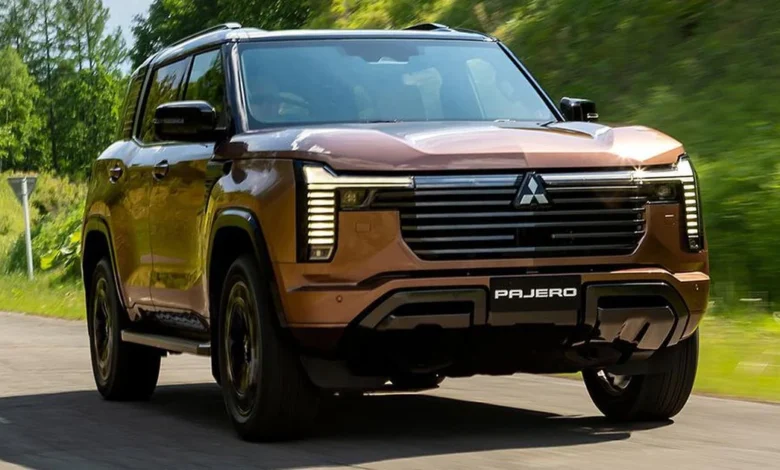
The upcoming launch of the next-generation Mitsubishi Pajero, scheduled for release in December 2026, marks a pivotal moment for the Japanese automaker. With an anticipated entry price of 68,490 AUD (approximately 1.3 billion VND, excluding on-road costs), this SUV is positioned to disrupt a segment long dominated by the Toyota Land Cruiser Prado and the Ford Everest. However, internal insights from Mitsubishi’s product development team reveal that the ambition behind this vehicle extends far beyond its immediate price-point rivals.
A Benchmarking Strategy Focused on Premium Competitors
Kunitoshi Itagaki, a lead product expert at Mitsubishi, has confirmed that the development phase for the new Pajero involved a rigorous benchmarking process that extended well beyond the mid-size SUV segment. While the Pajero will naturally compete with the Prado and Everest in terms of market positioning and pricing, the engineering benchmarks were set significantly higher.
According to Itagaki, the development team meticulously studied the Toyota Land Cruiser 300 and the Nissan Patrol. These flagship off-roaders, which occupy a higher tier in terms of size, capability, and price, served as the gold standard for the Pajero’s structural integrity and ride quality. By analyzing these heavy-duty platforms, Mitsubishi aimed to bridge the gap between a rugged, ladder-frame utility vehicle and a refined, premium cabin experience.
"During the development process, we compared our prototype against a wide array of ladder-frame vehicles and luxury SUVs," Itagaki stated in an interview with the German publication Carsales. "Our goal was to cover the entire spectrum of driving performance, build quality, and comfort. We needed to ensure that the Pajero not only maintains its legendary off-road heritage but also sets a new standard for internal refinement."
The Economic Reality and Market Positioning
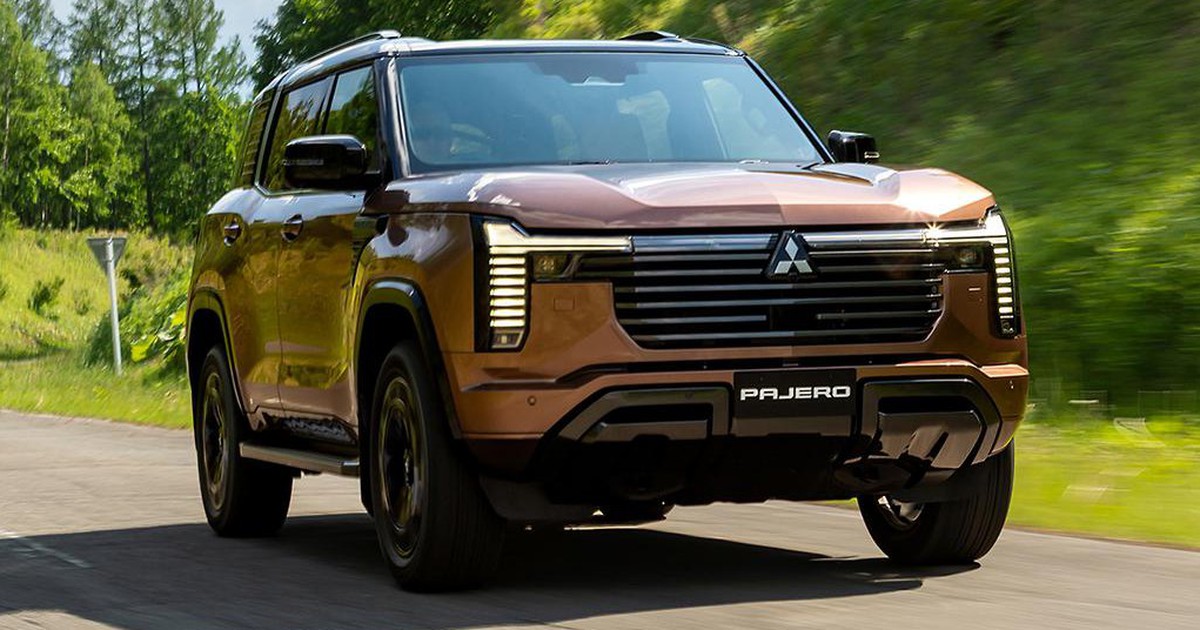
A significant point of discussion is the price disparity between the upcoming Pajero and the premium models used for benchmarking. While the new Mitsubishi Pajero is expected to start around 68,490 AUD, the vehicles it studied—the Nissan Patrol and the Toyota Land Cruiser 300—start at approximately 98,990 AUD and 99,270 AUD, respectively. This creates a price gap of nearly 30,000 AUD (over 550 million VND).
This strategy of "aiming high" while pricing competitively is a calculated move by Mitsubishi. By incorporating the structural lessons learned from larger, more expensive platforms, Mitsubishi intends to offer a vehicle that feels more substantial and capable than its direct price competitors, such as the Prado or Everest. It is a strategic effort to reclaim the Pajero’s status as a top-tier off-roader without alienating the core customer base that relies on its accessibility.
Architectural Evolution: Beyond the Triton
There has been significant public speculation regarding the relationship between the new Pajero and the Mitsubishi Triton pickup truck. While the two vehicles share a common DNA and structural lineage, the new Pajero is not a simple SUV-bodied version of the pickup.
Mitsubishi has clarified that while the front section of the frame and the area surrounding the engine bay are shared with the Triton, the rear chassis architecture has been significantly modified to accommodate the specific requirements of a passenger-focused SUV. This distinction is crucial for ride comfort and cargo management. Despite being smaller than the Land Cruiser 300 in terms of overall dimensions, the Pajero’s wheelbase of 2,870 mm is notably more compact, trailing the Land Cruiser 300 by only 20 mm, which suggests a focus on maneuverability without sacrificing interior space.
Technical Specifications and Powertrain Dynamics
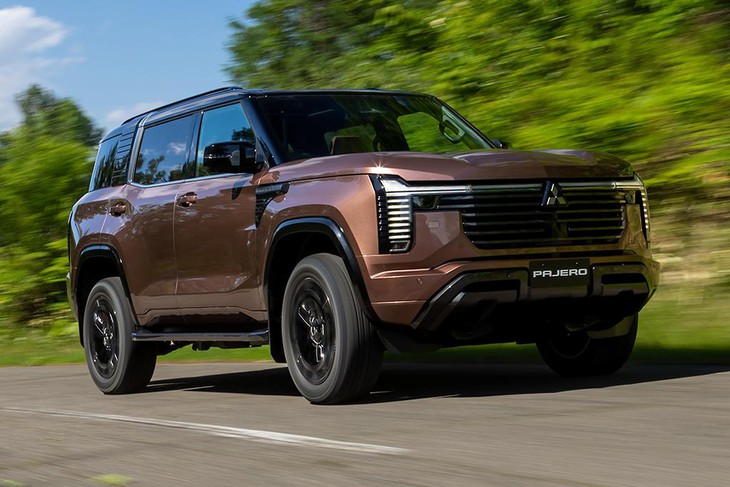
At the heart of the new Pajero lies the 2.4L 4N16 turbocharged diesel engine. This power unit produces approximately 201 horsepower and a robust 480 Nm of torque, channeled through an 8-speed automatic transmission. While these figures are respectable for the segment, they are significantly lower than the outputs of the V6 engines found in the Land Cruiser 300 and the new Nissan Patrol Y63.
The Nissan Patrol Y63, for instance, utilizes a 3.5L twin-turbo V6 petrol engine, generating 317 kW (approx. 425 hp) and 700 Nm of torque. Similarly, the Australian-spec Toyota Land Cruiser 300 is powered by a 3.3L twin-turbo V6 diesel, producing 227 kW (approx. 304 hp) and 700 Nm.
The disparity in power raises questions regarding the Pajero’s real-world towing capacity and performance when fully loaded with seven passengers. However, Mitsubishi maintains that the 480 Nm of torque is sufficient for the vehicle’s intended use, and the company has officially stated that the new Pajero will boast a towing capacity of up to 3.5 tonnes, keeping it competitive with the leaders of the mid-size SUV class.
The Influence of Global Market Trends
One of the most intriguing aspects of the Pajero’s development is the inclusion of Chinese-made vehicles in the benchmarking pool. As the automotive industry shifts rapidly toward electrification and high-tech cabin features, Mitsubishi has acknowledged that it borrowed certain design and functionality concepts from Chinese manufacturers.
"We have tested many vehicles, including those from Chinese manufacturers," Itagaki shared. "Naturally, some models have excellent features. I cannot specify which ones, but we have experimented and incorporated some of those ideas into our own final product."
This openness to cross-pollination of ideas highlights a shift in Mitsubishi’s engineering philosophy. Instead of relying solely on internal heritage or traditional Japanese manufacturing standards, the brand is increasingly looking at global trends to improve user experience, infotainment integration, and interior ergonomics.
Implications and Future Outlook
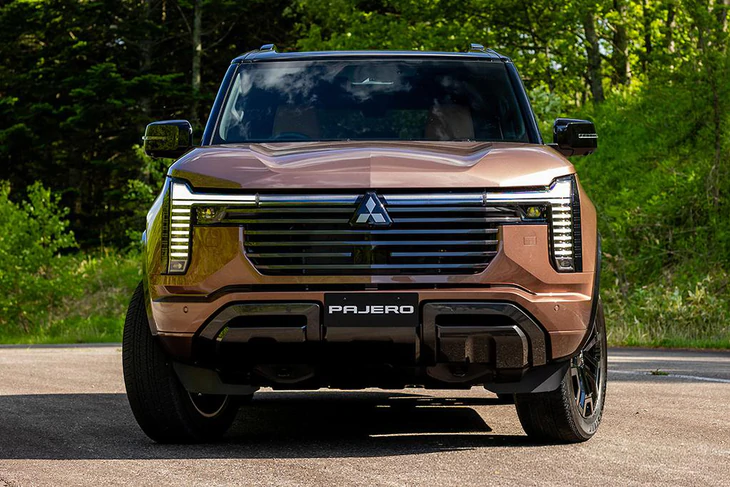
The launch of the next-generation Pajero in late 2026 is more than just a product release; it is a critical test for Mitsubishi. The brand has been working to revitalize its image as an "off-road-first" manufacturer, and the success of the Pajero will likely dictate the company’s trajectory for the remainder of the decade.
The decision to benchmark against the Land Cruiser 300 and the Patrol suggests that Mitsubishi is not interested in merely participating in the mid-size SUV segment—it intends to lead it by offering "big SUV" quality at a "mid-size" price point. If the engineering, build quality, and off-road capability can indeed mirror the premium benchmarks while maintaining the 68,490 AUD price, the new Pajero could become the most value-dense vehicle in its class.
However, the real challenge will lie in the consumer perception of the 2.4L diesel engine. In a market where competitors are increasingly moving toward V6 configurations, Mitsubishi will need to prove that its four-cylinder unit can deliver the durability and pulling power required for serious, long-term off-road adventure.
As the industry approaches the December 2026 launch date, the automotive world remains watchful. The Pajero has always been a nameplate associated with the Dakar Rally and extreme durability. By blending the lessons learned from high-end luxury flagships with the pragmatic, cost-conscious engineering required for the mid-size market, Mitsubishi is betting that it has found the perfect formula to revive an icon. The results of this extensive, multi-national benchmarking strategy will ultimately be decided by the drivers who put these vehicles to the test on the world’s most challenging terrains.