Global Leaders Assess New Dynamics in International Relations Following U.S. Midterm Elections

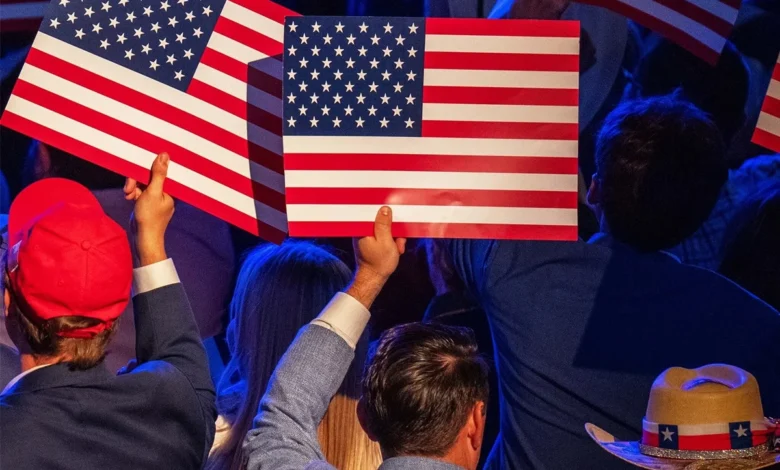
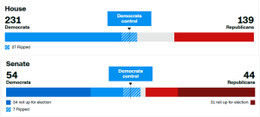
The stunning and decisive victory achieved by the Democratic Party in the United States midterm elections has reverberated far beyond domestic borders, triggering a wave of intense commentary, strategic re-evaluations, and cautious optimism among world leaders. As projections indicate a complete shift in legislative power—with Democrats poised to wrest control of both the House of Representatives and the Senate from President Donald Trump’s Republican Party—governments across the globe are grappling with the profound geopolitical ramifications of this political earthquake.
While the dust settles in Washington, D.C., international capitals from Europe to the Middle East, Asia, and Africa are actively deciphering what a divided U.S. government means for global diplomacy, economic stability, trade partnerships, and ongoing international conflicts. The consensus among many foreign analysts and heads of state is that the November 3 midterm outcome marks a major inflection point, fundamentally altering the diplomatic chessboard and establishing what several officials have described as a "new paradigm in world relations."
A Seismic Political Shift at Home and Abroad
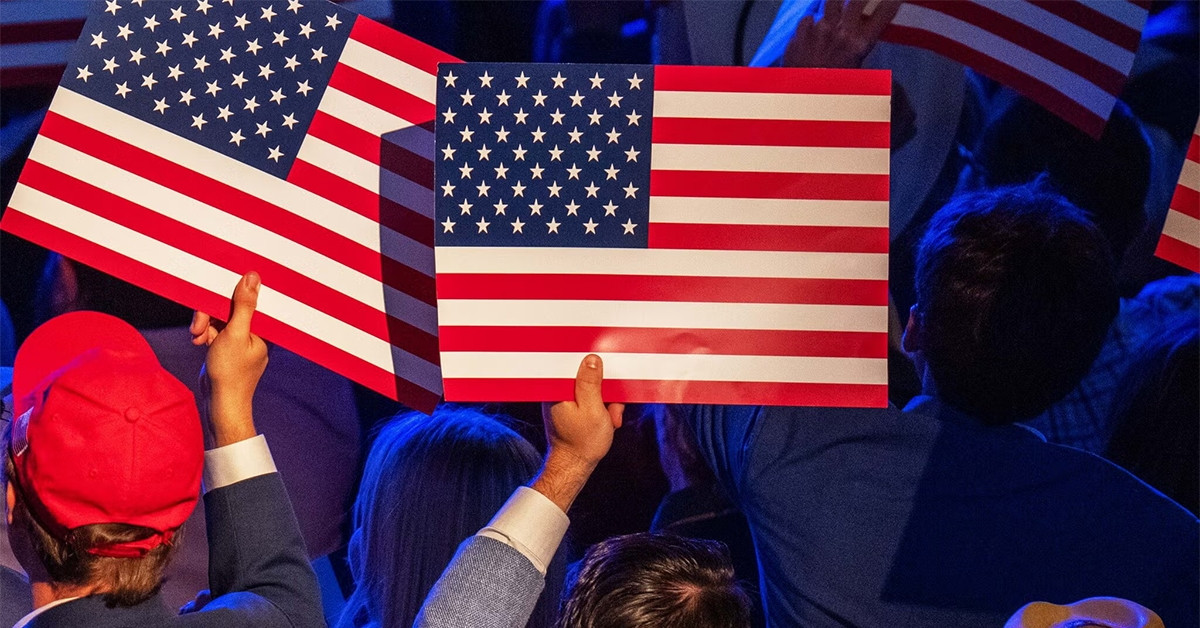
The 2026 U.S. midterm elections were widely viewed as a crucial referendum on the current administration’s domestic and foreign agendas. According to final projections by major news networks, including CNN, the Democratic Party managed to secure decisive majorities in both chambers of Congress. This unexpected legislative sweep serves a severe blow to President Trump’s governing agenda, effectively neutralizing his party’s legislative monopoly and setting the stage for intensified institutional gridlock, congressional investigations, and policy friction for the remainder of his presidential term.
The international community was quick to parse the underlying message sent by American voters. Spanish Prime Minister Pedro Sánchez offered a sharp, ideological interpretation of the results during a public address cited by CNN. He emphasized that the vote demonstrated a clear rejection by the American populace of policies associated with inequality, social division, misogyny, climate change denialism, and the preservation of entrenched elitist privileges.
Similarly, Norwegian Prime Minister Jonas Gahr Støre described the midterm outcome as a powerful political signal indicating a substantial directional shift from the American electorate. South African President Cyril Ramaphosa echoed this sentiment, noting that the results would inevitably open up a new paradigm in international relations, forcing global actors to recalibrate their diplomatic strategies to account for a recalibrated Washington power structure.
Diverse International Reactions: From Hope to Skepticism
Reactions from foreign governments varied significantly depending on their historical and strategic relationship with the United States. In Europe, traditional allies moved swiftly to reassure Washington of their enduring commitment to transatlantic partnerships, regardless of which domestic political faction controls Capitol Hill.
British Health Secretary James Frith characterized the election outcome as a profound moment for American democracy and the Democratic Party during an interview with Times Radio. However, Frith firmly underscored that London would maintain a "splendid relationship" with Washington, emphasizing that diplomatic alliances transcend the shifting majorities of American legislative politics.
Meanwhile, the official response from Moscow reflected a mixture of tactical observation and cautious pragmatism. Kremlin Spokesperson Dmitry Peskov noted that President Donald Trump remains in office and expressed sincere hope that the U.S. leader would continue his stated efforts toward conflict resolution and peacebuilding. Russian lawmaker Leonid Slutsky adopted a similarly watchful stance, telling CNN that while it was perhaps too early to draw definitive conclusions, the prevailing reality is that President Trump now finds himself in a position of complete institutional constraint, facing a hostile legislative branch capable of launching aggressive oversight and blocking key presidential appointments.
In the Middle East, the election results elicited sharply contrasting viewpoints from Tehran. Mohammad Bagher Ghalibaf, Chairman of the Parliament of Iran, took to social media platform X to claim that the American people had used the ballot box to "say no to war," signaling explicit support for anti-interventionist sentiments.
Conversely, high-ranking Iranian leadership struck a much more skeptical tone. Supreme Leader Mojtaba Khamenei asserted that the midterm results would fundamentally do nothing to alter Washington’s hostile baseline posture toward the Islamic Republic. In statements broadcast by the official IRNA news agency, Khamenei warned that anyone harboring the fragile hope that the U.S. ruling establishment might alter its behavior through partisan cycles or concessions was entirely mistaken. This uncompromising rhetoric highlights that despite domestic political upheaval in Washington, deep-seated geopolitical enmities in regions like the Middle East remain stubbornly resistant to change.
Domestic Aftershocks and High-Profile Commentary
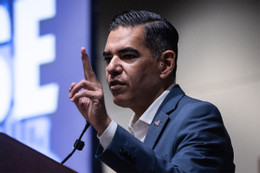
Back in the United States, the political fallout was immediate and intensely personalized. Representative Robert Garcia, a prominent Democratic lawmaker who is widely projected to assume the chairmanship of the House Oversight Committee, delivered a characteristically blunt message to President Trump and his Republican allies on social media: "Get a lawyer." This succinct warning previewed the aggressive wave of congressional subpoenas, investigations, and legislative oversight that Democrats are expected to unleash upon taking control of the House.
The election also featured numerous historic milestones. According to CNN’s tracking data, several victorious candidates broke long-standing barriers, including the election of the first Black, openly gay male U.S. senator, signaling shifting demographics and cultural representation within the winning legislative coalitions.
Prominent public figures and business leaders also weighed in on the Republican defeat. Tech billionaire Elon Musk offered characteristically humorous and detached commentary regarding the reversal of fortune for the Republican Party, reflecting the cultural ubiquity and polarization surrounding the electoral process.
Implications for Global Trade, Security, and Diplomacy
The transition of legislative control from the Republican Party to the Democratic Party carries profound implications for U.S. foreign policy and international agreements. Under a divided government, treaty ratifications, foreign aid packages, and international trade deals will face heightened scrutiny in Congress.
For international allies, the resurgence of Democratic influence in Capitol Hill likely means renewed emphasis on multilateralism, international climate agreements, and traditional security alliances such as NATO. European capitals, which frequently found themselves at odds with the unilateralist tendencies of the Trump administration, may find more sympathetic ears among congressional leaders on issues ranging from environmental protection to global trade standards.
At the same time, foreign policy experts warn that a weakened executive branch bogged down by domestic investigations and gridlock could lead to a temporary paralysis in swift international decision-making. Adversaries of the United States may seek to exploit this domestic distraction, testing American resolve in various geopolitical hotspots while Washington navigates its internal political transition.
As the final vote tallies are certified and the new congressional session approaches, the international community remains on high alert. The U.S. midterm elections of 2026 have proven that American domestic politics remain deeply volatile and profoundly consequential for the rest of the world. Whether this new political dynamic fosters greater international cooperation or deeper global uncertainty remains one of the defining questions of the contemporary geopolitical landscape.