The dream of homeownership, long considered a fundamental milestone of adulthood in Vietnam, is increasingly becoming a daunting financial hurdle for the younger generation. As property prices in major urban centers like Ho Chi Minh City and Hanoi continue to decouple from average salary growth, a significant number of young professionals are forced to hit the pause button on their housing plans, choosing to remain in rental properties rather than commit to multi-decade mortgage obligations.
The Widening Gap Between Income and Property Values
Over the past five years, the real estate landscape in Vietnam’s primary cities has undergone a dramatic transformation. Data from property consultancy firm Avison Young Vietnam reveals a stark disparity: while residential property prices in Hanoi and Ho Chi Minh City have surged by 50% to 75%, personal income growth for the average worker has only tracked at a modest 6% to 10% annually.
This divergence has pushed the median price of a standard apartment to over 108 million VND per square meter. For individuals aged 29 or 30, who are often at the peak of their career-building phase, the mathematics of a mortgage simply no longer align with their lifestyle stability.
Take the case of Thu Hien, a 29-year-old communications professional in Ho Chi Minh City. Hien had long targeted the age of 30 as her deadline for purchasing a first home. With a monthly income of 30 million VND, she initially considered a property in the 2–3 billion VND range, requiring a loan of 1.5 billion VND over 25 years. However, upon calculating the monthly principal and interest payments, she realized that after meeting essential living expenses, supporting her family, and setting aside a safety net, her remaining budget would be dangerously thin.
"I used to be bold enough to consider a loan covering 60% to 70% of the asset value, thinking I had decades to work and repay," Hien noted. "Now, I am unwilling to compromise my family’s financial security just to own a home at today’s inflated prices."
Chronology of Financial Uncertainty
The hesitation among young buyers is not merely a result of high property prices, but also a reaction to the volatility of interest rates.
Throughout 2023 and early 2024, the Vietnamese banking sector saw fluctuating interest rate policies. While many banks offered "teaser" rates—often between 7% and 9% for the first year—these rates typically reset to higher margins, often reaching 10% to 12% in subsequent years.
For Hai Dang, a 33-year-old mechanical engineering employee, the plan to buy a 2.8 billion VND apartment in 2024 was shelved indefinitely. Dang, whose household income totals nearly 60 million VND, calculated that his monthly mortgage payment would start at 21 million VND but could climb to 25 million VND once the promotional period ended. This would mean committing 40% of his total household income to debt servicing—a precarious position should one of the partners lose their job or if interest rates were to spike further.
Market Dynamics: The Scarcity of Affordable Supply
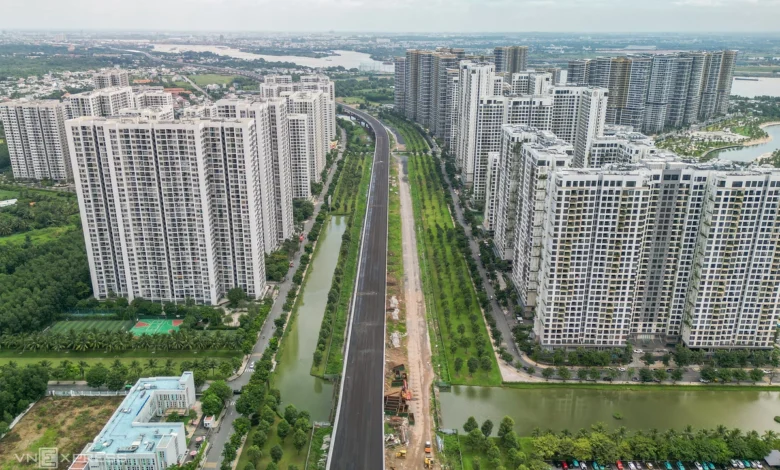
The frustration of potential buyers is exacerbated by a supply-side imbalance. Reports from Savills indicate that approximately 80% of new apartments entering the Ho Chi Minh City market in the third quarter of 2026 belonged to the mid-to-high-end segments, with average prices exceeding 100 million VND per square meter.
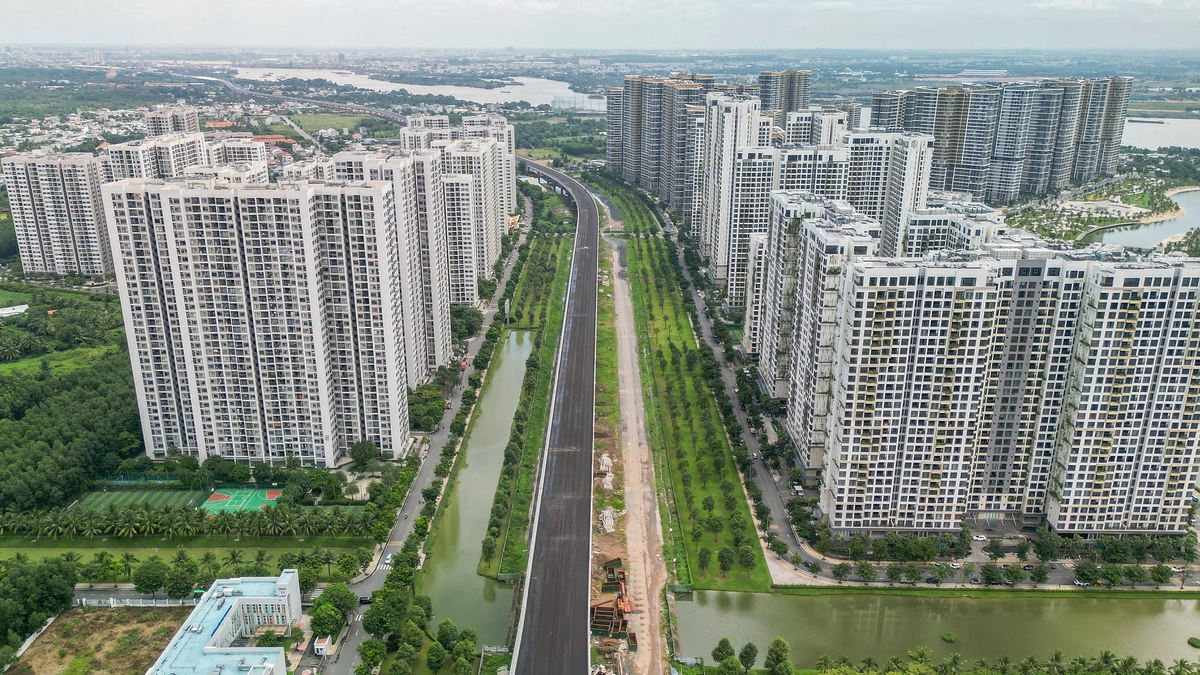
The "affordable" segment—properties priced under 3 billion VND—which is the primary target for first-time buyers, has become increasingly scarce. While some satellite regions, such as Binh Duong, offer more accessible price points, prospective buyers must factor in the "hidden costs" of homeownership: the significant time and financial expense associated with long-distance commuting and the limited access to high-end social infrastructure.
Industry Insights and Expert Analysis
Market researchers at Batdongsan recently surveyed the demographic aged 18–35 and found that while 83% expressed a desire to purchase a home, 64% are currently choosing to rent. The primary deterrent remains the mismatch between financial capability and current market entry requirements.
Vu Hong Thang, Deputy General Director of DKRA Group, suggests that while debt can be a useful tool for accelerating homeownership, it must be approached with extreme caution. "The loan amount must be determined based on a comprehensive assessment of stable income, living expenses, and the ability to maintain long-term debt service, rather than just the maximum amount a bank is willing to approve," Thang advised.
He posits that for a family with one child and a stable monthly income of 50 million VND, a reasonable debt commitment is roughly 20 million VND. At current average interest rates of 12%, this supports a loan of approximately 1.5 billion VND. However, this calculation assumes that the household maintains a rigid budget and a significant emergency fund.
The Psychology of Risk Aversion
The current sentiment among young professionals reflects a broader shift in financial planning. Unlike previous generations, who prioritized asset accumulation through property as a primary goal, modern professionals are placing a higher premium on "financial flexibility."
Expert Le Quoc Kien emphasizes that the decision to delay homeownership is often a rational response to economic uncertainty. "Using leverage is a double-edged sword," Kien stated. "It is only advisable when the buyer has a substantial down payment, a stable income, and a monthly debt burden that does not account for an overwhelming share of their revenue. If the mortgage forces a household to rely on bonuses or volatile income sources to survive, delaying the purchase is the most prudent path."
Broader Implications for the Real Estate Market
The collective pause of the younger generation has significant implications for the real estate sector. Developers are beginning to feel the pressure to shift their focus toward more attainable housing products, though construction costs and land prices remain high.
If the current trend persists, it may lead to a permanent shift in urban living patterns, where long-term renting becomes a standard, rather than a temporary phase. Furthermore, the banking sector faces the risk of a cooling mortgage market, which may force institutions to re-evaluate their lending products and risk assessment criteria for young borrowers.
Ultimately, the goal of "an cu" (settling down) remains a core value in Vietnamese culture, but the path to achieving it is being rewritten by the realities of a modern, high-cost economy. For the youth, the path forward is no longer about reaching a specific age threshold to buy, but about achieving a level of financial resilience that can withstand the unpredictable tides of the global and local economy.
As interest rates remain a volatile factor and property supply remains skewed toward luxury segments, the "wait and see" approach is likely to dominate the market for the foreseeable future, forcing both policymakers and developers to reconsider what "affordable" truly means in a 21st-century urban environment.