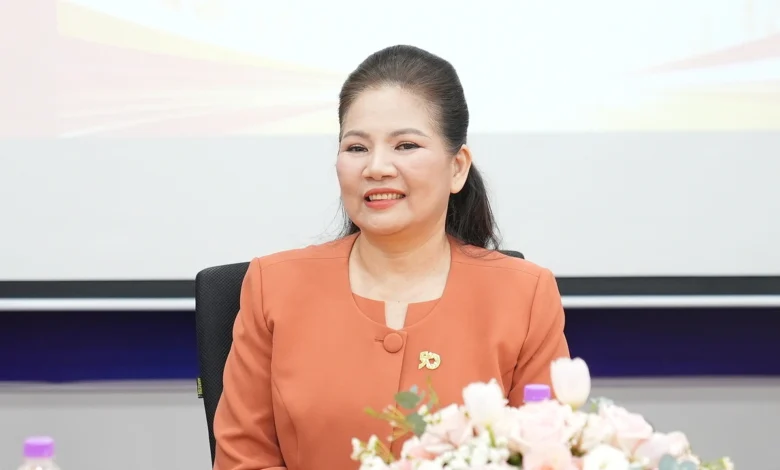
From a modest, family-run enterprise established in 1976 during the challenging post-war period to a modern industrial leader, TakyFood (Bột – Thực phẩm Tấn Kỷ) has become a quintessential example of Vietnamese entrepreneurial resilience. Under the leadership of CEO Bui Thi Thuy Loan, the company has transformed a kitchen-table startup into a powerhouse of the food processing industry, with annual revenues approaching the one-trillion-dong milestone. As the company looks toward the future, it has set ambitious targets: reaching 1,500 billion VND in revenue by 2029 and doubling that to 2,000 billion VND by 2030.
The Genesis of a Culinary Empire
The story of TakyFood is rooted in the necessity and ingenuity of the post-1975 era. In 1976, while living in Thu Thiem, Ho Chi Minh City, Ms. Loan’s mother, Nguyen Thi Xuan, and her father, Bui Sa Nhung, operated a family life that required constant resourcefulness. Ms. Xuan sold soy milk while Mr. Nhung operated a rented tricycle to support their five children.
The turning point occurred on an ordinary evening in 1976. Ms. Xuan discovered leftover cassava (khoai mì) in the kitchen. Instead of discarding it, she processed the tubers, extracted the starch, and allowed it to settle overnight. The resulting flour was sun-dried and used for making sweet soups. Seeing potential, she began packaging the product for local grocery shops. This small, home-based production unit laid the foundation for what would eventually become a national brand.
Chronology of Growth and Innovation
The company’s evolution can be categorized into three distinct phases:
- The Survival Phase (1976–1992): Operations were confined to the family’s kitchen and living space. Production was manual, labor-intensive, and limited in scale.
- The Modernization Phase (1992–2020): Recognizing the limitations of manual labor, a 22-year-old Thuy Loan took the initiative to modernize. She sought mentorship from Nguyen Thi Bach Tuyet, the head of the Food Technology Department at Ho Chi Minh City University of Technology. Through this free academic guidance, Ms. Loan began applying rigorous scientific standards to flour production, turning her home kitchen into a makeshift research laboratory.
- The Ecosystem Phase (2020–Present): The company finalized its transformation into a holistic business ecosystem, integrating raw material processing with high-tech R&D partnerships. Today, over 70% of the raw materials—including rice, sticky rice, and cassava—are sourced domestically, with minimal imports of potato and corn starch.
Strategic R&D and Market Positioning
Ms. Loan recalls her early days as the company’s first R&D employee. "I spent three years using precise analytical balances to perfect the formulas for frying flour, banh xeo flour, and various traditional cake mixes," she explains. This dedication to R&D ensures that TakyFood maintains its core competitive advantage: high-quality, consistent products that honor traditional Vietnamese flavors while meeting modern convenience standards.
Currently, TakyFood products are available in 87–90% of all supermarkets across Vietnam and are distributed through a network of 125 distributors. The company has successfully expanded its footprint to 34 international markets, catering primarily to the Vietnamese diaspora and Asian communities abroad.
Economic Impact and Market Challenges
According to the Ministry of Industry and Trade, the Vietnamese flour market for cake production consumes approximately 1.5 million tons annually, generating a total market value of roughly 40,000 billion VND. While the industry is growing alongside rising living standards, it faces stiff competition from international brands and changing consumer habits.
Modern consumers, particularly Gen Z, demand convenience, nutritional transparency, and speed. "Today’s consumers do not have 24 hours to wait for rice flour to ferment for traditional cakes," says Ms. Loan. In response, TakyFood has developed high-tech dried yeast and pre-mixed flour solutions that reduce the preparation time for traditional dishes like banh bo from 24 hours to just 1.5 hours, without sacrificing the authentic taste.
Embracing the Digital Transformation
To stay relevant, the company has pivoted toward digital sales channels. Duong Cong Minh, Ms. Loan’s son, now spearheads the company’s marketing and e-commerce initiatives. By focusing on TikTok Shop and other online platforms, TakyFood has reached sales of over 100 million VND per day on digital channels.
"Our online strategy is designed for the modern lifestyle," Minh notes. "We focus on short, engaging content during leisure hours, such as evenings or weekends, that guides consumers through simple, quick cooking tutorials. This approach has proven highly effective in driving conversions among younger demographics who value time-saving solutions."
The Preservation of Culinary Heritage
Despite the drive for modernization, there is a deep-seated concern among industry experts regarding the potential loss of traditional Vietnamese culinary arts. Vu Kim Hanh, Chairwoman of the High-Quality Vietnamese Goods Business Association, argues that while "do-it-yourself" cooking is popular, the complexity of technical processes—such as starch chemistry and fermentation—often discourages the younger generation.
TakyFood aims to bridge this gap. Ms. Loan has revealed plans to establish a "Museum of Vietnamese Cakes" in Ho Chi Minh City. This project will serve as an educational hub, offering workshops on traditional cooking techniques. The initiative is supported by cultural experts like Bui Thi Suong, who emphasizes that protecting culinary heritage requires a collaborative effort between manufacturers, researchers, and the public.
Future Implications and Industry Analysis
The company’s goal to reach 2,000 billion VND in revenue by 2030 is ambitious, especially when compared to multinational food conglomerates. However, analysts believe that by combining domestic raw material sourcing with cutting-edge R&D, TakyFood has secured a unique position.
The broader implication for the Vietnamese food industry is the move toward "value-added" agriculture. By processing domestic crops into sophisticated, ready-to-use flour products, TakyFood is helping to increase the economic value of Vietnam’s agricultural output. Furthermore, the focus on preserving traditional recipes through modern technology provides a blueprint for other local firms to compete against foreign imports.
Conclusion: Lessons in Resilience
Reflecting on over three decades of entrepreneurship, Ms. Loan emphasizes that there is no shortcut to sustainable growth. She attributes her success to three fundamental principles: "Observe the market meticulously, explore products deeply, and maintain high standards of discipline."
As TakyFood continues its journey, it stands as a testament to how traditional values, when married with modern technology and a forward-thinking business strategy, can transform simple agricultural commodities into a thriving, multi-generational enterprise. The company’s focus on the intersection of convenience and tradition ensures that, even as the global palate changes, the soul of Vietnamese cuisine remains preserved for future generations.