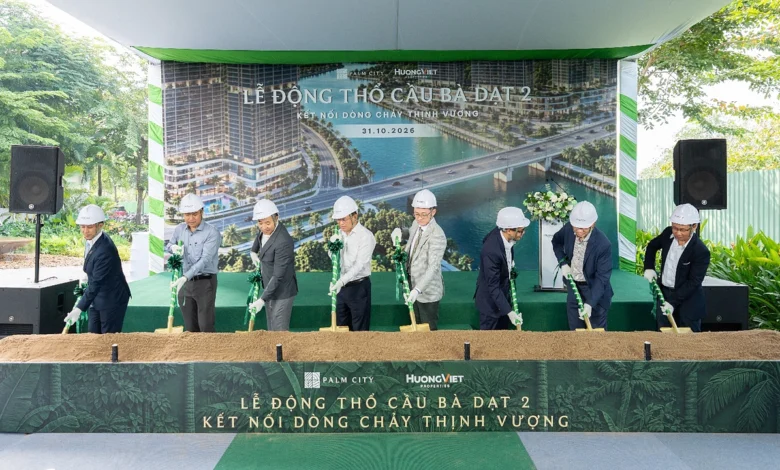
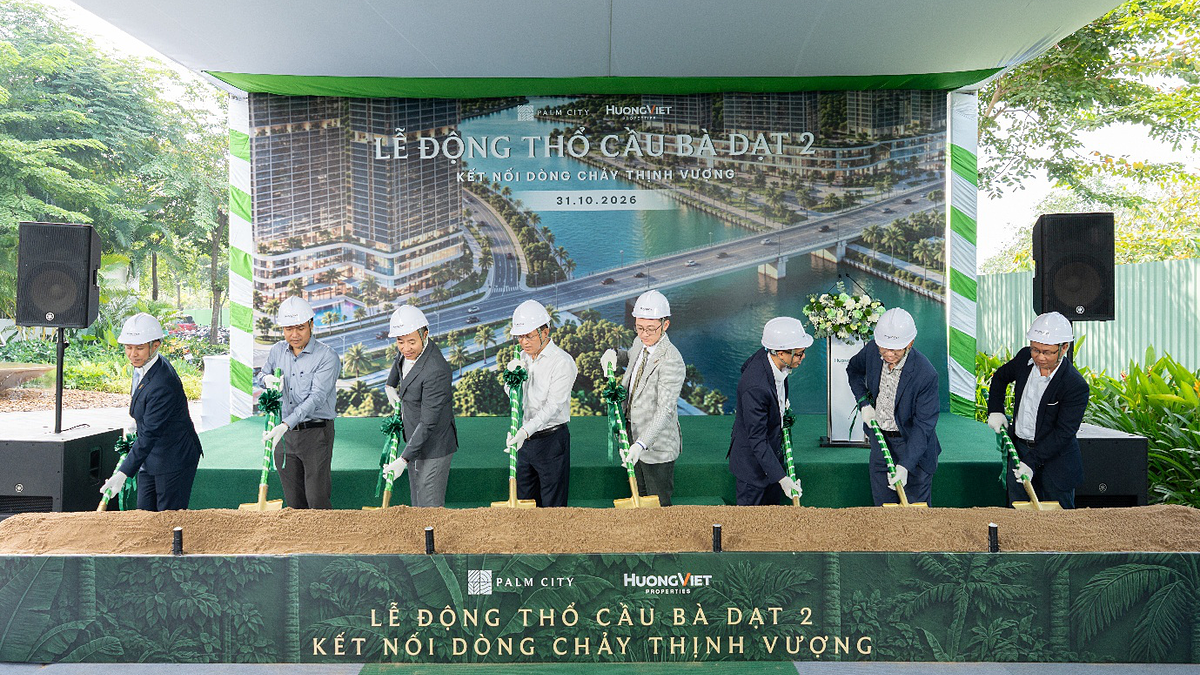
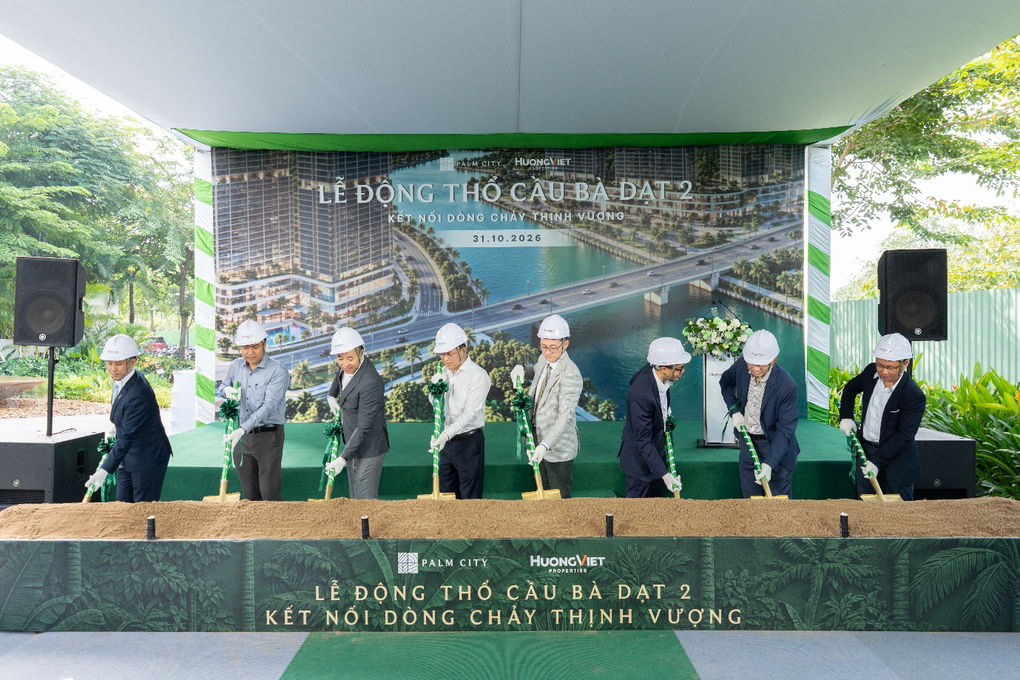
The groundbreaking ceremony for the Ba Dat 2 Bridge took place on October 31, 2026, within the Palm City urban development area in Binh Trung Ward, Ho Chi Minh City, marking a significant milestone in the region’s infrastructure expansion. With a total investment of approximately 124 billion VND, this project is designed to enhance connectivity between existing residential zones in Binh Trung Ward and the broader transportation network of the Nam Rach Chiec area. The ceremony saw the participation of key stakeholders, government representatives, project developers, and local residents, all underscoring the strategic importance of this bridge in the city’s ongoing urbanization efforts.
Technical Specifications and Scope of Development
The Ba Dat 2 Bridge project is not merely an isolated crossing but a comprehensive infrastructure package. The bridge structure itself spans approximately 38 meters in length and 12 meters in width, featuring three distinct spans and a two-lane configuration. The scope of work extends beyond the bridge deck to include the integration of approach roads, retaining walls, pedestrian pathways, and essential technical infrastructure.
Adjacent to the bridge, a new traffic route spanning 445 meters will be constructed to ensure seamless vehicle flow. This road will also measure 12 meters in width. To cater to the modern needs of urban residents, the project includes 355 meters of sidewalk and specialized drainage systems, energy-efficient lighting, and integrated landscaping. These components are being developed simultaneously with the bridge to provide a holistic solution for local traffic and to improve the aesthetic and functional quality of the riverfront corridor.
Strategic Connectivity and Traffic Optimization
The construction of Ba Dat 2 serves a critical role in the strategic master plan for the Nam Rach Chiec area. Historically, the region has faced challenges with fragmented connectivity, which often led to traffic congestion and limited accessibility between residential pockets. By establishing a direct link between the existing residential communities and the Palm City development, the bridge acts as a catalyst for regional integration.
Once completed, the project will facilitate improved access to the Ho Chi Minh City – Long Thanh – Dau Giay expressway, specifically enhancing the connection to the An Phu intersection. This is expected to significantly reduce commute times for thousands of residents and streamline logistics within the eastern district of the city. By mitigating the "bottleneck" effect, the bridge is projected to optimize the flow of both private vehicles and public transport services, thereby elevating the overall quality of life in the vicinity.
Project Timeline and Development Milestones
The development of the Ba Dat 2 Bridge follows a rigorous schedule designed to ensure minimal disruption to the surrounding community. Since the initial launch of the broader Palm City project in June 2026, the development team has focused on a phased approach to infrastructure. The project’s timeline is structured as follows:
- June 2026: Official launch of the Palm City urban development phase, focusing on residential and community infrastructure.
- Mid-2026: Commencement of the Palm River high-rise residential complex, a key component of the site’s waterfront transformation.
- October 31, 2026: Official groundbreaking ceremony for the Ba Dat 2 Bridge, initiating the physical construction phase.
- Q4 2027 (Projected): Final completion and commissioning of the bridge, enabling full traffic integration.
This systematic rollout ensures that as the population of the Nam Rach Chiec area grows, the infrastructure capacity keeps pace with demand, preventing the common urban issue of "development outpacing accessibility."
Developer Vision and Community Impact
Nguyen So Toan, Director of Residential Real Estate Operations at Huong Viet Properties, emphasized that the project is rooted in a commitment to "infrastructure-led development." During the ceremony, Mr. Toan noted that the completion of internal infrastructure must be intrinsically linked to tangible benefits for residents.
"The Ba Dat 2 Bridge, along with the associated landscaping and riverfront amenities, is a fundamental part of our long-term vision for the community," stated Mr. Toan. "Our goal is to create an environment where mobility is effortless, green space is readily accessible, and community interaction is fostered. By investing in these public-facing assets, we are not just building houses; we are creating a sustainable urban ecosystem."
The developer’s strategy for Palm City involves a dual-focus approach: high-density residential utility and low-density community space. The integration of pedestrian-friendly zones, parks, and riverside running tracks reflects a growing trend in Vietnamese urban planning, which increasingly prioritizes the "human-centric" design of residential areas.
Economic and Environmental Implications
The investment of 124 billion VND into this infrastructure project carries broader economic implications for the district. Firstly, improved accessibility typically correlates with increased property value and local economic vitality. By connecting residential hubs to major arterial roads like the Long Thanh – Dau Giay expressway, the bridge effectively links the neighborhood to the regional economic engine of southern Vietnam.
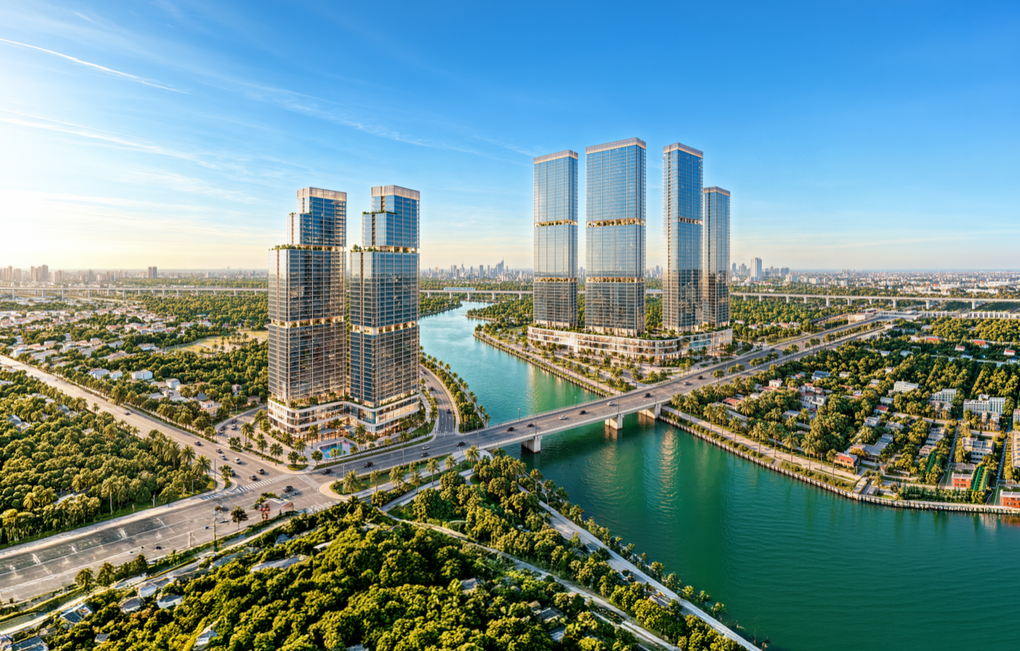
Secondly, the project integrates significant environmental considerations. The landscaping and riverfront restoration efforts are designed to mitigate the heat island effect common in large cities. The development of walkable paths and green buffers not only improves air quality but also provides a "soft" infrastructure that promotes physical health and mental well-being for residents. The creation of public space along the riverfront acts as a social bridge, encouraging residents of different residential blocks to interact, thus strengthening community cohesion.
Analyzing the Broader Urban Landscape
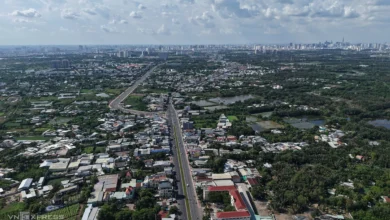
The Nam Rach Chiec area is currently undergoing a radical transformation, moving from a semi-rural, fragmented landscape to a high-density urban district. This transition requires a massive injection of capital into public utilities. The Ba Dat 2 Bridge is a prime example of private-sector participation in urban development, where developers undertake the responsibility of building critical infrastructure that serves the public interest while enhancing the value of their own projects.
Urban planners observing this development note that the success of such projects depends heavily on the integration of these "minor" bridges and roads into the city’s larger arterial system. If the connections to the An Phu intersection and the surrounding major expressways are handled with foresight, the cumulative effect of these localized projects could serve as a model for future suburban development in Ho Chi Minh City.
Conclusion
As construction progresses through the next 14 months, the Ba Dat 2 Bridge remains a focal point for the residents of Binh Trung Ward and the future inhabitants of Palm City. With the support of local authorities and the commitment of developers, the project stands as a testament to the city’s ongoing efforts to modernize its infrastructure. Upon its scheduled completion in the fourth quarter of 2027, the bridge is expected to be more than just a crossing; it will be a critical conduit for economic growth, community connectivity, and the realization of a modern, integrated urban lifestyle in one of Ho Chi Minh City’s most promising districts. The project serves as a clear indicator of the scale and quality expected in the next generation of Vietnamese urban planning.