Unlocking the Potential of Digital Data: A New Frontier for Vietnamese Enterprises and National Growth


The Vietnam – Asia DX Summit 2024, held on May 28-29, has served as a pivotal platform for defining the next phase of the nation’s digital transformation journey. Central to the discourse was the strategic elevation of "data" as a national resource, a shift that marks a significant departure from traditional industrial development models. As Vietnam positions itself to join the ranks of leading digital nations, the emphasis has moved from merely adopting technology to harnessing the power of data to fuel economic, social, and administrative growth.
The Paradigm Shift: Data as a New National Resource
During the opening session of the Vietnam – Asia DX Summit 2024, Minister of Information and Communications Nguyen Manh Hung emphasized a profound conceptual shift: for the first time in human development, humanity is creating a new resource rather than depleting existing ones. Historically, industrial development was often synonymous with the consumption of finite raw materials. Today, however, the digital economy thrives on the creation of data—an infinite, regenerative asset that gains value through usage and integration.
This realization is the cornerstone of the "National Data Strategy to 2030," a comprehensive framework approved by the Prime Minister. The strategy aims to build a robust data infrastructure, which is now considered the bedrock of national digital transformation. By treating data as a strategic asset, the government aims to catalyze development in artificial intelligence (AI), public services, and smart governance, ultimately positioning Vietnam as a regional hub for data-driven innovation.

The Regulatory Roadmap and Strategic Objectives
Following the government’s approval of the National Data Strategy in February 2024, the Ministry of Information and Communications (MIC) has moved swiftly to operationalize these directives. Tran Minh Tan, Deputy Director of the Institute of Information and Communications Strategy at the MIC, outlined the core pillars of this initiative during a specialized seminar on May 29, titled "Management and Effective Operation of Enterprises Based on Data."
The strategy is built on six key principles, aimed at fostering a digital ecosystem where data flows securely across sectors. Key objectives include:
- Public Data Development: Establishing a comprehensive framework for the collection, cleaning, and sharing of public data to better serve social development.
- Economic Growth through Data: Creating a thriving data market that allows businesses to monetize and leverage information to drive competitive advantages.
- Cross-Border Data Security: Implementing rigorous frameworks to ensure that while data acts as a "flowing" resource that crosses borders, it remains secure and compliant with national sovereignty interests.
The government is taking a "lead-by-example" approach, tasking ministries, departments, and localities with the immediate publication of their open data catalogs. This transparency is intended to create a multiplier effect, enabling private enterprises, research institutions, and startups to build applications and services that utilize this public data, thereby fostering an open innovation ecosystem.
Challenges for Small and Medium Enterprises (SMEs)
While the national strategy provides a top-down framework, the practical application of data-driven management remains a significant hurdle for many Vietnamese businesses, particularly SMEs. During the summit, representatives from MISA, a leading provider of digital transformation solutions, highlighted the "Three Barriers" currently preventing SMEs from fully embracing data-driven operations.

Nguyen Ngoc Ly, Director of the MISA Business Center, identified these challenges as:
- Fragmented Data Ecosystems: Many businesses suffer from "data silos" where different departments use incompatible software, leading to duplicated data entry and a lack of a unified view of the business.
- Lack of Scalable Solutions: Businesses often invest in software that fits their current size but cannot scale, forcing them to abandon data and processes when they reach a certain growth threshold.
- Prohibitive Costs: High-end Enterprise Resource Planning (ERP) systems are often too expensive or overly complex for SMEs, leading to a mismatch between software capabilities and actual business needs.
The Case for Early Data Adoption
A recurring theme among experts at the summit was the urgency of data culture. Contrary to the belief that data management is only for large enterprises, MISA argued that businesses should start building their data architecture from the very moment of incorporation.
"The cost of organizing data at the outset is significantly lower than attempting to restructure a massive, messy data set after a company has already scaled," stated Ly. She emphasized that SMEs should prioritize solutions that allow for modular growth. By integrating data management tools early, companies can leverage AI-driven insights to optimize operations, improve productivity, and enhance their competitive edge in a tightening market.
The Role of AI in Data-Driven Management
The integration of Artificial Intelligence (AI) into business operations was highlighted as the natural next step for data maturity. When businesses successfully organize their data—moving from raw, unstructured information to structured, actionable insights—they become prime candidates for AI implementation.

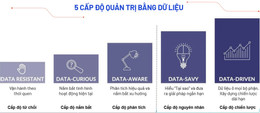
MISA showcased its own AI assistant, MISA AVA, as an example of how businesses can move up the "data maturity ladder." By processing information from internal systems, such as accounting, payroll, and CRM, the AI can generate real-time reports and visual dashboards that allow leadership to make evidence-based decisions rather than relying on intuition. Currently, many Vietnamese SMEs are stuck at the second level of data maturity—basic "data capture"—and are failing to leverage this information for strategic decision-making. The transition to advanced analytics is the critical bottleneck that requires both technological investment and a shift in management mindset.
Chronology of Digital Transformation in Vietnam
- Pre-2020: Initial focus on "E-Government," characterized by the digitization of public records and the launch of basic online public services.
- 2020-2022: Accelerated digital adoption triggered by the COVID-19 pandemic, leading to a surge in remote work tools, e-commerce, and digital payment systems.
- 2023: Government policy shift towards "Digital Economy" and "Digital Society," with a focus on data governance and cybersecurity.
- February 2024: Formal approval of the "National Data Strategy to 2030," establishing the framework for a national data infrastructure.
- May 2024: The Vietnam – Asia DX Summit 2024, focusing on the tactical implementation of the National Data Strategy and the role of the private sector in data monetization and security.
Broader Economic and Social Implications
The implications of a data-first approach extend far beyond individual business efficiency. At a national level, the successful implementation of this strategy is expected to contribute significantly to Vietnam’s GDP growth. By digitizing the economy, the government estimates that the transparency, efficiency, and innovation fostered by data-driven management could reduce administrative costs for businesses by as much as 20-30% over the next decade.
However, challenges remain. Issues such as data privacy, the potential for cybersecurity breaches, and the need for a massive upskilling of the workforce were acknowledged by all stakeholders. The government’s role, as defined by the Ministry of Information and Communications, is to act as a guide and a facilitator, setting the standards for interoperability while ensuring that the benefits of the data economy are shared across the entire population.
Conclusion
The Vietnam – Asia DX Summit 2024 has crystallized a vision for Vietnam’s future: a country where data is not just a byproduct of business activity but the primary engine of its economic future. While the path from vision to implementation is complex—fraught with challenges regarding technical compatibility, organizational culture, and resource constraints—the momentum is undeniable.
For the Vietnamese SME sector, the message is clear: the digital transformation is no longer a luxury but a fundamental requirement for survival. By adopting a "data-first" mindset, leveraging modular technology, and investing in the right talent, the next generation of Vietnamese enterprises has the opportunity to leapfrog traditional development stages and compete on the global stage. As the nation moves toward 2030, the ability to turn data into wisdom will likely define the winners of the next era of growth.
Related posts: