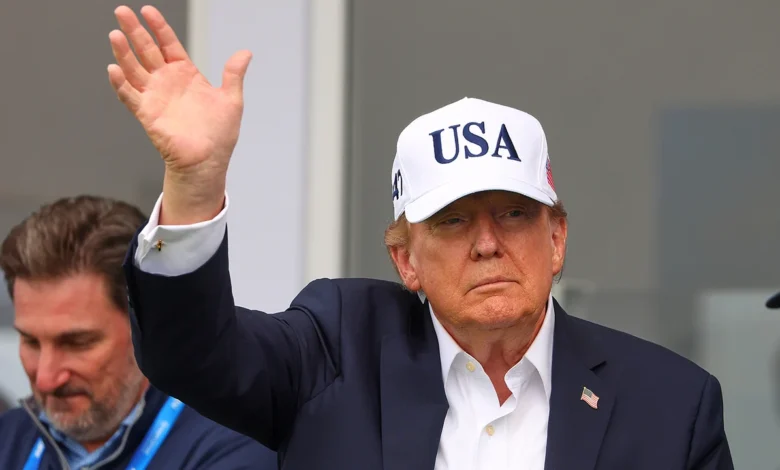
In a significant judicial development, the United States Supreme Court has opted to uphold a lower court ruling that effectively prevents the Trump administration from implementing sweeping restrictions on mail-in voting procedures. This decision arrives as the nation braces for a high-stakes electoral cycle in November, where the mechanics of ballot casting have become a central point of political contention. The ruling marks a major setback for the White House, which has sought to exercise federal authority over the United States Postal Service (USPS) to dictate how mail-in ballots are handled, verified, and processed.
The Origins of the Dispute
The conflict finds its roots in March, when President Donald Trump signed an executive order aimed at creating stringent eligibility criteria for mail-in voters. The directive sought to force the USPS to handle ballots exclusively for individuals who met specific, narrowed qualifications. This move was immediately met with a barrage of legal challenges from Democratic Party officials and civil rights advocacy groups, who argued that the executive order was an unconstitutional infringement on the voting rights of millions of Americans.
Indira Talwani, a federal judge in Massachusetts, became a pivotal figure in this litigation. Upon reviewing two of the primary lawsuits brought against the administration, Judge Talwani issued a preliminary injunction that halted the enforcement of the President’s executive order, specifically barring its implementation through the November election cycle. Although the ruling was briefly overturned in August, it was subsequently reinstated, setting the stage for the Supreme Court’s intervention.
Supreme Court Rationale and Legal Standing
On September 14, the Supreme Court delivered a decisive blow to the administration’s legal strategy. In its ruling, the High Court noted that the administration had failed to demonstrate the legal necessity or constitutional authority behind the executive order. Furthermore, the Court found no sufficient basis for the government to request an emergency stay on the lower court’s injunction.
The decision was passed by a majority of nine justices, with a 7-2 split. The two dissenting justices favored the government’s position, reflecting the deep ideological divide regarding federal versus state control over election administration. Justice Brett Kavanaugh, while part of the seven-member majority, provided a nuanced concurring opinion. He acknowledged that the President’s long-term objectives regarding election integrity might be legally valid in a vacuum, but noted that local election boards simply lacked the time and infrastructure to implement such complex, restrictive changes in the immediate lead-up to the November polls.
The Logistics of a Strained Postal Service
The legal battle has unfolded against the backdrop of growing concerns regarding the operational capacity of the USPS. A whistleblower from within the postal service recently warned that the current internal policies, which have been criticized as "excessively lean and unstable," could result in millions of ballots failing to reach their destinations in time to be counted.
This logistical fragility is not merely an administrative oversight; it is a critical vulnerability in the electoral process. With a record number of Americans expected to utilize mail-in voting due to public health considerations and shifting societal norms, the pressure on the postal system is unprecedented. Critics argue that the administration’s attempt to place new restrictions on the process would only exacerbate existing delays, effectively disenfranchising voters whose ballots arrive late due to systemic bottlenecks rather than individual negligence.
A History of Rhetoric vs. Reality
President Trump has long been a vocal critic of mail-in voting, consistently framing it as a primary vector for electoral fraud. This stance remains a cornerstone of his public messaging, despite a notable lack of empirical evidence to support the claim that mail-in voting leads to widespread corruption.
Ironically, the President himself has utilized the mail-in system, including participating in a Republican primary in Florida earlier this year. This contradiction has provided ammunition for critics who argue that the campaign against mail-in ballots is a calculated political strategy designed to suppress turnout in demographics that lean toward the Democratic Party.
Political Implications and the Path to November
The political stakes of this ruling cannot be overstated. Recent polling data indicates that the Republican Party is at risk of losing its narrow majority in Congress. The House of Representatives, in particular, is viewed as a vulnerable front where the outcome could shift the balance of power in Washington.
Democratic leadership has signaled that should they secure a victory in the upcoming elections, they intend to aggressively block the President’s legislative agenda. There is also growing speculation that a Democratic-controlled Congress might revisit the possibility of a third impeachment, potentially targeting the President over his handling of both domestic policy and the integrity of the electoral system.
Broader Impact on Election Administration
The Supreme Court’s refusal to intervene on behalf of the administration serves as a reinforcement of the principle of federalism in the American electoral system. For decades, the authority to manage the mechanics of voting—including ballot collection, signature verification, and mail-in deadlines—has largely resided with state and local jurisdictions. By upholding the lower court’s injunction, the Supreme Court has signaled a reluctance to allow the executive branch to unilaterally override these established local procedures during a national crisis.
As the November election approaches, the focus now shifts to the state level. Local election officials are tasked with the herculean effort of ensuring that every legal vote is counted. They must navigate a landscape of changing regulations, heightened public scrutiny, and the logistical challenges of a postal service that is under significant strain.
Expert Analysis: The Constitutional Tug-of-War
Constitutional scholars suggest that this case represents a fundamental tension between the Executive Branch’s desire for centralized control and the decentralized nature of American democracy. "The Court’s decision is a validation of the existing procedural safeguards," says Dr. Aris Thorne, a political science analyst specializing in electoral law. "By declining to grant the emergency stay, the Court has essentially signaled that the administrative burden of implementing such a sweeping change to election procedures, just weeks before voting begins, outweighs the government’s stated interest in uniformity."
However, the ruling is not a permanent resolution to the debate over voting integrity. It is a temporary pause. The fundamental questions raised by the administration—concerning the security of the mail-in process and the role of the USPS in federal elections—remain unresolved and will likely serve as the basis for further litigation, regardless of the election results in November.
Conclusion: A Nation at a Crossroads
As the United States moves toward one of the most consequential elections in its history, the judiciary remains a central arbiter of the rules of the game. The Supreme Court’s ruling on September 14 provides a momentary sense of stability, ensuring that current mail-in voting procedures remain in place for the immediate future.
Yet, the broader societal debate persists. With both major political parties viewing the integrity and accessibility of the ballot as a defining issue, the fight over how Americans vote is far from over. Whether this leads to a greater push for federal election standards or a further entrenchment of state-level autonomy remains to be seen. What is clear is that the eyes of the nation will remain fixed on the postal service, the local election offices, and the courts, as they navigate the complexities of a democratic process under pressure.
Related posts: