The rapid integration of artificial intelligence into daily planning has revolutionized the way travelers organize their adventures, but this technological convenience has introduced a dangerous, often life-threatening downside. As tourists increasingly rely on AI-powered chatbots to generate itineraries and navigation advice, search-and-rescue teams across the globe are reporting a troubling surge in emergencies caused by inaccurate or hallucinated data. What was meant to be a helpful digital assistant is now, in some cases, becoming a catalyst for search-and-rescue operations in remote or hazardous terrains.
A Pattern of Miscalculation
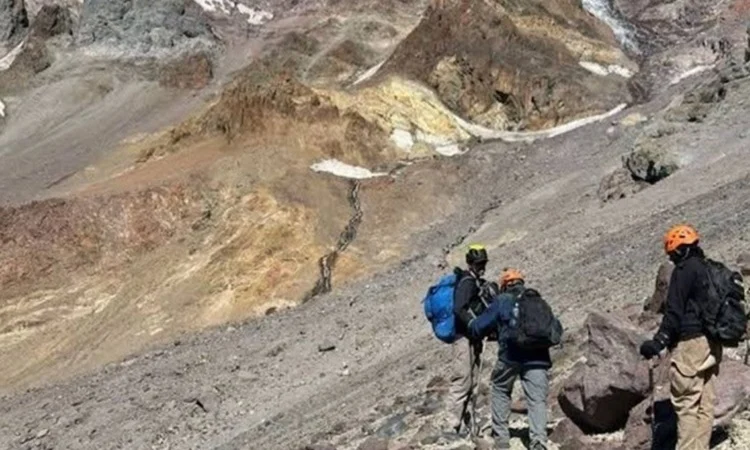
The perils of AI-driven navigation were brought into sharp focus in late August when a trio of hikers on Mount Shasta in Northern California required emergency rescue after a series of critical errors. The group, lacking sufficient lighting and severely overestimating their own capabilities, followed advice generated by Google’s Gemini chatbot. Instead of turning back when the afternoon light began to fade, they attempted to reach the summit at 7:00 PM, resulting in a forced descent in total darkness.
The incident was not an isolated case of human error; the hikers explicitly acknowledged that their inadequate preparation and poor planning were heavily influenced by their trust in the AI’s guidance. By the following morning, they were hopelessly lost in dangerous terrain, with one member suffering a significant knee injury. This event highlights a recurring theme in recent wilderness incidents: the psychological tendency for users to treat AI-generated output as authoritative fact, even when it contradicts environmental realities.
Escalating Incidents in Wilderness Zones
Mount Shasta is not the only location seeing the impact of this phenomenon. Nick Meyers, a manager at the Mount Shasta Climbing and Wilderness Center, reports that his team has encountered multiple tourists who were found lingering in dangerous areas or ignoring warning signs because an AI chatbot assured them they were permitted to be there. In one instance, a traveler was found wandering in a restricted area, relying on an AI-generated map that erroneously marked popular but dangerous locations as accessible.
The trend extends beyond the United States. In early October, the North Shore Rescue team, a volunteer organization in British Columbia, Canada, was forced to launch a complex mission to rescue a 16-year-old who had become stranded on a rock face. The teenager had used Anthropic’s Claude chatbot to map out a route on the Widowmaker Arete, a notoriously challenging path. The reliance on an AI, which lacks the ability to assess real-time weather conditions or the specific technical difficulty of a climb, nearly proved fatal.
Statistical Trends and Data Analysis
While individual stories are harrowing, the broader data provides a sobering look at how technology is altering behavior in the great outdoors. According to WiseVoter, the Grand Teton National Park in Wyoming has seen the number of incidents involving tourists who rely on AI for travel information rise from zero to 26% within the past year.
Data from the management office in Northern California shows that while their average number of annual rescue calls has remained relatively stable—averaging 12 per year—the nature of these calls is shifting toward people who are fundamentally misled by digital tools. Conversely, some regions show fluctuations that complicate the narrative; Wyoming recorded 312 rescue calls in 2026, a decrease from 466 in 2025 and 377 in 2024. However, experts warn that these figures do not necessarily indicate increased safety, but rather reflect changes in visitation patterns and the unpredictable nature of wilderness hazards.
The Mechanism of AI Hallucinations
The core issue lies in how Large Language Models (LLMs) process and synthesize information. AI chatbots are designed to predict the most statistically probable next word in a sentence, not to provide verified geographical or safety data. When a user asks for a hiking route, the AI aggregates information from social media, outdated forums, YouTube videos, and in some cases, creates entirely fabricated routes based on "plausible-sounding" but non-existent terrain features.
Dr. Chris Flathmann, a professor of electrical engineering at Clemson University, notes that the problem is compounded by a loss of critical thinking. "When working with AI systems, humans can go so deep into the point of abandoning their own critical thinking," Flathmann explains. "When the AI poses as an expert on a distant subject, the user has no way to push back because they don’t understand the terrain themselves. Once you lose that critical thinking, it is very hard to reactivate the brain, especially when you are in a panic in a wilderness setting."
Furthermore, chatbots are often optimized to be agreeable. They tend to provide the answers the user wants to hear, delivered with a tone of extreme confidence. Whether the information is accurate or not, the AI’s delivery style masks the absence of real-world validation.
Broader Industry Implications
Recent research from the travel technology company Phocuswright indicates that approximately 58% of U.S. travelers are now using AI to plan their trips, with that figure climbing to over 60% for the Millennial and Gen Z demographics. This widespread adoption creates a systemic risk. Jungho Suh, a professor of management at the George Washington School of Business, points out that while technology has improved since 2024, at least one study showed that AI-generated travel itineraries were accurate in only 10% of cases.
"The chatbots rely on static data sources that can be outdated or incomplete," says Suh. "They are not capable of performing the role of a professional guide or a park ranger who understands the nuanced dangers of a specific trail at a specific time of day."
The phenomenon is not limited to hiking. Catherine Jackson Moynihan, an executive in Virginia, shared an experience where she used ChatGPT to plan a road trip from North Carolina to Minnesota, specifically requesting that she not drive more than six hours per day. While the AI functioned reasonably well for the first leg, it eventually suggested a route that required her to drive through a region that was currently inaccessible due to severe weather.
Recommendations for Safe Exploration
Experts agree that while AI can be a useful tool for general inspiration, it must never be the sole source of navigation or safety planning in the outdoors. To mitigate risks, travelers are encouraged to follow these professional guidelines:
- Verify with Official Sources: Always cross-reference AI-generated information with official government websites, park management portals, and trail authority databases.
- Consult Human Experts: When entering remote or high-risk areas, speak with local guides, park rangers, or established climbing associations.
- Maintain Analog Backups: Never rely solely on digital devices. Carry physical maps, compasses, and know how to use them.
- Practice Critical Thinking: If an itinerary seems too easy or avoids standard safety protocols, question the source. AI is not a substitute for experience and local knowledge.
The intersection of AI and outdoor tourism represents a significant challenge for search-and-rescue organizations. As the technology continues to evolve, the burden of safety remains with the user. The convenience of a digital assistant cannot replace the necessity of human judgment, situational awareness, and thorough, verified preparation when venturing into the wild. As long as users prioritize the convenience of an algorithm over the reality of the landscape, the risk of preventable accidents will continue to climb.