Ninh Binh authorities launch investigation into suspicious land auction irregularities in Ly Nhan commune

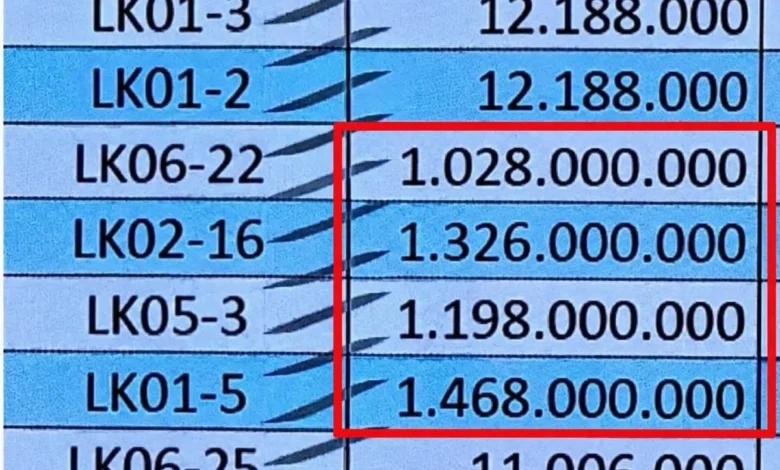
On November 7, a routine land use rights auction in Ly Nhan commune, Ninh Binh province, transformed into a focal point of administrative scrutiny after 11 of the 70 auctioned plots reached final bidding prices that local authorities and industry experts describe as inexplicably inflated. While the auction was intended to generate revenue for infrastructure development, the resulting figures—ranging from 850 million VND to nearly 1.5 billion VND per square meter—have prompted an immediate intervention by the commune’s leadership and law enforcement agencies.
The auction involved a total area of 8,798.5 square meters, partitioned into 70 individual lots, each measuring between 110 and 200 square meters. The event, which was managed by the Phuong Hung Auction Partnership Company (Ninh Binh Branch), aimed to secure funding for the construction of essential public infrastructure. However, the final outcome of the bidding process, which concluded on the evening of November 8, has raised significant concerns regarding market transparency and the potential for bidding manipulation.
Chronology of the Auction Process
The process began with a clearly defined regulatory framework. The starting total value for all 70 plots was set at 72.9 billion VND. The bidding format was structured as a multi-round, direct open-ballot system, designed to continue until no further bids were submitted. Under the established rules, the first round carried a starting price of 3 million VND per square meter, with subsequent rounds increasing by 1 million VND per square meter.
Prospective participants were required to submit an initial deposit ranging from 249 million to 576 million VND per file, depending on the specific lot. While individuals were permitted to register for multiple lots, they were required to pay the document fees and security deposits for each entry, theoretically filtering out non-serious participants. A total of 73 individuals participated in the auction, a number that initial assessments deemed appropriate for the scale of the available land.
However, the deviation occurred mid-auction. While the majority of the lots followed a standard market trajectory, 11 specific plots saw a sudden, aggressive spike in bidding intensity that bore little resemblance to the surrounding land valuation.
Discrepancies and Market Anomalies
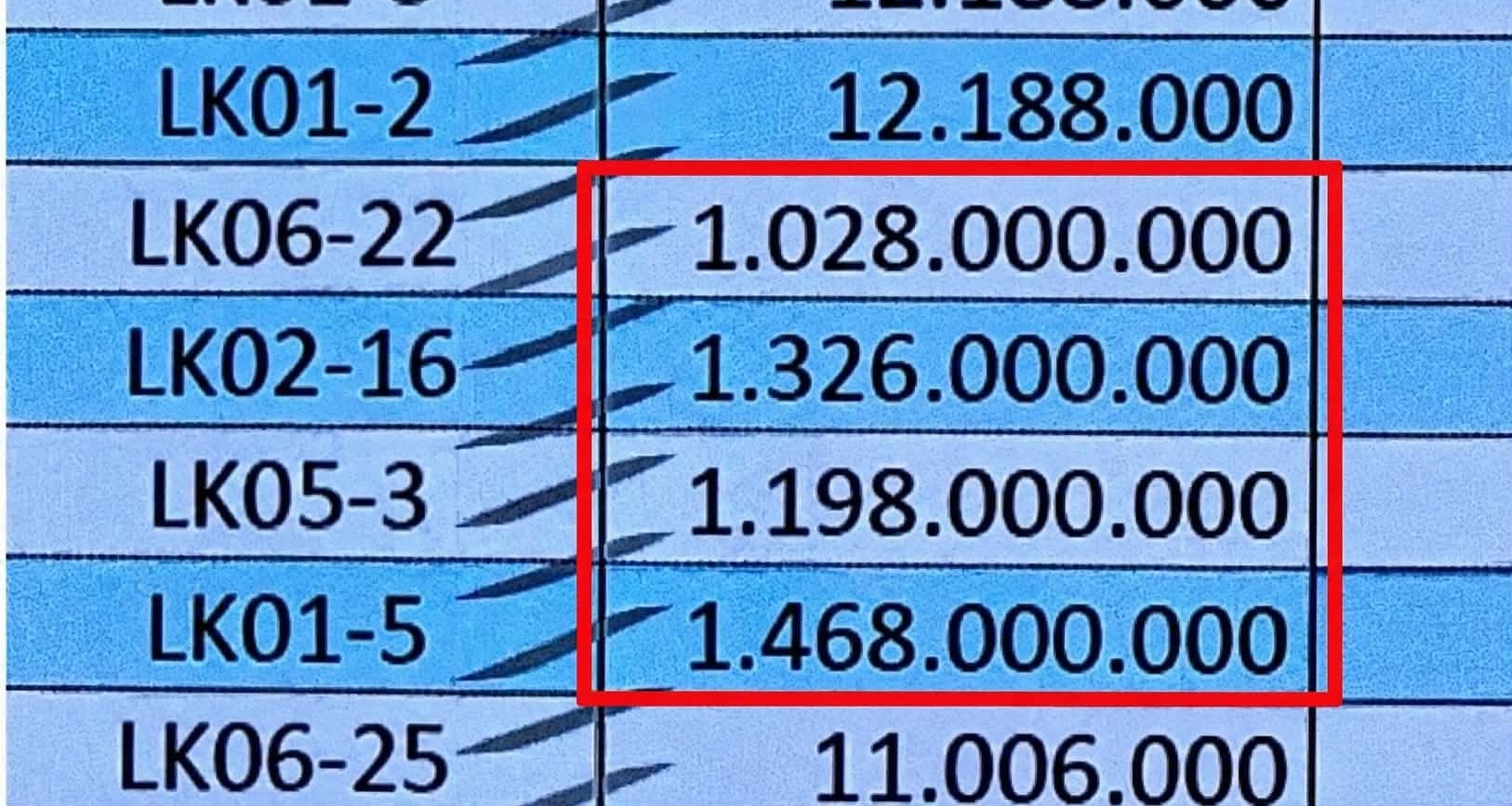
The most egregious example of this price surge involved the lot designated as LK-015. This 120-square-meter plot had an initial starting price of approximately 9.2 million VND per square meter, with a required deposit of 331 million VND. By the end of the session, the winning bid had skyrocketed to 1.468 billion VND per square meter.
This figure is vastly disproportionate to the real-world value of the land in that specific area. According to local government records, recent market surveys conducted by the commune authorities placed the realistic market value for land in that vicinity at approximately 17 to 20 million VND per square meter. The winning bid for lot LK-015 represents a valuation nearly 75 times higher than the locally assessed market rate, a statistical anomaly that suggests either a profound misunderstanding of market conditions by bidders or an attempt to manipulate the auction outcome.
Official Responses and Preliminary Investigations
By the evening of November 8, the leadership of the Ly Nhan People’s Committee acknowledged the gravity of the situation. A joint task force has been established, comprising representatives from the commune’s police department, the local Economic Division, and the auction organizers.
"We are currently in the verification stage," a spokesperson for the local government stated. "Our primary objective is to determine whether these bids were made in good faith or if they constitute a breach of the regulations governing land auctions. We are scrutinizing the participant profiles and the chronological progression of the bids to identify any collusive behavior."
The investigation is expected to cover several key areas:
- Verification of Bidders: Confirming the financial capacity of the winning bidders and their potential affiliations.
- Procedural Compliance: Auditing the auction house’s adherence to the established bidding rules and security protocols.
- Intent and Collusion: Determining if the "hyper-bidding" was designed to create an artificial benchmark for neighboring land or to intentionally disrupt the sale process.
Broader Economic and Legal Implications
The implications of this incident extend beyond the local scope of Ly Nhan. In Vietnam, land auctions serve as a critical mechanism for local governments to fund public projects, including schools, roads, and healthcare facilities. When auctions are compromised, it threatens the integrity of public revenue streams and undermines public trust in the land management system.

Economic analysts point out that "abnormal" bidding often stems from two primary motivations: speculative bubbles driven by misinformation, or malicious bidding intended to invalidate an auction. If a winning bidder realizes they cannot or will not pay the final bid amount, they forfeit their deposit, but the resulting administrative chaos often forces the local government to cancel the auction, causing significant delays to infrastructure projects.
Furthermore, there is a risk of market distortion. If these inflated figures are publicized without context, they may lead to unrealistic price expectations among local landowners, creating a "frozen" market where sellers refuse to lower prices based on false benchmarks, ultimately stifling local real estate liquidity.
Market Transparency and Future Safeguards
This event has reignited calls for more stringent oversight of auction houses and digital bidding platforms. While the open-ballot system is designed to be transparent, the human element—specifically the potential for coordinated, bad-faith bidding—remains a vulnerability.
Legal experts suggest that future auctions may require enhanced "cooling-off" periods or stricter financial vetting for high-value bids. Additionally, there is a growing consensus that auction results that deviate by a significant percentage from established regional market appraisals should trigger an automatic, independent audit before the sale is finalized.
As the investigation in Ninh Binh proceeds, the outcome will likely serve as a litmus test for the effectiveness of local oversight mechanisms. For the residents of Ly Nhan, the wait for the results of this inquiry is critical, as the stalled revenue from the auction leaves essential public development projects in limbo. The provincial authorities have pledged to release a formal report once the investigation into the 11 suspect plots is complete, promising full transparency regarding any administrative or legal action taken against those responsible for the irregularities.
The incident serves as a stark reminder of the complexities inherent in land management during periods of rapid economic transition. As the government continues to modernize land auction laws, the case of Ly Nhan will likely become a benchmark for identifying and mitigating the risks of artificial price manipulation in the real estate sector.
Related posts: