National Assembly Debates Crucial Draft Laws and Multi-Billion-Dollar Expressway Investments Alongside Local Policy Shifts in Ho Chi Minh City

The political and legislative landscape of Vietnam experienced a dynamic wave of activity as lawmakers, local government officials, and urban planners converged to address critical national reforms and municipal development strategies. At the heart of these proceedings, the National Assembly convened in plenary sessions to deliberate on several cornerstone legislative frameworks, including the draft Law on the Development of Cultural Industries and extensive amendments to specialized laws governing sports, tourism, telecommunications, cinema, cultural heritage, advertising, and the press. Simultaneously, sweeping regional policy updates—particularly in Ho Chi Minh City—demonstrated a concerted push toward sustainable urban management, public health resilience, green transitions, and vibrant civic engagement heading into the new year.
Legislative Overhauls and the Cultivation of Cultural Industries
At the forefront of the National Assembly’s agenda was the comprehensive review of the draft Law on the Development of Cultural Industries, a legislative blueprint structured across 8 chapters and 39 articles centered around six primary policy domains. Parliamentary delegates and drafting committees emphasized that the formulation of this law is driven by urgent practical demands. The primary objective is to unleash creative capacities, unlock dormant economic resources, and transform Vietnam’s cultural industries into a robust new growth engine for the national economy.
By formalizing intellectual property protections, streamlining investment incentives for artistic and media ventures, and establishing clear operational parameters for creative enterprises, the state aims to position culture not merely as a matter of social preservation, but as a dynamic commercial sector capable of generating substantial gross domestic product (GDP) contribution and high-value employment.
In tandem with the cultural industries bill, the morning parliamentary session tackled a comprehensive omnibus legislative package: the draft Law amending and supplementing a number of articles concerning Physical Training and Sports, Tourism, Telecommunications, Cinema, Cultural Heritage, Advertising, and the Press. This legislative harmonization reflects a broader governmental strategy to eliminate legal bottlenecks, modernize regulatory oversight, and foster an environment conducive to digital transformation and international integration within Vietnam’s service and media sectors.
At the conclusion of these rigorous deliberations, Minister of Culture, Sports and Tourism Nguyen Van Hung took the podium to address specific inquiries, clarify complex legislative intersections, and provide formal explanations regarding points raised by parliamentary representatives.
Administrative Decentralization and Special Economic Mechanisms
The afternoon legislative schedule shifted toward institutional governance, administrative efficiency, and judicial streamlining. Lawmakers engaged in robust debates concerning the draft Law on Promulgation of Normative Legal Documents, evaluating mechanisms to enhance the quality, transparency, and responsiveness of Vietnam’s legal system. Central to this discussion was an exhaustive review of the implementation status of Resolution No. 206/2025/QH15, a landmark legislative instrument designed to provide special mechanisms for resolving critical bottlenecks and legal hurdles that have historically impeded public administration and capital disbursement.
Furthermore, the government submitted formal reports detailing the systemic adjustments and operational challenges arising from ongoing structural realignments within state machinery. As part of a national administrative reform initiative, authorities are aggressively advancing decentralization and delegation of authority, empowering local governments to make timely decisions, remove regulatory deadlocks, and accelerate infrastructural execution without awaiting protracted central-level approvals.
Strategic Infrastructure Investments: Connecting the Regions
Capitalizing on these decentralized mechanisms, the legislative session culminated in a high-stakes deliberation concerning the policy approval for three major expressway projects spanning a combined length of approximately 430.5 kilometers, with a preliminary total investment estimated at a staggering VND 162.393 trillion ($6.5 billion USD).

The proposed infrastructure package encompasses:
- The Bao Ha – Lai Chau expressway, including the Bao Ha – Tan Phong section.
- The Quang Ngai – Kon Tum expressway.
- The Moc Chau – Son La – Dien Bien expressway, traversing the rugged topography of Son La province.
Engineered to a standardized four-lane expressway configuration, these monumental transport arteries are designed to overcome geographical isolation, enhance national security, stimulate trade, and integrate remote mountainous and Central Highlands provinces into the broader national economic grid. The financial scale and logistical complexity of these projects underscore the government’s unwavering commitment to infrastructural modernization, even amid global economic headwinds.
Ho Chi Minh City’s Comprehensive Push for Green Transition and Emission Control
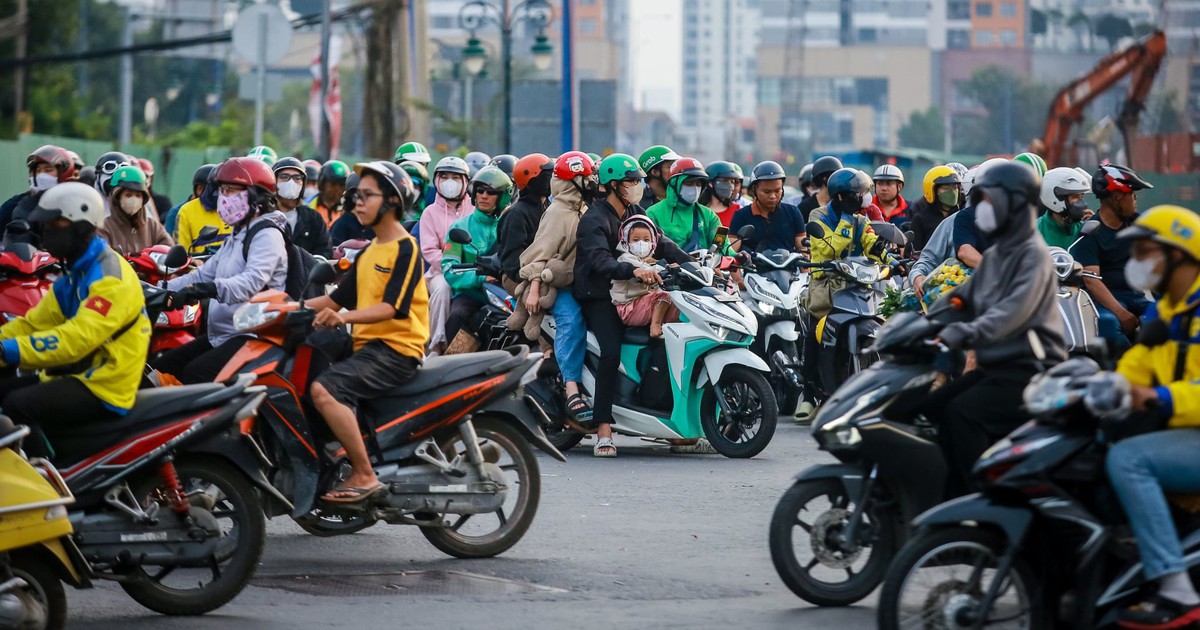
While national lawmakers charted the course for legislative and infrastructural development, municipal authorities in Ho Chi Minh City implemented aggressive policy measures aimed at urban environmental reform, public welfare, and economic equity. Following executive directives issued by the Chairman of the Ho Chi Minh City People’s Committee regarding mandatory motorcycle emission testing, the municipal Department of Finance has been tasked with formulating robust support frameworks tailored specifically for low-income workers, industrial laborers, and vulnerable households.
Under the proposed financial mechanisms, the city is actively exploring subsidies to cover initial emission testing fees, financial assistance for vehicle maintenance and repairs, and innovative credit structures. These initiatives include green-credit programs, trade-in incentives, and subsidized down payments designed to facilitate a seamless transition from traditional internal combustion engine motorcycles to electric vehicles (EVs) or alternative clean-energy mobility solutions. Concurrently, the Department of Construction has been mandated to devise technical support solutions, focusing on maintenance and repair networks for high-emitting vehicles owned by low-income demographics.
To prevent logistical bottlenecks and mitigate congestion, the municipal government has instructed relevant departments to optimize the geographic distribution of emission-testing infrastructure relative to population density and major industrial zones. Provisions are being made for flexible inspection schedules—including operations outside standard administrative hours, weekend availability, pre-registration systems, and online appointment booking—to ensure maximum convenience for citizens and prevent overcrowding at testing facilities.
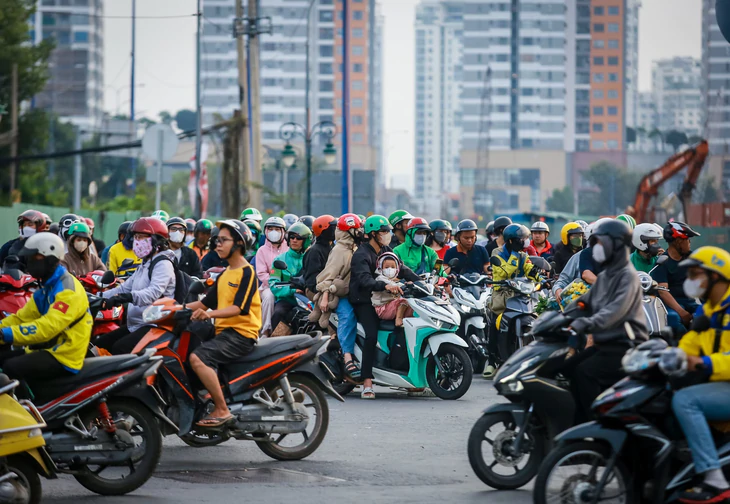
The Department of Culture and Sports has been charged with executing an extensive public awareness campaign utilizing mass media and direct outreach within industrial parks, export processing zones, and high-tech hubs. Workers will be provided comprehensive details regarding inspection timelines, technical standards, fee structures, and financial assistance schemes, empowering them to proactively service their vehicles and arrange work schedules accordingly.
Civic Celebration: Ho Chi Minh City Prepares for New Year Countdown 2027
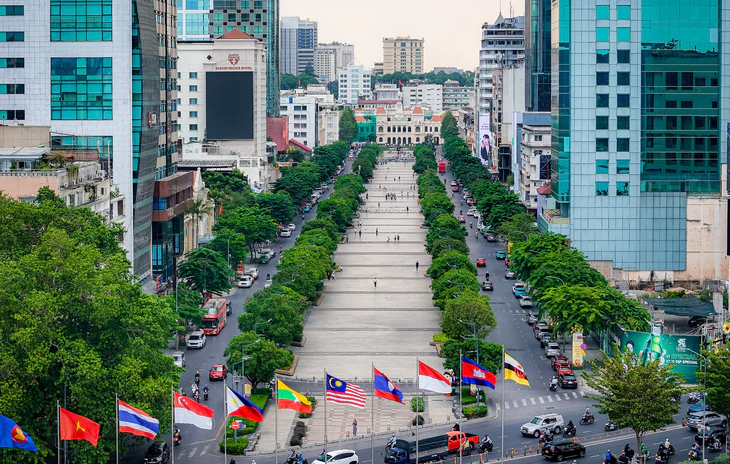
In a celebration of civic vitality and cultural tourism, the Ho Chi Minh City People’s Committee has officially greenlit the organization of the grand New Year Countdown 2027 celebration at the Nguyen Hue Walking Street in Saigon Ward. Scheduled as a multi-day spectacle, the event will span four consecutive days from December 28 through December 31, 2026.
Organized by the I.S.E.E Stage Production and Interior Joint Stock Company under authorization from the Ho Chi Minh City Football Joint Stock Company, the festivities will occupy the central pedestrian corridor stretching from Ton Duc Thang Street to Le Loi Street. Preparatory installation work is slated to commence precisely at midnight on December 24, with post-event dismantling and site restoration scheduled from January 1 through January 3, 2027. The event is projected to draw hundreds of thousands of residents and international tourists, reinforcing the city’s status as a premier regional destination for entertainment and cultural celebration.
Real Estate Governance: New Apartment Management Fee Frameworks
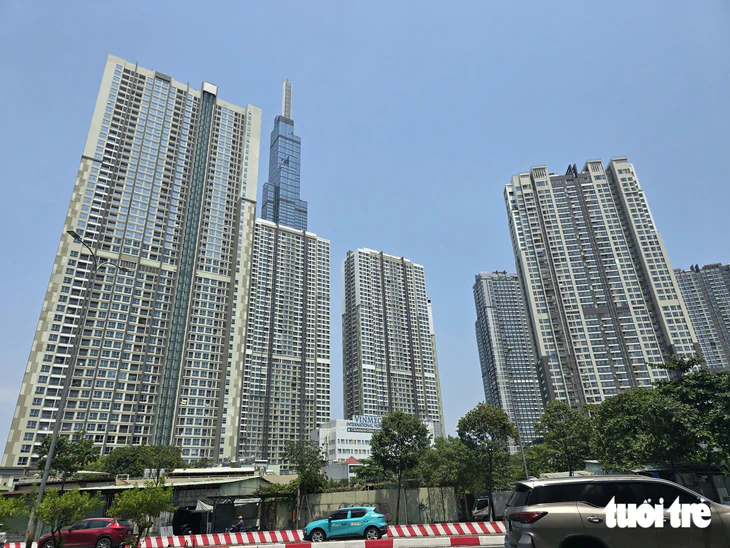
Addressing the burgeoning multi-family residential sector, the Ho Chi Minh City People’s Committee has promulgated Decision No. 96/2026/QĐ-UBND, establishing a revised framework for apartment building management and operation fees. Effective November 25, 2026, the updated regulation replaces previous municipal directives from 2024 and supersedes overlapping provisions formerly enforced in Ba Ria – Vung Tau and Binh Duong provinces.
Under the new pricing schedule, residential apartment buildings equipped with elevators located across urban wards and communes are subject to a fee range of VND 1,800 to VND 13,700 per square meter of usable apartment area per month. For apartment complexes lacking elevators, the bracket ranges from VND 600 to VND 8,800 per square meter monthly. In the special administrative district of Con Dao, where logistical costs are inherently elevated, the corresponding fees are adjusted upward: elevator-equipped buildings range from VND 3,200 to VND 24,700 per square meter monthly, while non-elevator complexes span VND 1,100 to VND 15,800 per square meter monthly.
Municipal authorities clarified that these fee caps explicitly exclude value-added tax, maintenance funds, fire insurance premiums, parking fees, utility costs (electricity and water), television and telecommunications services, and operational allowances for resident management boards. For privately developed apartment complexes outside the public asset portfolio, this framework serves as a statutory reference benchmark for negotiation between developers, residents, and management entities. In the event of a contractual deadlock, management units are legally authorized to temporarily collect fees based on the prior year’s rates—or an agreed alternative rate—provided it does not exceed the newly mandated ceiling.
Public Health Infrastructure: Surveillance Network Expansion for Infectious Diseases
Bolstering the city’s health security architecture, the Ho Chi Minh City Department of Health announced the formal release of a comprehensive strategic plan to establish and develop a specialized laboratory network for infectious disease surveillance through 2030.
A comprehensive baseline survey conducted in August 2025 revealed that while Ho Chi Minh City possesses a sophisticated, multi-tiered laboratory ecosystem comprising public and private institutions capable of executing advanced microbiology and molecular diagnostics, these disparate facilities have historically operated in isolated silos without a unified coordination mechanism.
The newly implemented master plan bridges this gap by structuring the diagnostic surveillance network into three functional pillars: a central governing directorate, a standardized specimen collection and logistics transport system, and a tiered network of diagnostic laboratories categorized into five distinct capacity levels. By 2030, the municipal health sector aims to integrate 70% of all infectious disease testing laboratories citywide into this unified network, with 90% of participating facilities having their operational capabilities dynamically updated on a centralized digital capacity map.
This institutional integration marks a significant leap forward in epidemiological preparedness, ensuring rapid pathogen detection, seamless data sharing, and robust health security for Vietnam’s economic epicenter in the decades to come.