When a satellite exhausts its onboard propellant, it does not simply vanish from the sky; rather, it enters a final, complex phase of its operational life. The transition from an active space asset to an "orbital derelict" is a critical juncture that poses significant challenges for space agencies and private operators alike. Whether a satellite continues to orbit Earth for decades, decays into the atmosphere, or is maneuvered into a "graveyard orbit," the outcome is determined by its altitude, its remaining structural integrity, and the strategic planning of its mission controllers.
The Physics of Orbital Decay and Abandonment
To maintain a stable orbit, satellites are in a constant state of controlled falling. Gravity pulls the spacecraft toward Earth, while its forward velocity keeps it from crashing into the surface. As long as a satellite has propellant, it can use its thrusters to correct its altitude, avoid collisions with orbital debris, and maintain its precise orientation relative to the Earth’s surface.
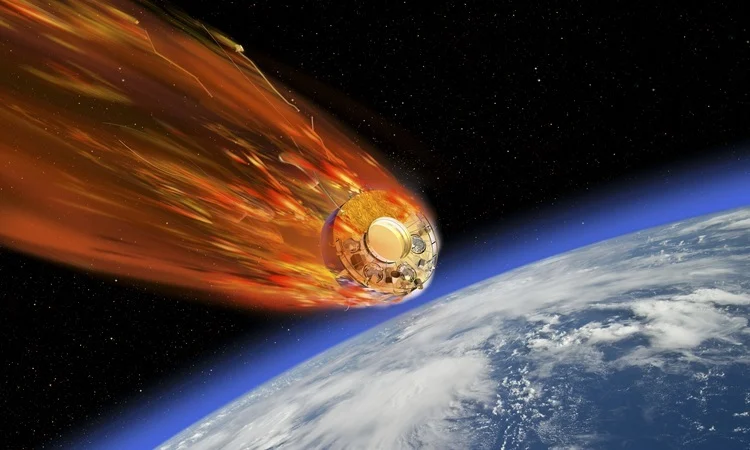
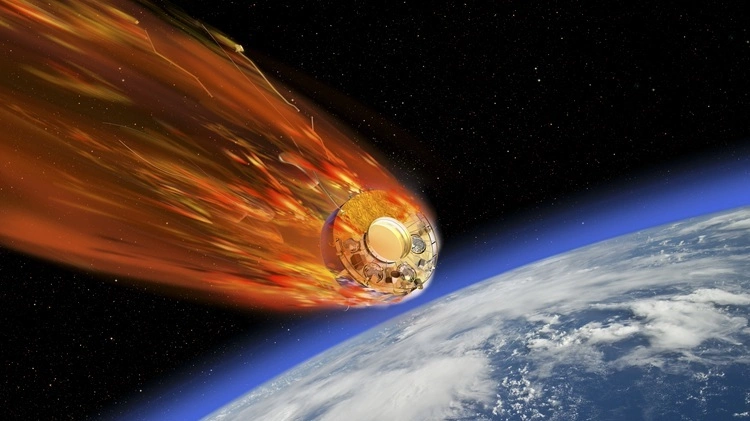
However, once the propellant is depleted, the satellite loses its ability to perform these essential maneuvers. In Low Earth Orbit (LEO)—the region extending up to about 2,000 kilometers—the environment is not a perfect vacuum. Thin layers of the upper atmosphere create drag, which acts on the satellite, gradually sapping its kinetic energy. Over time, this drag pulls the spacecraft into lower and lower orbits. Without thrusters to boost its altitude, the satellite will eventually descend into the denser layers of the atmosphere, where it will undergo rapid heating and disintegration.
According to data from the Space Atlas, a satellite re-entering the atmosphere at these altitudes can travel at speeds approaching 27,300 kilometers per hour. During the final moments of its descent, the intense friction causes the spacecraft to heat up rapidly, leading to the vaporization of solar panels and the melting of metal components. The object typically breaks apart at altitudes of 70 to 80 kilometers, scattering debris across a wide footprint.
Graveyard Orbits and Long-Term Sustainability
Not all satellites meet a fiery end. For spacecraft operating in Geostationary Orbit (GEO), located approximately 35,786 kilometers above the equator, the scenario is drastically different. At this distance, atmospheric drag is negligible, meaning a dead satellite could theoretically remain in orbit for millions of years, posing a long-term collision hazard.
To mitigate this risk, international guidelines established by bodies such as the Inter-Agency Space Debris Coordination Committee (IADC) require operators to move satellites to a "graveyard orbit" (or "disposal orbit") at the end of their lives. This involves using the last remaining fuel to boost the satellite at least 300 kilometers above the operational GEO belt. Once the spacecraft is safely tucked away, operators perform "passivation."
The Crucial Phase of Passivation
Passivation is the process of rendering a satellite inert to prevent it from becoming a source of new debris. Even after a mission ends, a satellite remains a potential ticking time bomb. Batteries, if left connected, can swell or explode due to temperature fluctuations or internal shorts. Residual fuel, if pressurized and exposed to the heat of the sun or a collision, can cause a violent rupture of the fuel tanks.
The European Space Agency (ESA) and NASA have standardized strict passivation protocols. These include:
- Depletion of Residual Propellant: Burning off or venting any remaining fuel to ensure no pressurized energy remains.
- Battery Disconnection: Severing the link between solar arrays and storage batteries to prevent overcharging and subsequent electrical fires.
- Shutdown of Transmitters: Disabling all communication systems to prevent interference with other active missions.
A prime example of this procedure is the decommissioning of the GRACE-FO mission. NASA engineers systematically shut down systems, disconnected power sources, and exhausted fuel reserves to ensure the craft would not pose a threat to the orbital environment. Similarly, the ERS-2 satellite, which had been in orbit for decades, saw its altitude lowered by controllers in 2011 to accelerate its natural decay, reducing its projected time in orbit from over 200 years to just 15.
Technological Innovations in Debris Removal
As the density of objects in Earth’s orbit continues to increase, the industry is shifting from passive disposal to active removal. The growth of "space junk" has prompted private companies and government agencies to develop specialized technologies for cleaning up the orbital environment.
ESA is currently leading the development of "ClearSpace-1," a mission designed to rendezvous with and capture defunct satellites or large pieces of debris. The engineering challenge involves creating standardized docking interfaces and magnetic capture systems that can grapple a non-cooperative, tumbling target. By designing future satellites with "capture interfaces," manufacturers are making it easier for future robotic missions to grab, de-orbit, or service aging infrastructure.
The Balancing Act of Mission Planning
Mission planners face a difficult economic and scientific trade-off: how much fuel should be reserved for the end of the mission versus how much should be used to extend the satellite’s scientific or commercial life?
If a mission controller uses too much fuel to extend a satellite’s operational window, they may find themselves without the margin needed to perform a safe disposal maneuver. This scenario, known as "fuel starvation," can leave a valuable asset stranded in a busy orbital lane. Conversely, reserving too much fuel for disposal limits the potential ROI (Return on Investment) of the spacecraft.
The NASA TDRS-1 satellite provides a historical case study in careful planning. After over 26 years of service, operators used the final fuel reserves to boost the spacecraft into a disposal orbit, effectively clearing the path for its successors. This discipline is essential as the satellite population grows exponentially with the deployment of large constellations for global internet and Earth observation.
Broader Implications for Global Space Policy
The transition of a satellite from an active participant to a piece of debris is no longer a localized event; it is a global concern. With thousands of new satellites being launched annually, the ability to manage the end-of-life process is a pillar of orbital sustainability.
International space law and the "Outer Space Treaty" have historically been vague regarding the responsibility of debris, but current standards are tightening. Organizations like the Federal Communications Commission (FCC) in the United States have recently introduced rules requiring operators to de-orbit satellites within five years of mission completion, a significant decrease from the previous 25-year guidelines.
As we look toward the future of space exploration, the focus is shifting toward a circular space economy. The development of in-orbit refueling and servicing—pioneered by companies like Northrop Grumman with their Mission Extension Vehicles (MEVs)—could eventually render the "end-of-life" scenario obsolete. By extending the life of a satellite through refueling, we reduce the need for constant new launches and mitigate the creation of orbital clutter.
However, until such technologies are widespread, the "death" of a satellite remains a testament to the precision required in modern aerospace engineering. From the high-energy fireballs of LEO re-entry to the silent, permanent resting place of the graveyard orbits, the final act of a satellite’s life is a vital component of protecting the fragile environment of Earth’s orbital shell. Through careful passivation, strategic maneuvering, and emerging removal technologies, the global community continues to strive for a sustainable future in space, ensuring that the orbital pathways remain clear for the next generation of discovery.